Former minister Fátima Báñez dies in the train accident in Toledo
The former PP politician was who led the Ministry of Labor for the longest time in Spanish democracy
-
CAT -
CAST
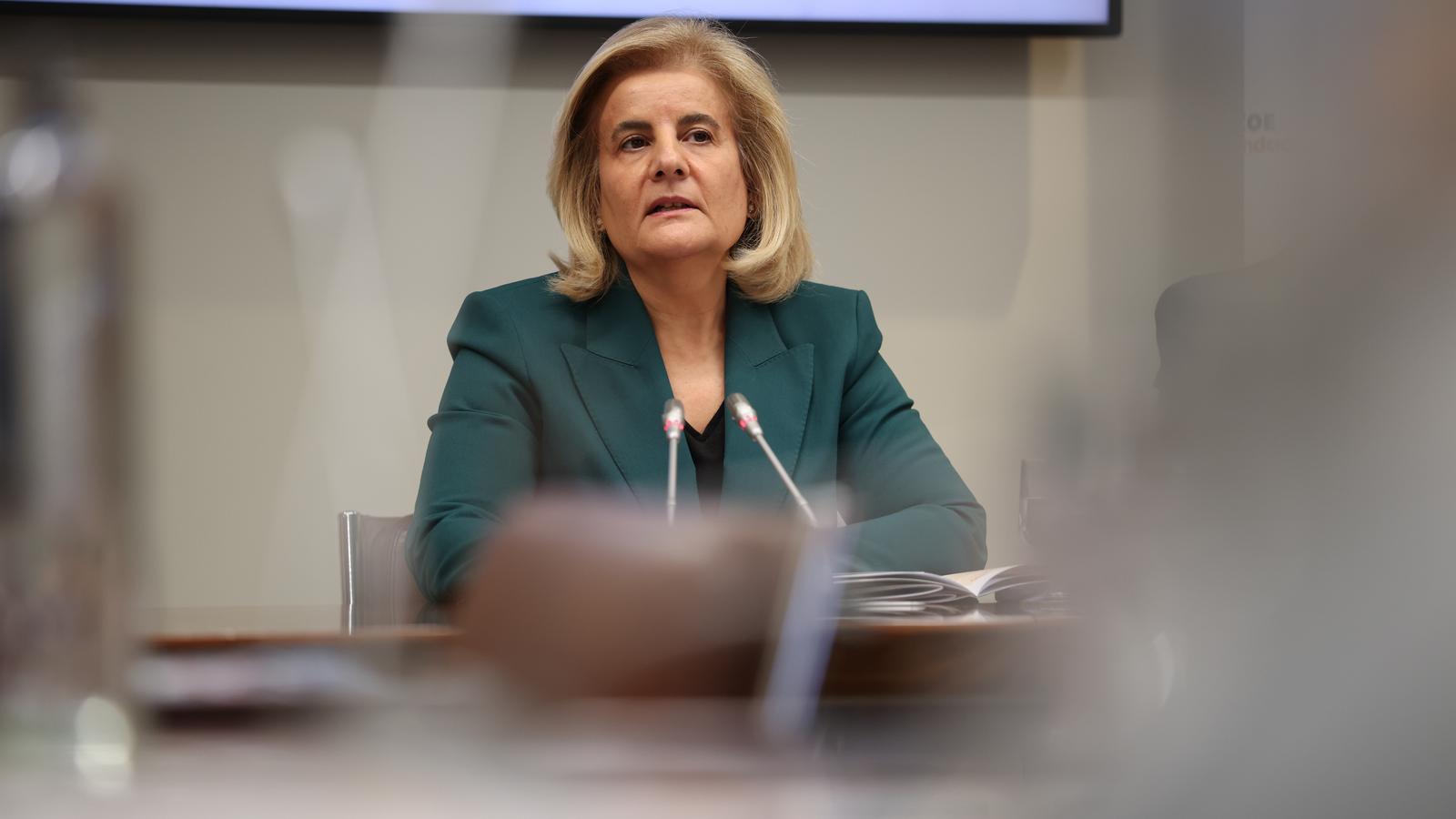
BarcelonaFátima Báñez, Minister of Labor and Social Security during Mariano Rajoy's government, is one of the fatalities of this Wednesday's train accident in the town of Urda (Toledo), as confirmed by the CEOE. There had been no news of her since early Wednesday morning, and the Spanish employers' association, whose foundation she presided over, reported that they were trying to contact her. Speculations proliferated throughout this Wednesday, but her death was confirmed this Thursday and the CEOE, in fact, has made a statement. "We want to express our deepest sadness," the text maintains, adding that the business owners feel a "profound pain for this loss" and wish to convey "affection, support, and condolences" to the family and their loved ones, as well as to the rest of the victims of the accident. "Those who knew her will always remember her human quality, her closeness, and her firm commitment to the values that have guided her life and her professional activity," it notes.
At the same time, the vice president of the employers' association, Lorenzo Amor, also recalled on X the fact that he was waiting for her all day yesterday, Wednesday, at the station and the bond that united them. "You have left like the greats, in the line of duty", he notes. "You always had a yes for others," he concludes. PP leader Alberto Núñez Feijóo has lamented her death, remarking that "she was a tireless woman, loyal, a friend, and always committed to improving the lives of Spaniards." "The entire PP mourns her loss," he added, as did his number two, Miguel Tellado, and numerous party leaders. The Minister of Equality, the socialist Ana Redondo, also has expressed condolences, emphasizing the fact that she was "the first woman to hold the Labour and Social Security portfolio" in Spain. "We thank her for her service to Spanish society", has asserted. In the same vein, the Ministry of Labour led by Yolanda Díaz has spoken out: "We express our deepest condolences", it commented on X.
The former Spanish Vice President María Jesús Montero has also reacted to the death, describing her as an "Andalusian politician proud of her land" with work that deserves social "recognition". In the same way as the leader of the UGT union, Pepe Álvarez, who has no "words" to "express the grief and pain" that the loss of someone with whom he shared social "negotiations" from the other side of the table causes him. The president of the business organization Pimec, Antoni Cañete, has expressed himself in similar terms for the "memory of the moments and efforts shared".
Several regional presidents, such as the Madrilenian Isabel Díaz Ayuso, the Murcian Fernando López Miras, or the Ceutian Juan Jesús Vivas have expressed their condolences. "Such a good person, cheerful, willing, solvent...", stated Ayuso. The deputy spokesperson for the PP in Congress, Cayetana Álvarez de Toledo, defined her as "a great manager, a brave reformer, a stateswoman". In turn, the leader of the PNV, Aitor Esteban, also mentioned the "magnificent relationship" he had with her party and the "friendship" they shared.
Báñez, who was 59 years old, was traveling on the Iryo train that made the journey from Madrid to Seville, where she was to attend an event of the Confederation of Employers of Andalusia. "I would be lying if I did not say that this suffering, of knowing nothing about her, hurts me especially, not only because we are friends and colleagues, but also because she got on that train to accompany us at the celebration event for Business Day, which we had planned today in Seville", the president of Andalusia, Juanma Moreno Bonilla, expressed in the afternoon, before the tragic outcome was known.
Born in Huelva in 1967, Báñez was known politically for having promoted the controversial labor reform of Rajoy's popular executive, which made the labor market more flexible in 2012. That decision led to the calling of two general strikes against her, at a time when the unemployment rate did not stop growing, above 25%, and when the Spanish state was struggling to emerge from the public debt crisis and the effects of the bursting of the real estate bubble. Forged in parliamentarism, with nineteen years of experience in the Congress of Deputies –eleven when she assumed the ministerial portfolio–, she had earned a reputation as a dialogue-oriented politician. "I will always prefer an agreement, even if it is partial, to a reform by decree," she said before pushing ahead, by decree, the labor reform or reforming the pension model to decouple it from the CPI.
The longest-serving Minister of Labor
With almost eight years in the Ministry of Labor, Báñez has been the person who has spent the most time in the position in the democratic era (she also assumed the Health portfolio for a few months in 2016 and was, de facto, the Minister of Labor of the Generalitat de Catalunya during the application of Article 155). The economic situation gradually improved, and when she left the ministry in 2018, the unemployment rate had fallen below 15%. She continued as a deputy for one year after the motion of no confidence that brought Pedro Sánchez to the Moncloa, and in 2019 she left frontline politics once the elections were called.
More than two decades later –before moving to state politics in 2000, she had been a director of Andalusian television since 1997– she rejoined the private sector. Since 2020, she was president of the CEOE Foundation and was part of the board of directors of the Rovi laboratories, in addition to being a director of the international subsidiary of the energy company Iberdrola. She was also part of advisory boards such as the Hermes Foundation.
Báñez had a degree in business studies from ICADE, at the Pontifical University of Comillas, with a postgraduate degree at Harvard and another in leadership for public management at Iese. Married with children, she began her political career in 1996 under the wing of the Andalusian PP. She never lost her bond with the Popular Party, and was always considered a party woman.
