What is the LZB, the safety system that has failed on the Madrid-Seville line?
The transport expert, Joan Carles Salmerón, responds to technical doubts about the accident
-
CAT -
CAST
BarcelonaThe unfortunate chain of technical failures and human errors that ended in the collision of two high-speed trains in Urda, Toledo, opens up many questions about how it could have happened and what technical factors could explain a disaster of these characteristics. Transport sector expert and director of the Terminus Transport Studies Centre, Joan Carles Salmerón, clarifies technical terms and the main unknowns still surrounding the accident for the ARA. There are six questions to provide context and understand key concepts.
What is the LZB? How does it work?
— It is the security and communications system that was implemented on the Madrid to Seville line in 1992. It is very similar to the European system that is unified in Europe, the ERTMS, but it was developed after 1992 and, therefore, it resembles it a lot, but it is not the same. Both the LZB system and the ERTMS are security systems that control the train. They are incorporated both into the vehicle, the train, and the infrastructure and ensure that, in the face of any human error, whether by the driver or the infrastructure manager, the train stops automatically. If an order is not met or if a driver is distracted for more than 10 seconds, it is activated. Obviously, it is also activated when there is a failure of the system itself.
Is it normal for the LZB to fail?
— It is not normal for it to fail, but it is not infrequent either. The LZB system can fail just as the signaling system also fails. Often we also see this at home with the Rodalies de Catalunya system.
This line was undergoing the migration to the ERTMS system. Could this have caused a problem?
— In principle, no. The migration works were underway, but there is no reason for it to be affected.
What happens when the LZB safety system fails?
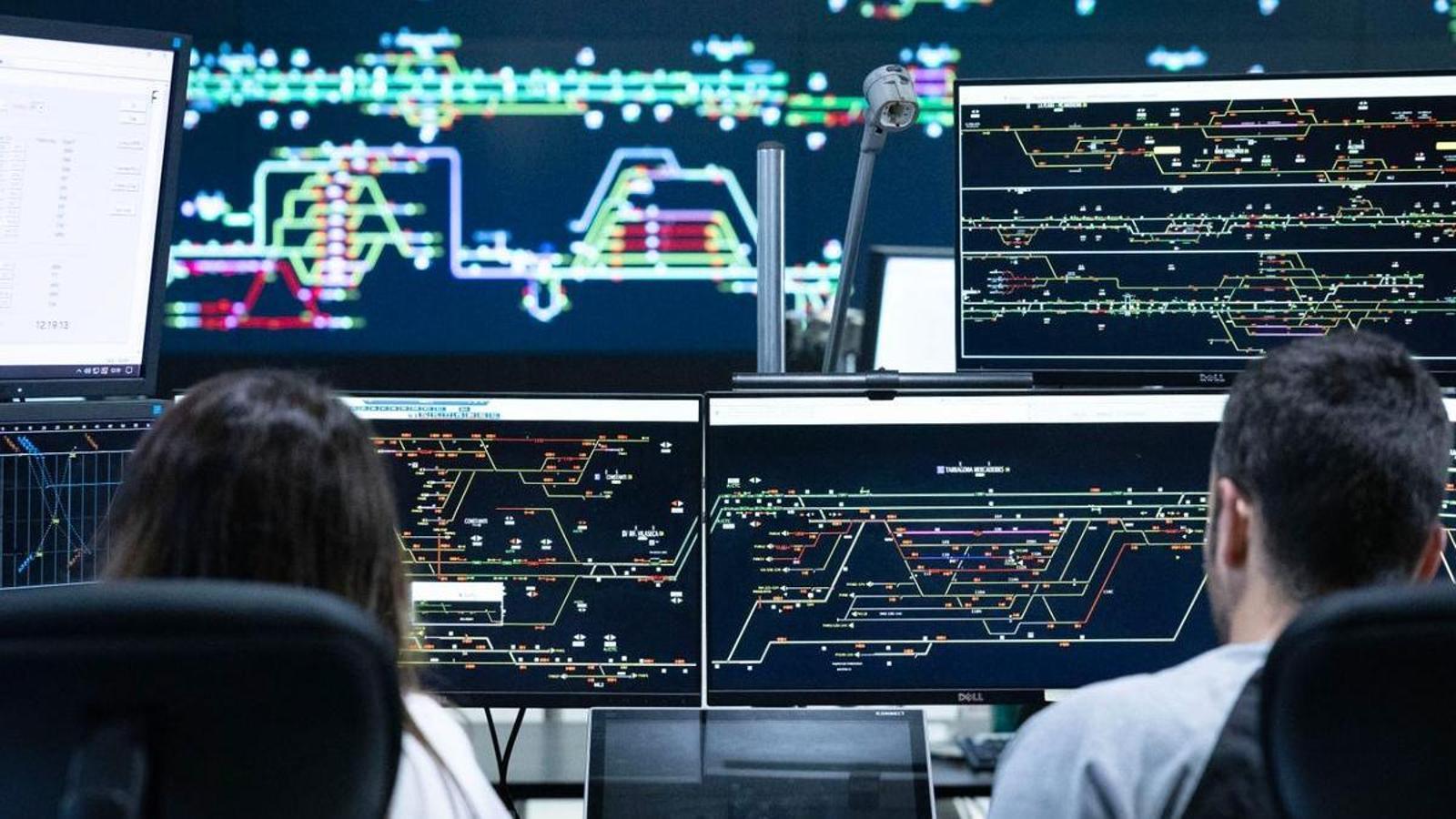
— Given the forecast that the system could not be reactivated quickly, what has been done is to switch to another, much older technology: the lateral signaling blocking system. In simple language, traffic lights have been activated, like the ones we find on the street, which allow or deny passage. This system is controlled from the operations center, in this case the one in Madrid, at Atocha. With this system, it is much more likely to commit human errors. But the cause of the accident was not unique, but multicausal.
Why hasn't the Iryo service started?
— It is one of the great unknowns left to be known. What I can say is that it is one of the most modern trains circulating in Spain with many safety measures. To resume the journey, the train itself requires many checks and safety codes from the driver. It does not restart like a mobile phone; it needs many procedures that take a few minutes.
From the moment the AVE starts until it collides with the Iryo, about 15 minutes pass. How is it that no one detects the problem during this time?
— It is another one of the great unknowns. It will need to be clarified very well and quickly by the administrations. We hope that the preliminary investigation report clarifies it soon.
