“Competing against ‘La raja de tu falda’ is a lost war”
Estopa release the album ‘La maketa’ and sell all the tickets for eight concerts in stadiums

-
CAT -
CAST
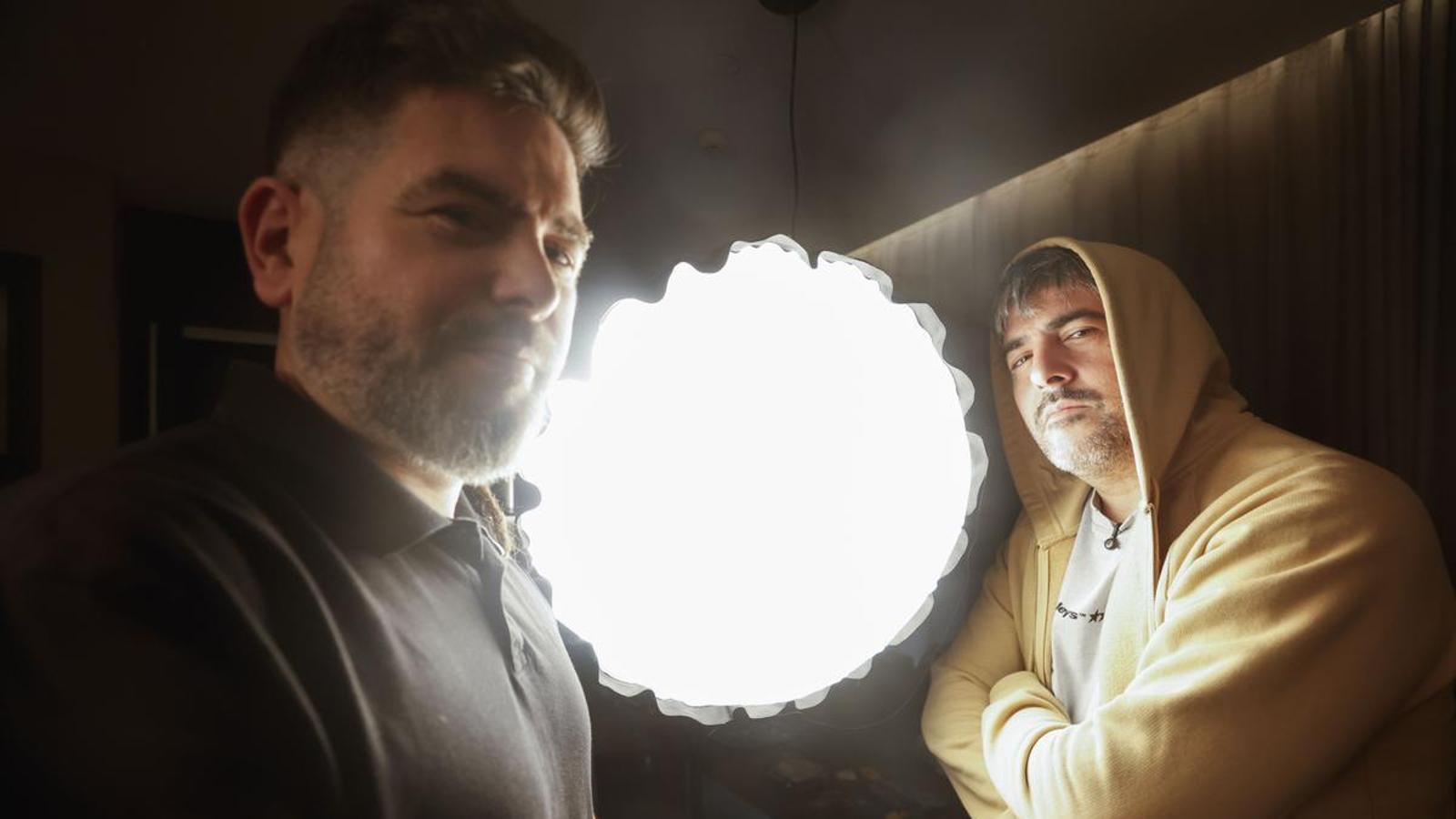
BarcelonaThey summon me to the Paco Meralgo restaurant, high tables, stools, and plates to share in Barcelona's Eixample. "Meralgo, what a curious surname," I think. It takes me a good while to understand the casual informality of the semantic wordplay. It's very Estopa, yes. There will be four of us for lunch, with Berta Alegre, from the record label Sony, and brothers David and Jose Muñoz. All of this is part of the promotional round prior to the release of La maketa (2026), the record that gathers Estopa's first songs, a good part of which fed the repertoire of the duo's first two albums, Estopa (1999) and Destrangis (2001). "But in a wild state," says Jose, referring to some uncut lyrics. For example, in Como camarón they recover the original verse: it doesn't sell "fine stuff," as it did on the record, but "cocaine," like on the demo.
The waiters greet the Muñoz brothers with the familiarity shown to regular customers. As soon as we sit down, a waiter appears with four beers that no one ordered. I decline the invitation, just mine, and the conversation drifts towards the complicated relationship between night-time professions and alcohol and drugs. "It's complicated if you're a nightclub waiter or a nightlife businessman," reflects Jose. "If you're a dealer and you take coke, you're dead. The dealer who consumes doesn't make money," states David. A bottle of wine also arrives. "Four glasses?" the waiter asks. "Three, please." "Should we kick this one out?" the waiter jokes.
“Can I take a photo with you?”, asks a woman who apologizes for working at a bank. The Estopa brothers attend to her with sympathy. “We have become the Grinch of banking,” says David. The situation is the result of a conscious decision. When Estopa announced they would go on a tour of four stadiums, they organized a ticket pre-sale that did not prioritize bank customers, as other artists do, but rather those who bought the album. “It is beyond criticism. It’s as if ARA organized a concert and gave priority to the newspaper’s subscribers. Beyond criticism,” asserts David. Prioritizing the fans has worked. The pre-sale did not include all of the tickets, because there was also a general sale, but it has mobilized a huge number of people: more than 20,000 physical albums were sold, a huge amount. “As our manager would say, those are gastronomic figures!”, exclaims Jose. “And for each album, you could buy six tickets,” they recall. In the end, tickets sold out for eight concerts: three at the Estadi Ciutat de València (June 9, 11, and 12), two at the Estadi Olímpic Lluís Companys (June 18 and 20), one at the Estadio de la Cartuja in Seville (June 26), and two at the Riyadh Air Metropolitano in Madrid (July 8 and 9). “That two guys from Cornellà with the silly faces we have can do this... –they say, defying those who didn’t trust them–. Trust in it a little.” “We are the Grinch of the banks,” insists David, who explains that, for last year’s tour, they received an offer from a bank whose name they do not want to recall. And to what extent do they owe it to the good-guy image they project? “None at all. I don’t give a damn about the image,” David blurts out.
The legendary ones and the rarities
The artichokes, the bravas potatoes, and the meatballs with cuttlefish they serve while the guys from Estopa talk with admiration about El Último de la Fila are delicious. “Manolo García is a benchmark. I wish I could convey a millionth part of what he conveys,” pleads David, as if he were now the one who didn't trust the emotional power of Estopa's songs. I remind them of the impact produced at their concerts when they play Como Camarón... They admit it. “And when the back rows sing, you've got it,” they say. A man approaches the table later to tell them they are “the best”.
The conversation flows with the usual cordiality, even with fraternal confidences, like when David suggests to Jose that he trim his beard. “Either a beard or a double chin,” the other replies. David, who will turn 51 in January, also talks about his son. “He is curious by nature. He is 19 years old and listens to everything, good things and bad things. And, even so, he is proud of his father,” he says. Jose, who just turned 48, explains that he is too lazy to do crunches. “I had a physical trainer, but after six months I gave it up because I noticed it was an obligation,” he recalls. His brother scolds him: “It's not an obligation at all!”. And both detail how they physically prepare for concerts. “You have to have minimal physical preparation to sing and move at the same time, because, on stage, if you get out of breath, you sing out of tune,” says Jose. “What we do is go running in the mountains... and sing while we run, like Rocky,” adds David, always with some cinematic reference in his pocket.
We have known each other professionally since 1999. Perhaps that is why they can be asked naturally about how they deal with the almost totalitarian power of the songs from their early years, and about whether the strength of the past condemns the rest of their discography to the corner of oblivion. “Competing against La raja de tu falda is a lost war,” admits David, who proposes turning the intention of the question around: “It's not about fighting, but about adding.”
Jose puts himself in the audience's shoes: “When I go to a band's concert, I want them to play the legendary hits.” “I don't want to criticize Robe, may God forgive me –David warns–, but sometimes he would sing some rarity that nobody knew. When you're playing at the Palau Sant Jordi and you sing a rarity, those four minutes that are golden are time you're stealing from the legendary songs. You keep the rarity for the family or for a special tour.” I explain to them that I also like concerts that surprise with rarities and those that give importance to new songs and are defended with conviction. They look skeptical. “There are songs from the latest albums that survive in the repertoire, but there are undisputed headliners that you cannot take out,” says Jose, glancing at David, who is wearing a T-shirt with the slogan “Liberté, égalité, Dembélé”. Paco Meralgo smiles.
