30 minutes to say yes to Salvador Illa
Cristina Morón entered municipal politics by chance and now heads the PSC list for Lleida in the general elections after the resignation of Montse Mínguez
-
CAT -
CAST
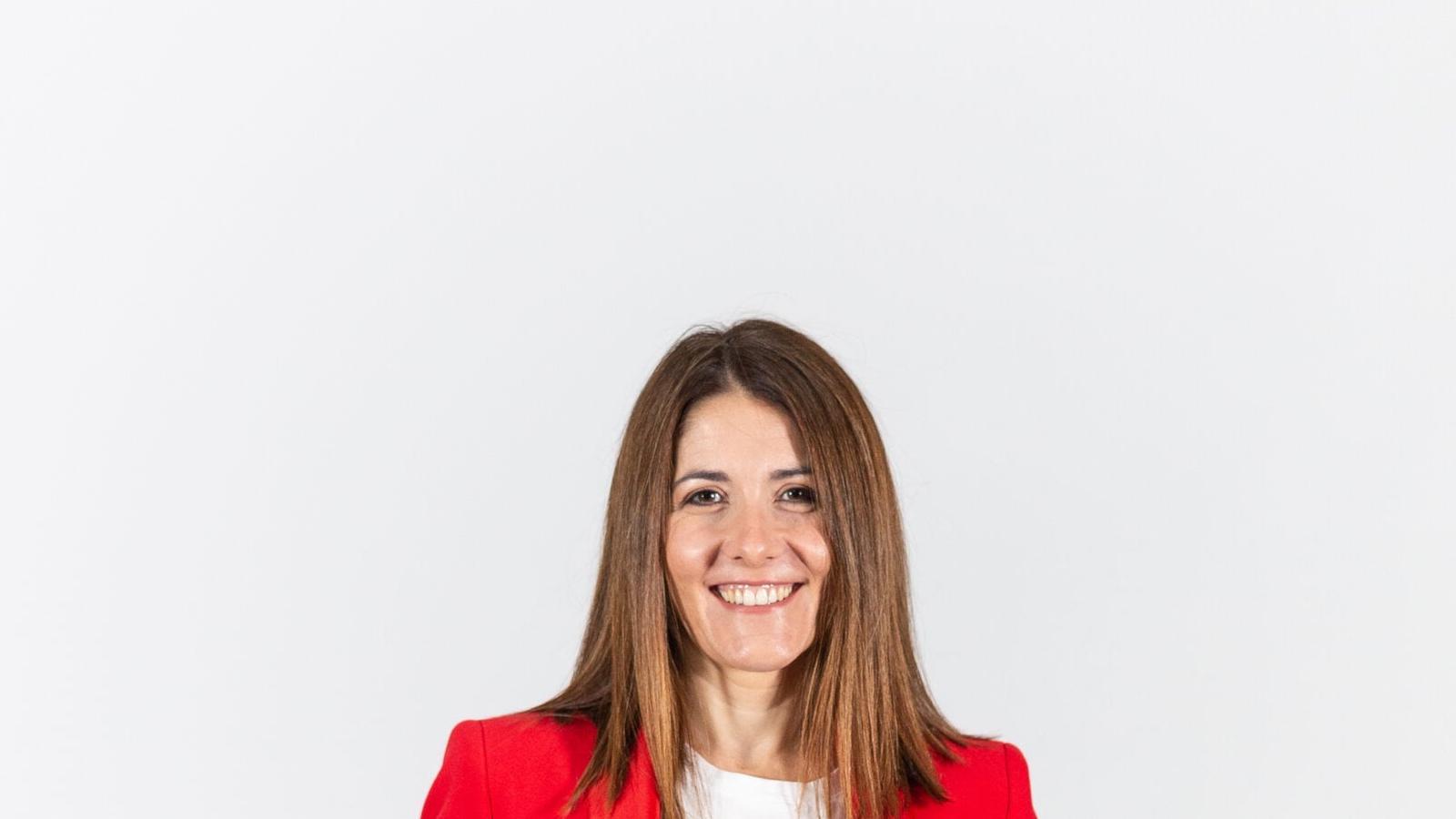
BarcelonaShe had never considered dedicating herself to politics. Now she is the new head of the PSC list for Lleida in the general elections of November 29th. "In my life, everything is the result of coincidences," explains Cristina Morón (Lleida, 1979) with a laugh. For several years, she was the point person for the dependency law at the Lleida City Council, where she worked as a social worker. After a conversation with Fèlix Larrosa, she received an offer to enter municipal politics. Now, a new unexpected proposal has changed her plans once again: "It was four-thirty in the afternoon and I received a WhatsApp call from a number I did not have registered, and it says: 'I am Salvador Illa, can you talk?'", explains Morón regarding the conversation in which she was proposed to head the PSC list for Lleida in Congress, after the resignation of Montse Mínguez. The decision came to her with little time to think it over, half an hour before the party's national council began. "Imagine how my heart was pounding," she recalls in conversation with the ARA.

Morón does not come from the socialist youth nor had she made a career within the party before entering the City Council. Her connection with socialism was primarily family-based and ideological; at home, they have always voted for the PSC, and her father participated in the neighborhood movement of Pardinyes, the neighborhood where she herself claims her origins. Her entry into politics came after a conversation with Larrosa, who, when he assumed the mayoralty after the departure of Àngel Ros, visited the different municipal services. When talking about the dependency law, Morón defended its social value, but also pointed out the difficulties in implementing it. Months later, the mayor proposed that she enter politics.
Her trajectory has been marked, as she explains, by the opportunities that have appeared for her. After four years in the opposition, she joined the municipal government. Throughout this journey, Larrosa has been a key figure, to the point that she considers him one of her "professional parents." The other is Lourdes Zanuy, former head of social services, from whom she learned much of the craft of social work.
Now the leap to Congress poses a different challenge for her. The socialist candidate aspires to revalidate the two deputies that the PSC has for Lleida and does not rule out trying to obtain a third. She argues that politics must serve to listen to the citizenry, understand their problems, and translate them into laws and projects. "Our whole life is political," she maintains. In this sense, she considers that her municipal experience can help her represent the territory in Madrid, although she admits that the distance will be greater than the one she has now as a councilwoman.
Morón assures that she does not want to lose contact with the city and insists that her origins will continue to mark her way of doing politics. "I know where I come from and I know who I am," she says. For now, she maintains her position as a councilwoman and does not project herself as a future candidate for mayor. In fact, when asked if she sees herself leading the party in Lleida, she closes the door to this possibility and defends the continuity of Larrosa at the head of the Paeria. Her immediate goal is another: to make the leap into state politics without detaching herself from the city that has brought her this far.
