Municipal thermometers

-
CAT -
CAST
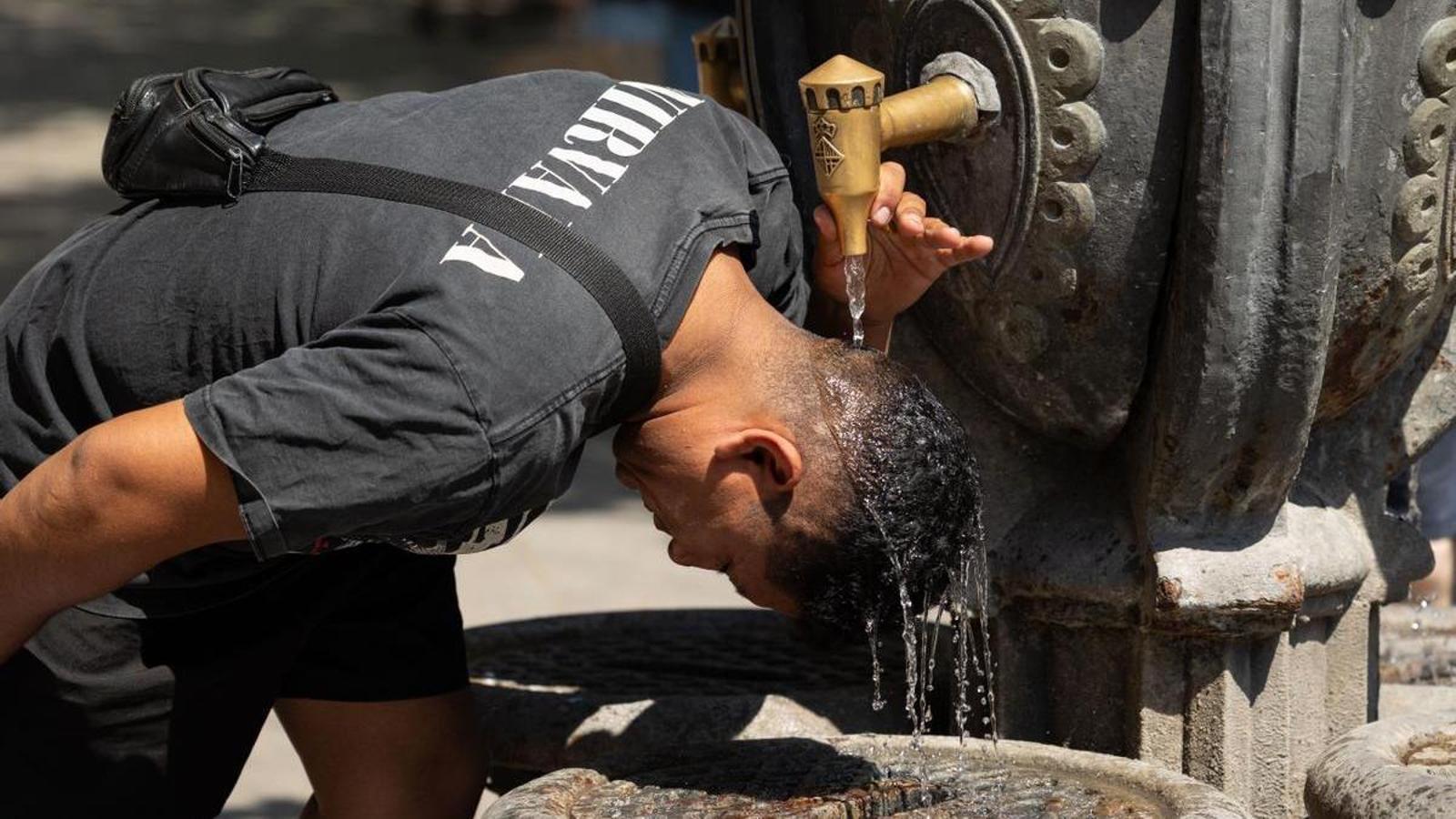
Every summer that passes confirms it: extreme heat has ceased to be a conjunctural accident to become a structural element. On the Mediterranean facade, moreover, it has a specific and especially insidious form, which are tropical and torrid nights, when the thermometer does not drop below 25 degrees and the body cannot recover. Because heat kills mostly at night and kills in silence. It strikes the elderly who live alone, poorly insulated apartments, those who work outdoors. The climate crisis is decided on a planetary scale, but heat is suffered, and it must also be fought, on the street. In the square without shade, in the classroom without air conditioning, in the neighborhood without greenery. Therefore, we could say that the front line of this battle is not only at international summits. On a day-to-day basis, it is played out in town halls.And the city councils have started to get involved. This summer there are nearly 2,000 active climate shelters in almost 400 Catalan municipalities, and the metropolitan area of Barcelona has expanded its network to 319, 31% more than last year. Valencia has doubled the number, from 18 to 39, to guarantee at least one in each district. And the movement is no longer just a matter for large cities. In Pla de Mallorca, towns like Sineu, Costitx, and Lloret de Vistalegre are transforming the areas around their schools into climate shelters. Away from asphalt and concrete: permeable pavements, large trees, shade designed to protect children and the elderly. Small municipalities doing, on their scale, what Paris does with the city as a whole, from the Seine to the schoolyards as “oases”.So far, the good news: adaptation to heat has entered the daily agenda of municipalism. The less good news is that, for the moment, the changes are more of intention than of transformation. In Valencia, a third of the announced shelters are libraries, which close in August, just when the heat hits hardest. In Barcelona, out of the 41 municipal libraries, 19 will remain open throughout August. On this matter, we should avoid continuing to play by the logic of "he who lives day by day", because everything suggests that the coming years will not be precisely better. Climate adaptation cannot be limited to an exercise of relabeling and adapting existing facilities, without touching a single square meter of asphalt.
It is therefore necessary to distinguish. One thing is to manage the emergency: opening air-conditioned facilities, distributing water, suspending activities. It is necessary and saves lives. Another thing is to transform: to make the city itself modify its configuration and, instead of heating, cool down. There are things to be done and they are well known. Shade as infrastructure, mature trees (because the shade that cools is made by the grown canopy, not the newly planted sapling), water in public spaces, permeable soil that reduces asphalt and stone, thermally rehabilitated housing... The management of the emergency can be improvised every June, but transformation requires years, money, and political continuity. And while public transformation is postponed, private adaptation is running: empty shelves and overwhelmed installers, with electricity consumption peaks that are surpassed every day. Each air conditioning unit cools a home while heating the street. It is the rational individual response that exacerbates the collective problem and leaves out, precisely, those who need it most. Barcelona, which has made part of the path of transformation, is now trying anticipation with the project “Barcelona at 50 °C”, which in 2027 will simulate how the entire city would respond to an extreme episode. The trial is welcome, as long as the simulation does not end up replacing the transformation.And here lies the underlying paradox. All of this (planting trees, renovating places, opening shelters, rethinking courtyards) is a municipal responsibility and scale. But municipalities continue to be the most structurally underfunded administration, the engine room of daily well-being to whom we systematically deny powers and resources. The Parliament of Catalonia has just called on the Government for a Catalan strategy against heatwaves, coordinated with municipalities, with a gender perspective and annual evaluation. It is a step forward, but a strategy without local funding would be another paper shelter. Supramunicipal resources are needed for municipal transformations.The heat exacerbates all the inequalities we already had, both in income and housing, age, or gender. And it is fought with the oldest policy that exists: the policy that decides whether a square is granite or shade, whether a patio is asphalt or earth and trees, whether a fountain flows or not when it is most needed. Few causes justify municipalism as well today as the thermometer.
