Preventive prison for the former president of Paraguay Santiago Peña
The Prosecutor's Office investigates Santiago Peña for breach of trust, administration for one's own benefit and influence peddling
-
CAT -
CAST
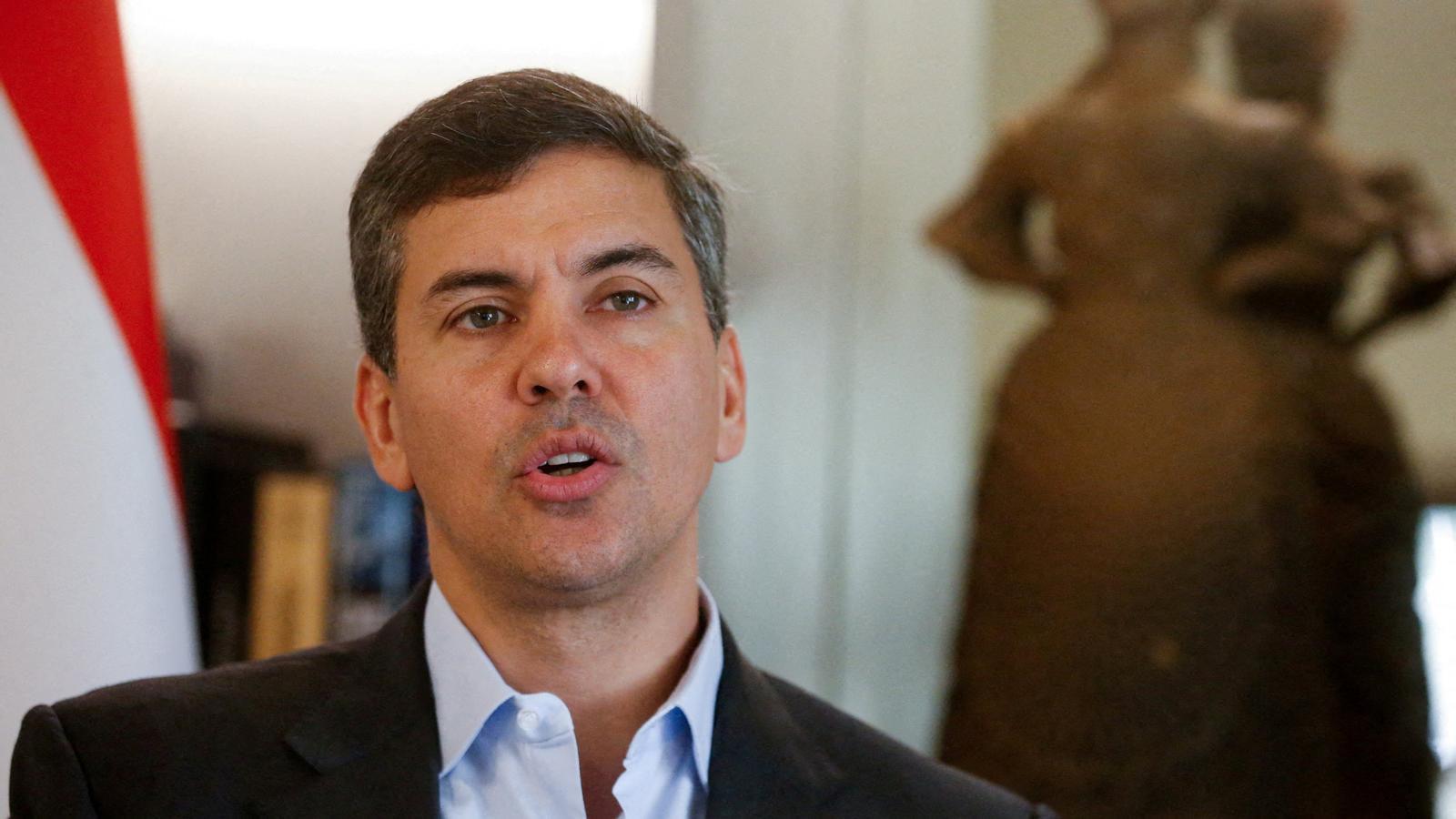
BarcelonaThe former president of Paraguay, Santiago Peña, was arrested this Saturday at dawn at his residence in Asunción, where he has been placed under house arrest, a few hours after the Senate removed him from office in a political trial for “misconduct in the performance of his duties.” The Public Prosecutor's Office has requested pretrial detention for Peña after formally accusing him of alleged "breach of trust and administration for personal gain" in relation to the collapse of Ueno Bank, a conglomerate where he held shares until March 2025 and where millions in funds from state pension funds went during his mandate. The judge has accepted the request and imposed pretrial detention.
Peña submitted his resignation on Thursday, in an attempt to protect himself legally. The Paraguayan Constitution establishes that democratically elected former presidents are lifetime senators and enjoy immunity, unless they are subjected to a political trial and found guilty. The legislators did not rule on his resignation, but this Friday the Senate ended up removing him from office, in a decision approved unanimously by the 44 senators present, the majority from his own party. After this, the Prosecutor's Office ordered his arrest in connection with the investigations into the bank's bankruptcy, which has left about three million people without savings, 60% of the country's adult population.
The until-now vice president, Pedro Alliana, was sworn in as president in an extraordinary session of Congress and will govern until August 2028. Alliana has promised those affected that they will be compensated for their financial losses: "The compatriots who today are going through a difficult time as a result of the financial collapse will be fully compensated. We will not leave them alone," he said in his first message to the country.

The economic and political earthquake in Paraguay began on Tuesday, when the country's central bank ordered the initiation of a resolution procedure for Ueno Bank, after detecting that its solvency had fallen below the required 50% minimum. This has resulted in the freezing of the deposits held there, in addition to the funds of public bodies, and in the closure of all branches in the country. According to the bank's website, two out of every three Paraguayans had an account with this institution, including 32,000 pensioners –out of the 91,000 total from the Social Welfare Institute–, who received their pension each month through the bank.
What was Ueno Bank and what was its relationship with Peña?
Ueno Bank began operating as a bank in November 2023, three months before Peña's arrival in government, and thanks to an intense digital strategy, it reached 2.9 million clients in a country of 6.1 million inhabitants. During Peña's term, funds from state entities worth nearly 850 million dollars ended up in this bank. Prosecutor's office investigations suggest that the entity may have granted loans exceeding legal limits to companies linked to Grupo Vázquez, its main shareholder.
Peña was a shareholder of this conglomerate until March 2025, when he sold his shares, and maintains that he never had a direct relationship with it, neither as a shareholder nor as an investor, and denies any wrongdoing. One of the elements fueling suspicions regarding the former president is that when he took office, he appointed Carlos Carvallo, who until then was the president of Ueno Bank, as executive president of the Central Bank of Paraguay. This led to him being questioned for possible conflicts of interest due to his previous ties to a company in the sector.
The first irregularities at Ueno Bank were detected as early as June, and prompted a more in-depth review of the entity's financial operations. Supervisors identified solvency problems and deficiencies in credit documentation, as well as suspicious movements of resources.
In addition to Peña, who will testify this Saturday, the judge has sent one of the entity's founders, Miguel Vázquez, and five other executives to prison. The Prosecutor's Office has also seized assets such as small planes, luxury vehicles, and bank documentation.
