
The studies Vulnerability of older adults to heatwaves: the Barcelona case and Climate classification and energy efficiency of buildings. A new climate classification for the energy efficiency of buildings in Spain, presented this Thursday by the Universitat Politècnica de Catalunya (UPC), have been elaborated by a multidisciplinary team formed by the ETSAB professors Blanca Arellano, Josep Roca Cladera and Dolors Martínez, and by the ETSEIB professor Carina Serra.
Heat kills more at night than during the day in Barcelona
Two UPC studies warn of nocturnal warming and call for taking into account the increase in minimum temperatures to take measures
23/07/2026 - 16:30 h
-
CAT -
CAST
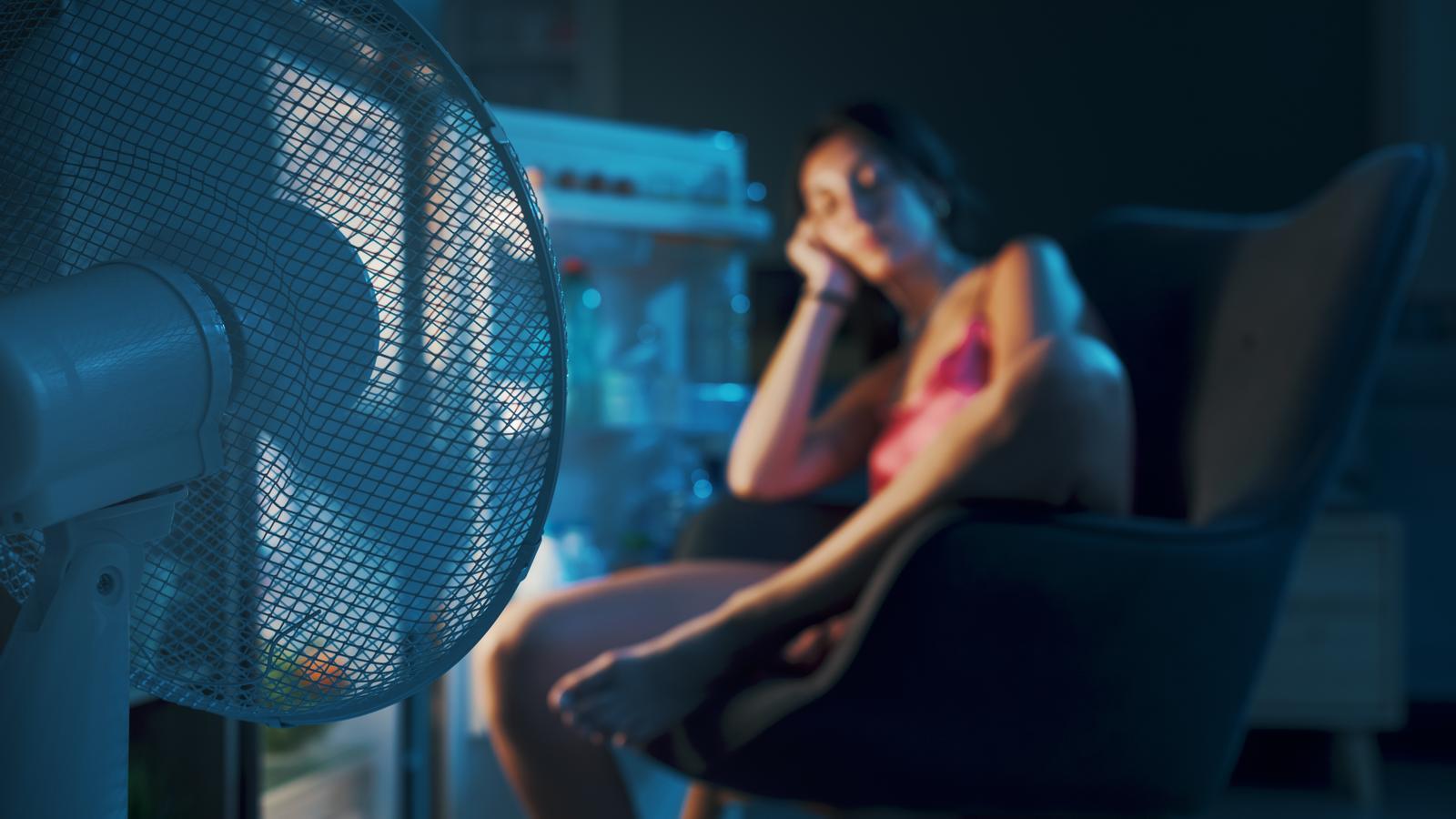
BarcelonaBarcelona suffers from a serious problem of nocturnal warming, which particularly affects the elderly and causes more deaths during the night than during the day. This is one of the main conclusions reached by the authors of two pending publications from the Universitat Politècnica de Catalunya (UPC). The authors attribute this reality to, among other factors, the lack of sufficient public alert measures and the fact that the energy performance certification system for homes in Spain has become outdated.
The studies promoted by the Centre for Land Policy and Valuations (CPSV)show that between 2007 and 2018, high and persistent nocturnal temperatures were the main cause of heat-related mortality in Barcelona. During this period, high nocturnal minimum temperatures caused 721 deaths, while diurnal maximum temperatures caused 571. One of the co-authors of the studies, Josep Roca Cladera, explains that this is due to the body's "low recovery capacity" after the heat accumulated during the day. For this reason, he describes nocturnal heat as a "silent killer," because the body "is unable to recover." "There is no escape from the heat," he insisted. In fact, according to data from Meteocat, as of this Thursday, the meteorological stations of Can Bruixa and El Raval in the city of Barcelona have already accumulated 30 and 28 torrid nights this year, an absolute record at this point in the summer since data has been kept.
The elderly are the most vulnerable to high temperatures. According to data from the Barcelona Public Health Agency, in 2025 alone, mortality attributable to extreme temperatures reached 370 deaths, of which about 80% corresponded to people aged 75 or over. The CPSV research also concludes that during the heatwave in August 2025, high minimum temperatures caused a 73.9% increase in mortality risk among the elderly. In contrast, maximum temperatures, which might seem more dangerous at first glance, raised the mortality risk to 63.6%.
Adjust alert systems
Roca Cladera argues that many of these deaths could be avoided with public alert systems that are more adapted to climatic reality and that do not "underestimate minimum temperatures and only talk about maximums". As an example, he cites the warnings from the Meteorological Service of Catalonia (SMC), which consider 27 degrees to be intense night-time temperature and 29 degrees to be very intense, thresholds that researchers consider "excessively high" and far from the 24 degrees established by their methodology. For this reason, they call for the incorporation of minimum temperatures into alert protocols and the establishment of differentiated warnings for age groups.
The expert explains that the CPSV sets, with its own methodology, 30.2 degrees during the day and 24 degrees at night as the thresholds beyond which there is a significant risk to health, especially for the elderly. "Throughout the summer, we have exceeded this threshold of an average night-time temperature of 24 degrees," he warns.
From Mediterranean climate to hot steppe
Due to the urban heat island effect, that is, the phenomenon by which an urbanized area – like Barcelona – registers higher temperatures than rural or peripheral areas, the city has experienced an average temperature increase of 3.22 degrees between 1971 and 2025 (from 15.82 to 19.04 °C). This is a much more pronounced increase than that recorded in the State as a whole (1.96 °C, between 1971 and 2024), in the Mediterranean region (1.83 °C), or globally (1.29 °C).
Studies reveal that the warming caused by the urban heat island effect and the lack of cooling breezes has been particularly accentuated during nighttime hours. In the last 54 years, the minimum nighttime temperature has increased by 3.87 °C (from 12.15 to 16.02), while the maximum daytime temperature has risen by 2.57 degrees (from 19.49 to 22.06). According to researchers, this phenomenon is due to high urban density, high soil impermeability, low albedo – that is, the low capacity to reflect solar radiation, of which asphalt is a good example – and a deficit of green areas. To this urban context is added climate change, which, according to Roca Cladera, is causing Barcelona to shift "from a Mediterranean climate to a warm steppe climate," typical of the peripheries of large deserts.
The challenge, internally
The expert admits that both studies have a significant limitation: "The lack of knowledge and information about what happens inside homes." Beyond actions in public spaces – such as the creation of shade or climate shelters – he considers it essential to deploy a citizen science network that allows monitoring the climatic conditions within homes. Projects like VIP-Clima, promoted by the UPC, the EAPC, the AMB, and the FAVB, among other institutions, should allow for a much more precise snapshot of indoor temperatures in homes.
The studies also warn that there is a generalized overestimation of heating needs and an underestimation of cooling needs. "They are based on a past climate," summarizes Roca Cladera, who calls for urgent reforms to both the Technical Building Code (CTE) and the energy certification system. One of the reasons is that, although the lack of heating still causes more concern, data shows that for almost 20 years, three times more energy has been spent on cooling than on heating.
Although Barcelona is already taking action to adapt to the climate emergency, Roca Cladera considers the climate shelter policy to be insufficient because "the vast majority are not open at night nor do people leave their homes to go there." Therefore, he advocates prioritizing the climate rehabilitation of homes rather than exclusively energy rehabilitation.
In this regard, he criticizes that this dimension still has little weight in programs such as the Barcelona City Council's Neighborhood Plan, which, he says, continues to focus mainly on maximum temperatures. As an emergency measure, he proposes fiscal incentives for these types of interventions: "There should be an income tax deduction or some mechanism that rewards climate rehabilitation."
Two studies awaiting publication in scientific journals
