1. Canal du Midi (France)This route allows you to enjoy a cruise through the vineyards of the Languedoc wine region, a UNESCO World Heritage site.2. Canals of Bruges and Ghent, Flanders (Belgium)During this tranquil journey through tulip fields and charming villages, you can discover the country at your own pace.3. River Shannon and Lough Erne (Ireland)It is a perfect region to discover places like Nieuwpoort, Ypres, and the charming city of Bruges, sailing among windmills, meadows, and castles.4. Frisian Coast-Amsterdam (Netherlands)Along this route, among charming villages, medieval churches, and traditional pubs, you can discover the landscape of central Ireland.5. Garonne Canal and Baïse River, Aquitaine (France)You can discover meadows, orchards, and charming medieval villages and enjoy the famous cuisine and wines of Aquitaine.
Between the asphalt and the canal
Floating houses emerge as a quiet alternative to traditional caravaning
-
CAT -
CAST
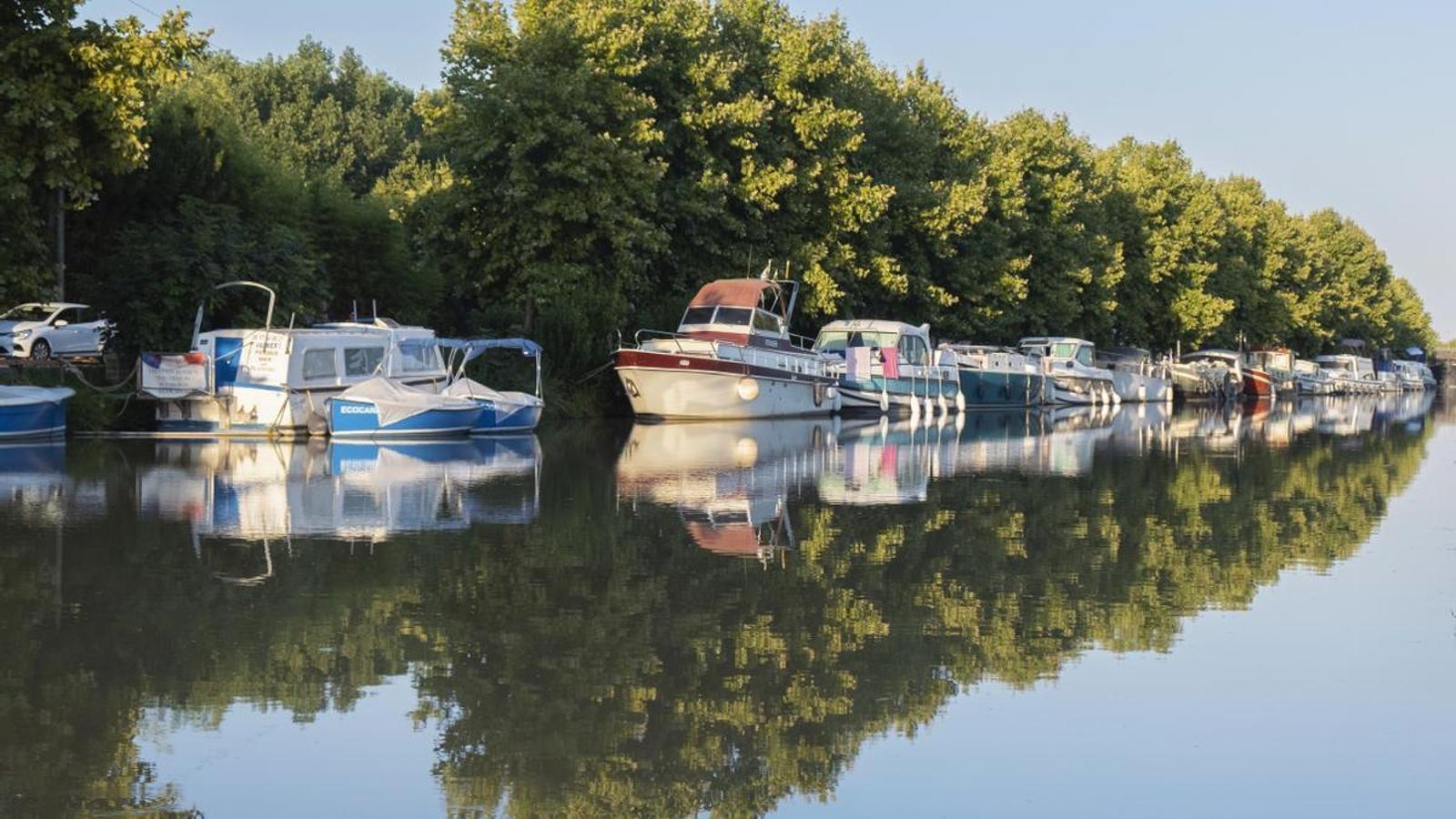
For years, the motorhome has symbolized a holiday of freedom, but parking restrictions, the saturation of many areas, and rising costs have led many travelers to seek alternatives. In this context, houseboats are attracting interest as a different way to travel along rivers and canals without needing a nautical license and with the same autonomy. A formula fully consolidated in countries like France, England, or the Netherlands, where the journey ceases to be just a trip to become part of the holiday.
A houseboat for sailing without a license
Driving a boat of almost twelve meters without ever having sailed may seem reckless. In Europe, however, it has been a common practice for decades. Companies like Le Boat, Locaboat, or Nicols rent boats equipped so that any family can travel along canals and rivers after receiving brief training before setting sail. Speeds are very low – usually between six and eight kilometers per hour – the routes are designed for recreational navigation, and the maneuvers are simple, making this experience an accessible option even for those who have never captained a boat.
More than a nautical activity, river tourism offers a different way to travel. The boat becomes a mobile accommodation from which to visit villages, markets, wineries, or natural spaces, and with which one can stop each day in a small port. The route progresses at the pace of the canals and locks, so the journey ceases to be a mere transit and becomes part of the experience.

For Daniel Imbert-Bouchard, director of the Tourism, Culture and Territory Research Group (TURCIT) and professor and researcher at CETT, this phenomenon responds to a progressive change in the way holidays are understood. "It is an upward trend that responds somewhat to the weariness of more massive and faster tourism. Experience, connection with the territory and sustainability are valued much more than a type of tourism that is much more about rapid consumption." According to the researcher, the pandemic accelerated this transformation. Mobility restrictions led many people to rediscover nearby destinations and prioritize more tranquil experiences, a trend that has continued to this day.
This model also fits with a growing environmental sensitivity. The slow pace favors a closer relationship with the territory, encourages local consumption and helps to decongest some visitors from the most crowded destinations.
The road crisis and the European mirror
The popularization of caravanning has also highlighted its limits. Motorhome areas often fill up during the summer months, many municipalities have imposed restrictions, and it is increasingly difficult to improvise a route without booking. What for years had been synonymous with freedom now forces many travelers to plan their routes much further in advance.
Imbert-Bouchard considers this one of the sector's major challenges. "The issue of caravans still generates a certain lack of regulation on where to park, what are the authorized places, or how to fit them into territories that are often not prepared. This ends up generating conflicts with municipalities and residents," he explains.
To this scenario is added the increasing cost of travel. The price of fuel, tolls, and the rising costs of campsites have led many families to reconsider the on-the-road holiday model.
Jordi Costa, 47, has made motorhome trips a family tradition. "Before, going out meant improvising. Now, if you don't book, you run the risk of not finding a spot," he explains. Looking for alternatives, he discovered the houseboats that travel along the French and Portuguese canals. "It's a similar idea, but in a completely different environment." He assures that the main difference is that on the canal, the pressure to reach a destination quickly disappears, and the journey becomes a succession of small stops and discoveries.
This model is fully consolidated in different parts of Europe. France is the great benchmark thanks to its more than 8,500 kilometers of waterways. The Canal du Midi remains the most emblematic route, but many travelers also opt for the Camargue, where canals cross lagoons full of flamingos and small fishing villages very close to the Mediterranean. There are also very popular routes in Belgium, the Netherlands, or Ireland.

The situation is different in Catalonia. Despite having some navigable stretches and a long hydraulic tradition, the lack of adapted canals, the orography, and, above all, the availability of water make it very difficult to copy the French model. Therefore, experts see river tourism as a complementary option for those seeking a more leisurely holiday.
An alternative that is still looking for its place
One thing all those who have tried river tourism share is that it is not a travel method suitable for everyone. Those who seek to accumulate kilometers, visit several cities in a few days, or improvise constant route changes will probably find limitations in a model that forces adaptation to the rhythm of the canals. On the other hand, for those who understand vacations as an opportunity to disconnect and dedicate time to the journey, slowness becomes the main attraction.
Daniel Imbert-Bouchard believes that this way of traveling fully connects with the values that are increasingly gaining importance among a segment of tourists. "In this type of tourism, there is a clear desire to know better where you are going, to discover what is done there, who lives there, and what local life is like. This territorial curiosity is one of its great strengths," he highlights. Furthermore, he points out that these types of proposals can contribute to redistributing visitors to less frequented areas and reducing pressure on the most overcrowded destinations.
Coral Garriga, a university student, discovered houseboats during a trip with her friends. She admits that before starting the journey, she had doubts about whether such a slow pace would eventually become boring. "I thought the boat would only be the means of transport, but in the end, it becomes a very important part of the vacation," she says. She explains that the slowness forces a change in habits. Hours of navigation turn into conversations on deck, reading, impromptu swims, or short bike rides through the villages that appear along the route. She also acknowledges that the route is conditioned by the canals and mooring points, so the distances covered each day are much shorter than on any road trip.
Experts agree that river tourism will not replace motorhomes, nor does it intend to. Rather, it is consolidating itself as an alternative for travelers who continue to seek autonomy and contact with the territory, but prefer to exchange traffic jams for locks, the noise of engines for that of water, and haste for a much slower pace.
1. Canal du Midi (France)This route allows you to enjoy a cruise through the vineyards of the Languedoc wine region, a UNESCO World Heritage site. 2. Canals of Bruges and Ghent, Flanders (Belgium)During this tranquil journey through tulip fields and charming villages, you can discover the country at your own pace.3. River Shannon and Lough Erne (Ireland)It is a perfect region to discover places like Nieuwpoort, Ypres and the charming city of Bruges, sailing among windmills, meadows and castles.4. Frisian Coast-Amsterdam (Netherlands)Along this route, among charming villages, medieval churches and traditional pubs, you can discover the landscape of central Ireland.5. Garonne Lateral Canal and Baïse River, Aquitaine (France)You can discover meadows, orchards and charming medieval villages and enjoy the famous gastronomy and wines of Aquitaine.
1. Canal du Midi (France)This route allows you to enjoy a cruise through the vineyards of the Languedoc wine region, a UNESCO World Heritage site.2. Canals of Bruges and Ghent, Flanders (Belgium)It is a perfect region to discover places like Nieuwpoort, Ypres and the charming city of Bruges by sailing among windmills, meadows and castles.3. River Shannon and Lough Erne (Ireland)Along this route, between charming villages, medieval churches and traditional pubs, you can discover the landscape of central Ireland.4. Frisian Coast-Amsterdam (Netherlands)During this peaceful journey between tulip fields and charming villages, you can discover the country at your own pace.5. Garonne Canal and Baïse River, Aquitaine (France)You can discover meadows, orchards and charming medieval villages and enjoy the famous gastronomy and wines of Aquitaine.
