The man who wanted to be buried inside a Pringles can
The brand was born to prevent the potatoes from ending up as crumbs

-
CAT -
CAST
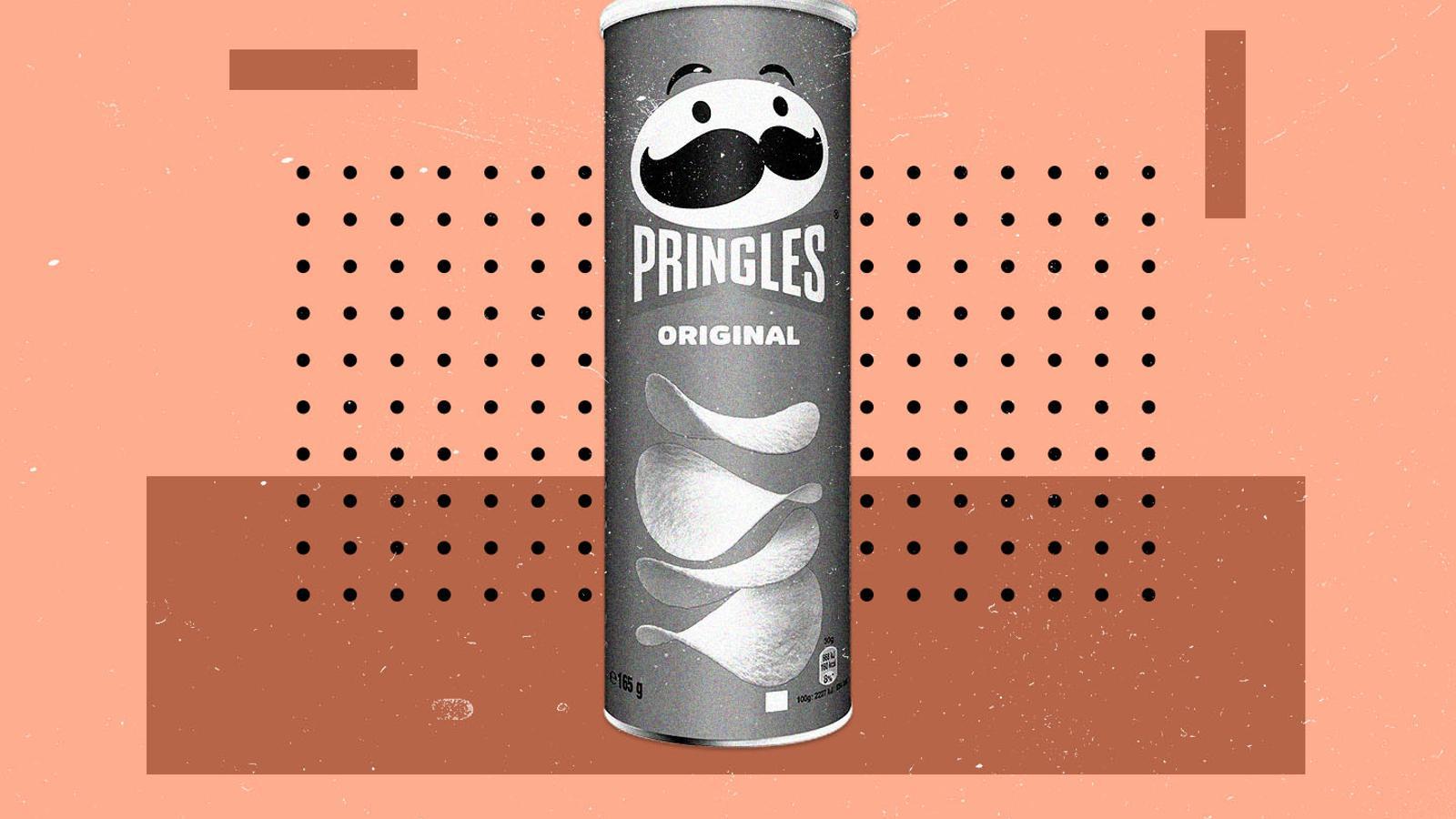
At the beginning of May 2008, three brothers entered one of the Walgreens supermarket chain stores in Cincinnati, in the United States. They walked around for a while until they stopped at the shelf with the Pringles chips. Their father, Frederic Baur, had just died at 89 years old and had made them a final request: he wanted his ashes to rest inside the curious cylindrical tube that serves as the packaging for this well-known brand of chips. “My brothers and I briefly debated which flavor we should choose,” recalled Larry Baur, the eldest son, in an interview with the magazine Time. “But I said we had to get the originals.” And so they did.
“When my father first proposed the idea of the burial, in the eighties, it made me laugh,” explained Larry Baur. But he soon discovered that he was speaking seriously. Fredric Baur had dedicated much of his career to research at the Procter & Gamble laboratories and, in 1966, he had participated in the development of a system to stack potato chips inside a cardboard tube without them breaking. That idea ended up becoming one of the most recognizable packages in supermarkets all over the world: the one for Pringles chips.
Bags of chips, a problem
Frederic John Baur Jr. was born on July 14, 1918, in Toledo, an industrial city in the American state of Ohio. As a young man, he became interested in science and enrolled at the city's university. Later, he continued his education at Ohio State University, where he earned a master's degree and a doctorate in organic chemistry. He also served in the United States Navy as an aviation physiologist before steering his professional career toward industrial research.
He ended up working for Procter & Gamble, an American multinational founded in 1837 in Cincinnati that had made a name for itself manufacturing soaps and candles and which, over the years, had expanded its business to detergents, hygiene products, and food. Baur worked there in research and development and, later, in quality control. It was precisely in the laboratories of this company that he encountered a challenge that, at first, seemed like a small matter: finding a better way to package potato chips.
The problem was that bags of potato chips did not always arrive in good condition in the hands of consumers. During transport, many chips would break and end up as crumbs at the bottom of the packaging. Furthermore, contact with the air caused them to lose freshness and texture. Procter & Gamble wanted to find a solution that would allow them to be better preserved and prevent them from spoiling. But it was not enough to just change the bag for a more resistant container: it was also necessary to ensure that all the chips had a similar shape and size so they could be stacked. The company set its researchers to work on it, and Baur was one of those in charge of finding an answer.
From invention to supermarket
The result came in 1968, when Procter & Gamble began marketing the first Pringles in the United States. Unlike traditional potato chips, the new chips were made from a dough with dehydrated potato that allowed them to be given an almost identical shape and size. Thus, they could be stacked inside a cylindrical tube, much more resistant than conventional bags. Baur had participated in the design of the stacking and packaging system, while other researchers, such as Alexander Liepa, had worked on the product formulation. The invention, however, did not succeed immediately. The first Pringles did not quite convince consumers, especially regarding the taste, and the company had to continue perfecting them before they became a commercial success.
Over the years, Pringles managed to make a place for itself in supermarkets around the world. In 2012, Procter & Gamble sold the brand to Kellogg for about 2.7 billion dollars. The business continued to grow and in 2023 it was already invoicing about 3.2 billion dollars annually around the world. In Spain, according to data from the company itself, sales grew by 19.2% in 2024 and the brand reached a 7% share of the potato chip market. Since December 2025, Pringles has been part of Mars, the giant owner of brands such as M&M's and Snickers.
