Strike, youth and political response

-
CAT -
CAST
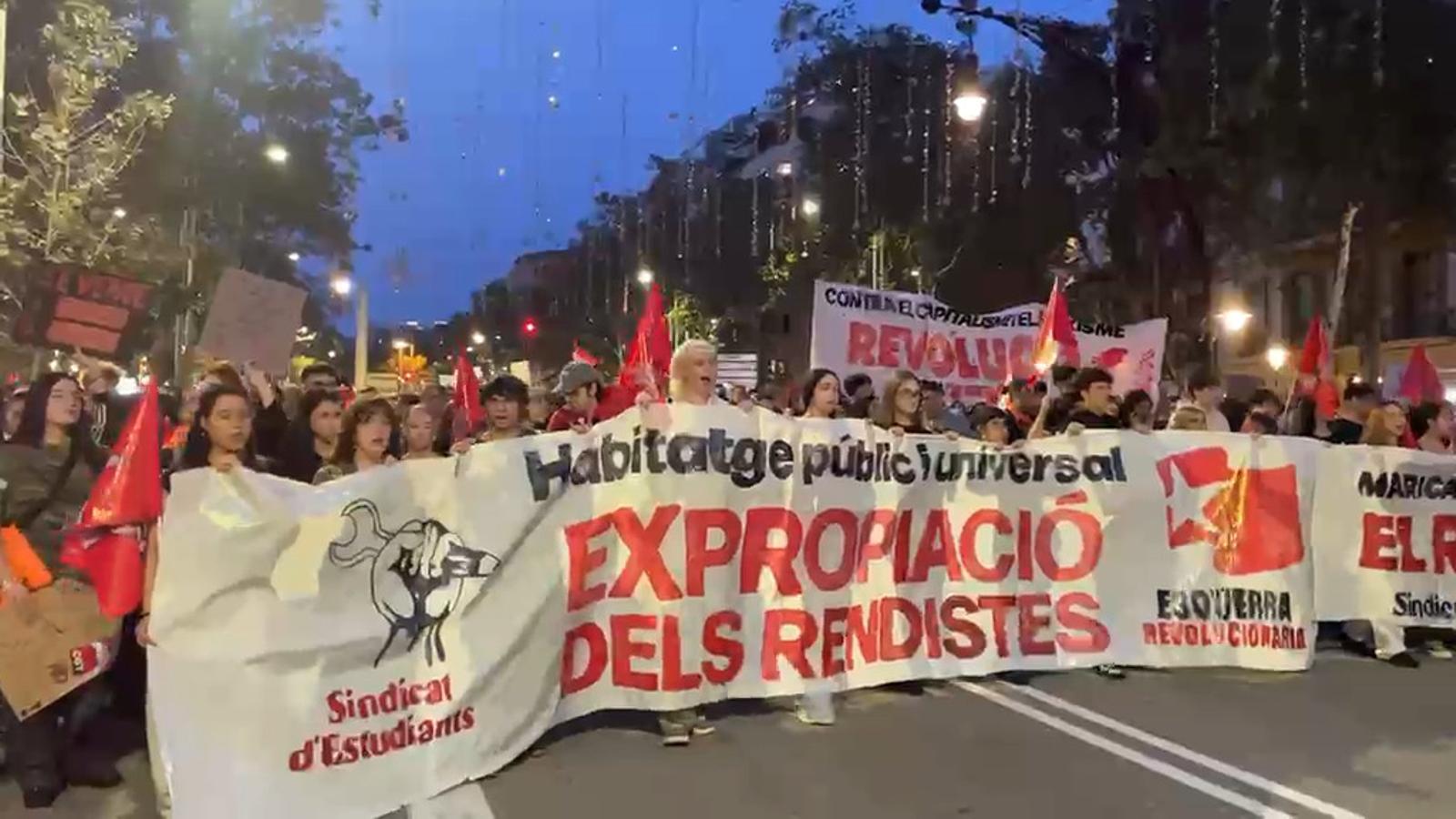
The strike day this Wednesday, November 11, with asignificant level of participation in key sectors –such as transport or heavy industry– and which has been accompanied by a considerable mobilization on the streets, especially among youth, has been focused on the lack of affordable housing, but also on wage precariousness. It is a protest that gives vent to a chronic social unrest that we can trace back to the global crash of the housing bubble more than fifteen years ago, a collapse that at the time led to the financial crisis and budget cuts in essential public sectors.
Since that moment, both in the country as a whole and especially in Catalonia, where there has been a large increase in demographic pressure, social tension has been maintained with growing segments of the population in a situation of fragility, and with a majority of young people lacking a dignified economic horizon. It is perfectly logical, therefore, that the leadership of the strike and the protest has come from the youth world, and specifically from the organization Sindicat de Llogateres, which has drawn in and achieved the involvement –and the legal and organizational coverage– of the major trade unions. Furthermore, the housing problem, being so transversal, has allowed for the inclusion of diverse citizens beyond political affiliations and generational divides.
What remains to be seen, however, is whether the social outcry on the streets will have a political translation in the short and medium term. Unfortunately, it does not seem that this will be the case. Although the government of the socialist Pedro Sánchez, in free fall due to corruption cases and the high-speed rail tragedy, has taken advantage of the so-called Maricarmen moment to decree new legal measures of a social nature and to call elections, seeking to capitalize on the protest, it is not at all clear that it can stop the rise of the far-right, currently skyrocketing in the polls.
It is a far-right that, as is happening in most Western democracies, is the one that has so far capitalized on the popular discontent of impoverished middle classes. This phenomenon is occurring within the framework of an accelerated ideological involution and in parallel to the loss of structural weight of the organizations that traditionally acted as intermediaries and channeled the demands between citizens and power –political parties, unions, and media–, overwhelmed by the new reality of social networks in the hands of large technological platforms.
We may find, therefore, that the legitimate and necessary demands for access to housing and salary improvements will soon collide with a new PP-Vox coalition government that directly deregulates the real estate market once again. In fact, the mobilization itself could have the effect of strengthening the reactionary response at the polls: the fact that yesterday, once again, the protest ended at night with riots only provides arguments for the law and order position of the right and the far-right. From the night of November 29th, we will know what type of immediate political translation the mobilization of this strike will have had in the middle of the electoral process.
