Jason: "We work so that it is incredibly unpopular to be a billionaire"
Activist

-
CAT -
CAST

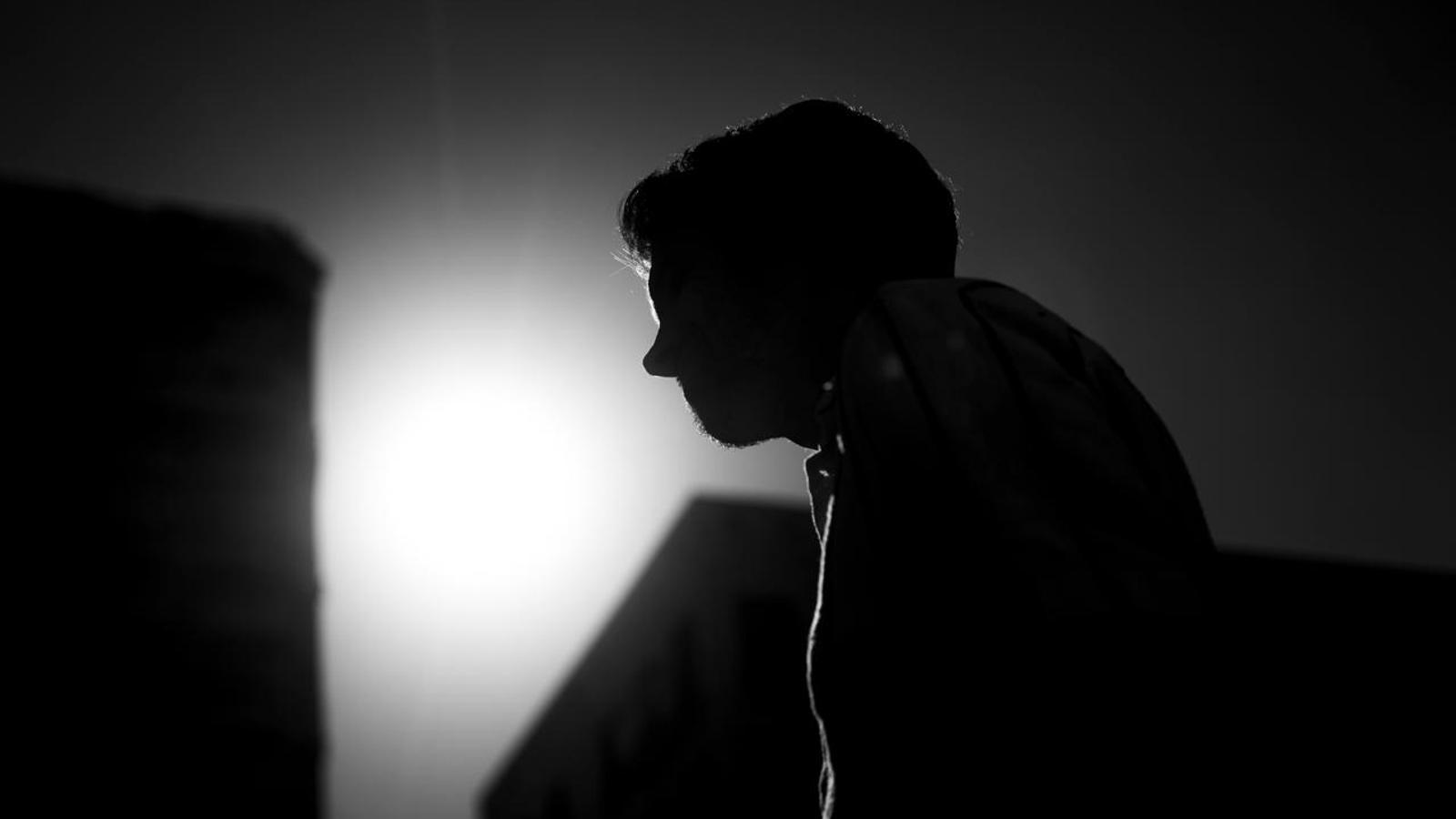
We meet in a discreet hotel amid some basic discretion measures and the requirement that we use this fake name and that he is not identified in the photos. The entities Xnet and Accent Obert have invited him to Barcelona within the framework of the new edition of the 4D conference, which bears the opportune subtitle Mock the power, generate change. And he does, as one of the members of Everyone Hates Elon, a communicative guerrilla collective that targets the half-dozen great fortunes that move the world and that has achieved millions of views for its actions. In the profile picture he sends me, for obvious reasons, it is not him but a Musk with a little mustache.
Which action are you most proud of?
— This is like choosing a favorite child... From this year, perhaps I would choose the campaign we ran against Jeff Bezos chairing the Met Gala. He wanted it to be an act in favor of his reputation, but we managed to make the conversation revolve around working conditions at Amazon, how he avoids taxes, and how his technology helps ICE or Israel.
You scattered bottles of fake urine throughout the Metropolitan Museum, in reference to the complaints of its warehouse workers, according to which the restrooms are so far away and the break is so short that they have to relieve themselves in a bottle.
— And we managed to make him have to move his wedding celebration by installing a giant banner in Venice. But I also liked the first campaign we did against Tesla: at the time it contributed to the reputation crisis that caused Tesla to lose 800 billion in stock market value in just three months. In general, the actions that please us the most are those that change a narrative or impact the fortunes of these powerful people.
Like now?
— We ran a campaign against AI smart glasses that helped popularize the term “pervert glasses”. And now there is a wave of regulation that has started in Australia and has spread throughout the world where they are beginning to ban certain uses of them.
Jason is a pseudonym. What can we know about who you are?
— We are three people, working full-time. We come from the world of activism, but NGOs were too small for us because they do not take risks: they are afraid of the consequences, the counterattacks. We think that if you create good, simple, and direct messages, they can be very persuasive.
I remember a fake ad about Tesla. The slogan was: “From 0 to 1939 in just three seconds”.
— NGOs often overcomplicate their messages and do not speak the language of the people. We started the group a couple of years ago as a result of this frustration, when Elon Musk began to interfere in British politics, gave that Nazi salute, and started to blame immigrants for the problems that, in reality, people like him have created.
How do you fight against corporations with endless resources in terms of advertising and lobbying?
— The idea is to outsmart them. If you make some posters, place them on buses and then take a photo of it with your mobile phone... that costs very little, but you can connect with many people. We are British and for us, humor is important.
Are you not afraid of annoying people like Musk?
— We were indeed a bit scared, but we carefully thought about our actions and sought legal advice. When we say that Elon is a Nazi we know that he could sue us, but he would have to go to court to justify why he is not, and that would be wonderful. I suppose his communication teams advise them to do nothing, so as not to increase media attention. That said, I hope that when I get home I don't find a legal notice and have to swallow this response!
I was thinking about the trolls and fanatics that spur him on social media.
— We have suffered this. We receive death threats, but they do not worry us: they are people letting off steam on social networks. "If I see you putting up one more ad, I'll break your legs!", they have written to me. But all this happens on Twitter, which is a world apart: those who threaten us with death only exist on the internet. When I go out into the street, I do not feel any threat at all. Well, one time in the south-east of England we were carrying out an action against Nigel Farage, in his electoral stronghold, and the atmosphere was indeed more hostile.
Do you often take buses and subways? Does the metropolitan transport authority not have you in their sights?
— Well, they have issued many statements explaining that our posters have not been authorized. But, at the same time, we received a donation from someone quite high up in the Transport hierarchy, whom I cannot name. [Smiles.]
Beyond making noise, what are you aiming for?
— It is repulsive that there are billionaires: Musk could solve world hunger hundreds of times, but every day of his life he decides not to do it. Right now, as we speak, he is deciding not to solve it. It does not seem democratic to me: if you were to ask people, everyone would surely agree that such immense wealth must be redistributed.
I don't see myself voting for it anytime soon, that...
— Of course, because these people have privileged access to politicians. Peter Thiel has said that freedom and democracy are not compatible. I think that billionaires and democracy are not compatible.
All these excessively rich people come from the technological world.
— And it shows. Let's look at AI: it should be a public service, but we leave it in the hands of five very rich guys in Silicon Valley. If it is deeply transforming our daily lives, we should be able to have a say in how it should work. Meanwhile, we are working to make being a billionaire incredibly unpopular.
Everyone has at some point dreamed of having an unimaginable fortune.
— No one should desire to be one, no one should venerate them. There is no ethical billionaire on the entire planet, so we should eradicate them through taxes. In California, they are about to vote on a 5% tax on large fortunes, but it will be a one-time payment: since they grow much more than 5% in a year, inequality will continue to increase.
One of your campaigns is based on getting people to donate a cent every time Musk tweets on X and donating the money to causes he detests.
— We have collected almost 200,000 euros and new donations arrive every month. One of the beneficiary groups is called Rainbow Migration: just by the name you can imagine how much he must hate an NGO that helps queer refugees so they can settle in the United Kingdom. We choose organizations that propose solutions to the problems he is causing. There are more than a thousand donors who keep their commitment and pay every time Musk tweets... which is very often. People like to know that they are doing something positive.
After these months of activism, what is the main lesson you have learned?
— If you want people to come to your party, make your party the best. If you build a movement, make it fun. If at your party everyone says that the world is in bad shape and that the Titanic is sinking... no one will want to come.
But if Musk came along and offered you a million pounds for you to stop bothering him, would it tempt you?
— No. Only if they offered me a billion. And only maybe!
