Wagner, the mercenary group that challenged Putin, resists disappearing
Hundreds of Russian paramilitaries run a drug empire in the Central African Republic

-
CAT -
CAST
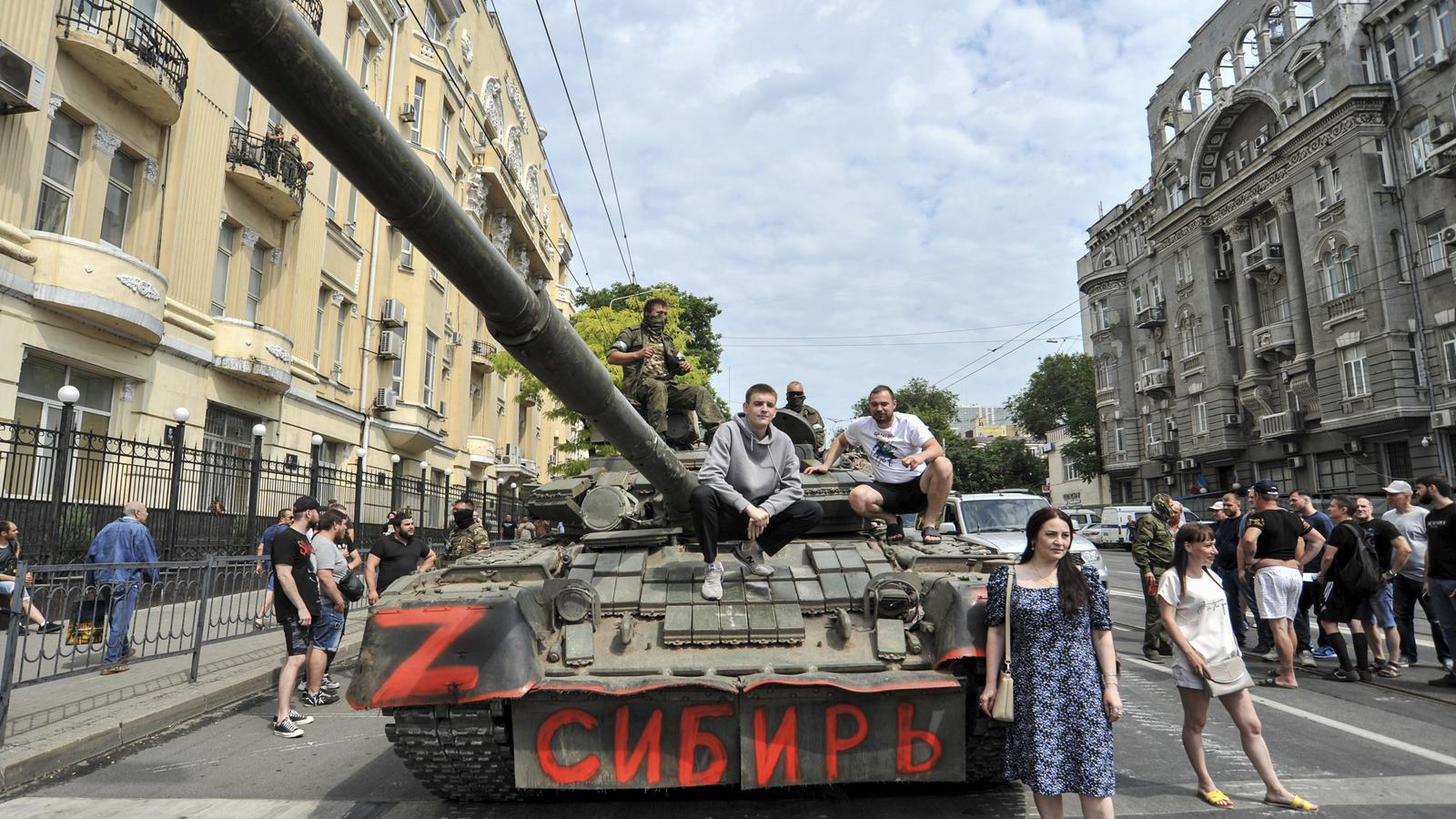
MoscowWhen Yevgeny Prigozhin, the leader of Wagner, rebelled against the then Russian Minister of Defense, Sergei Shoigu, on June 23, 2023, Vladimir Putin had already decided to disband Russia's most popular mercenary group due to the threat it posed to the regime's stability. Despite having been key in the conquest of towns like Bakhmut or Soledar, in Donetsk, the failure of the mutiny led private fighters to integrate into the regular army or return home. Some agreed to enlist in the armed forces, others sought a way to continue fighting in Ukraine while maintaining a certain autonomy, and many preferred to travel to Africa, where Wagner had become strong by defending local putschists and where it still struggles today to preserve the remnants of its empire.
The majority of veteran mercenaries consider that the option of signing a contract with the Russian government was a trap. Many of those who did so ended up dead shortly after in suicide assault operations carried out without adequate weaponry. “The comrades who got involved with the Ministry of Defense returned in coffins a month later,” a Wagner fighter recently lamented to the newspaper Meduza. In fact, it was precisely against these kinds of irrational decisions by the military leadership that Prigozhin, who died in a timely plane crash two months later, unsuccessfully revolted.
Some mercenary units became part of the National Guard, a security corps that reports directly to the Russian president, and under this umbrella, it is estimated that more than three thousand Wagner men enlisted in the Akhmat battalion, the Chechen unit fighting in Ukraine alongside the Russian army. Its head is Apti Alaudinov, the strongman of the Chechen leader, Ramzan Kadyrov. His alliance with Putin guarantees him independence in organizing his own security structure, but, ultimately, it is under the control of the Russian General Staff and does not allow former mercenaries the leeway to dare to conspire again.
The Russian Ministry of Defense has also sought to assimilate Wagner on the African continent, where it had a presence in countries such as Mali, Libya, Burkina Faso, Mozambique, Sudan, Niger, and the Central African Republic. “Wagner’s withdrawal is happening gradually and often through mergers or takeovers rather than dismantling,” Dimitri Zufferey, a researcher specializing in the Russian paramilitary group, explains to ARA, although in some territories the Kremlin has not managed to get them to comply.
In Mali, until June 2025, two years after its theoretical dissolution, Wagner was fighting against jihadist groups and Tuareg separatists before coming under the orders of the Russian government in the so-called Africa Corps. Even then, several investigations uncovered an illegal network of prisons controlled by the mercenaries and reported torture, mutilation, extrajudicial executions, and even cases of cannibalism by Russian fighters in Mali, who subsequently disseminated the atrocities on video.
Prigozhin's son
On the other hand, in the Central African Republic, around five hundred Wagner veterans, led by Prigozhin's son, Pavel Prigozhin, continue to act with impunity outside the Russian government's control. According to the Wall Street Journal, the paramilitaries control the tramadol trade in the country, an opioid that becomes a stimulant in high doses. Members of the presidential guard, pro-government militias, and insurgent groups all take it, in a spiral of consumption that has dramatically increased violence in the area.
Workers in the gold mines controlled by Wagner are also hooked, ingesting it to avoid fatigue. It is estimated that the mercenaries earn more than 150 million euros annually from the illicit exports of this metal, which allows them to finance arms purchases. Some experts fear that Russian fighters are now in a position to extend their influence to Sudan as well.
Meanwhile, in Russia, Wagner has lost all the power and resources it had, but it maintains its influence. More and more associations of veterans from the private military company are being created, organizing events in memory of their fallen comrades. The more warlike part of society respects them because they consider them heroes, capable of battlefield successes that the regular army has often failed to achieve. It is no coincidence that, despite having rebelled against the government, in a country where any spark of dissent is immediately stifled, Wagner has a memorial with fresh flowers near Red Square.
