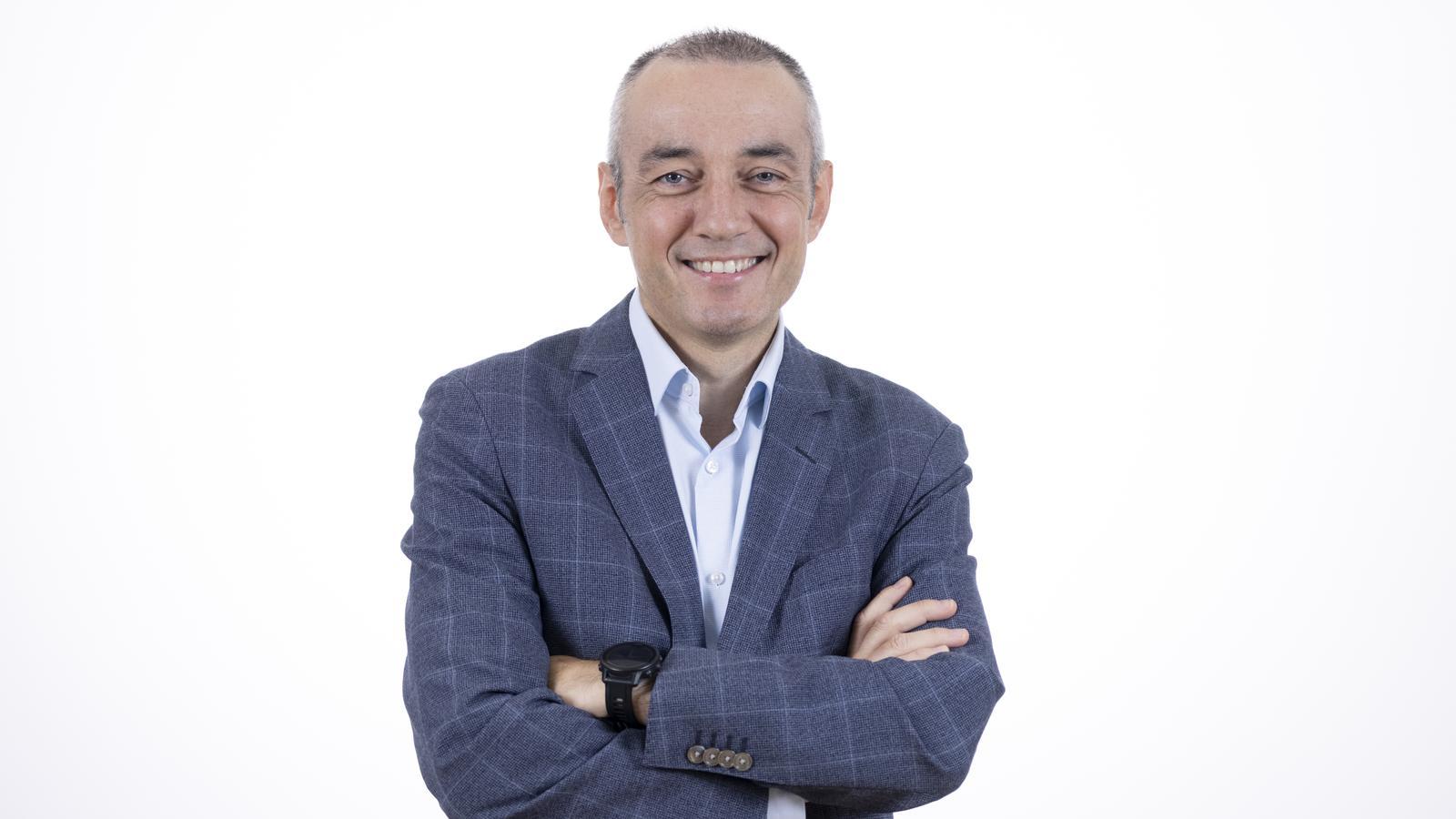
Ignasi Clariana: Industrial electrification and electric mobility still have a way to go
Energy Director of Sorigué
-
CAT -
CAST
With nearly 75 years of experience in infrastructure and services, Sorigué has expanded its activity into the energy sector, with projects in renewable energy, self-consumption, and energy efficiency. Ignasi Clariana, the group's Energy Director, analyzes the new challenges in Catalonia.
What role does the Energy area play within Sorigué?
— It is one of the youngest areas of a group with almost 75 years of history in infrastructure and services. It allows us to diversify our activity and contribute to the decarbonization of the industry. We develop, build, operate, and maintain photovoltaic parks, and we carry out industrial and residential self-consumption projects. In energy efficiency, we work with administrations and companies in the industrial, tertiary, and financial sectors. We analyze how much, when, and what they consume energy for to identify where they can save.
What does the energy service model offer and how are savings verified?
— The company can modernize its facilities and reduce the bill without advancing the investment, allowing it to dedicate resources to its core business. We study consumption, design and finance the project, execute the installation, and take care of operating and maintaining it throughout the contract. When viable, we combine efficiency and self-consumption. We verify the savings by comparing consumption with the reference levels and adjusting, if necessary, for changes in, for example, production volume.
What have Emin Energy and SunEnergy contributed?
— With Emin Energy we have strengthened our presence in the Mediterranean arc and expanded our offer with biomethane projects and the processing of energy savings certificates (CAE), which give economic value to accredited savings. With SunEnergy we offer residential and industrial self-consumption in Portugal. Their network of nearly 30 franchisees has provided us with a new way to grow and raise brand awareness through local partners.
How do low prices during sunshine hours affect investment in new parks? What role do PPAs play in this?
— Photovoltaic and wind energy have grown faster than demand. Industrial electrification and electric mobility still have room for growth. When many parks produce at the same time and consumption does not keep up, prices fall and it becomes more difficult to finance new projects. Batteries will allow moving part of the production to higher-value hours. Long-term power purchase agreements (PPAs) provide predictability to the buyer regarding cost and to the producer regarding revenue, which facilitates financing.
Where does the processing of a renewable energy park in Catalonia get stuck?
— Before public information, sufficiency reports can take months. A single point of contact would allow for their coordination while maintaining the rigor of the environmental assessment. The process leading up to the building permit has been streamlined, but a finished park may wait up to a year to be connected. From the start of construction, it would be necessary to agree with the distributor and the transmission system operator on the checks to be performed, the parties responsible, who will act as the liaisons with the developer, and the deadlines (and ensure they are met...). In the nearly five years that can pass until commissioning, market conditions may have changed completely.
What must the municipality be able to decide before the design is finalized?
— This is where we get to the heart of the matter. Every installation has an impact on the territory and must be explained with clarity, and it must be accepted on a social level, because there is a common good and an absolute urgency. In a solar park, the main concern may be visibility from inhabited areas. In a wind farm, landscape and noise may weigh more, and in a biomethane plant, odors and truck traffic. The opposition has various causes, but often narratives are created that have little to do with reality. Sometimes there is a rejection of having the installation nearby (NIMBY phenomenon), in other cases there has been a lack of political commitment at the local level, and obviously, sometimes, the project has been explained when the main decisions had already been made. The municipality must know the alternatives and be able to influence the design while there is still room to make changes. This means being able to talk, for example, about what vegetative screens can be incorporated into a solar park, the location of wind turbines, or the routes of trucks in a biomethane plant. Trust is earned when commitments are put in writing and the town council can verify compliance, but this is often impossible to achieve if the answer is no to everything. The Sectoral Territorial Plan for the implementation of renewable energies (Plater) is moving in the right direction because it can clarify which locations are priority and with which criteria they are chosen.
What would you prioritize until 2030 so that renewables make the Catalan industry more competitive?
— I would electrify the processes that can be supplied with local renewable energy at a predictable cost. Self-consumption with solar or wind installations of up to 5 MW within five kilometers can save on tolls for self-consumed energy if the requirements are met. Proximity could gain importance if prices better reflect grid congestion, a matter currently being debated in Europe. Long-term contracts provide price stability. Batteries, as I mentioned, will allow energy to be harnessed when the factory needs it, and consumption flexibility will allow processes to be concentrated during hours of higher renewable production. Therefore, electrification reduces emissions and gives more control over costs.
