The Houthis claim an attack against Riyadh and raise the military escalation with Saudi Arabia
The rebels, aligned with Iran, threaten the Saudi capital and gain ground in the Red Sea while Trump avoids a direct intervention

-
CAT -
CAST
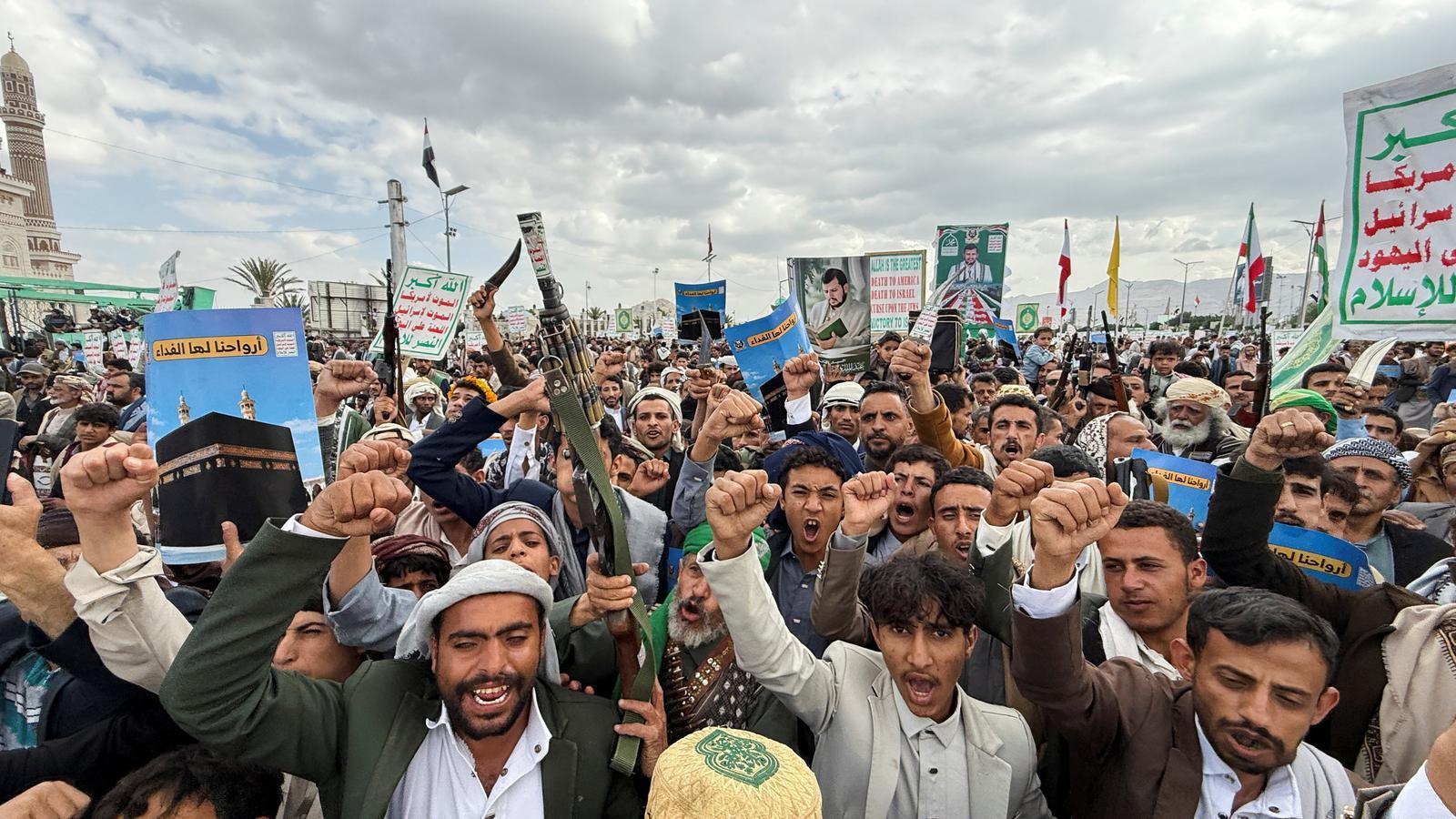
JerusalemThe Houthis of Yemen have claimed responsibility this weekend for missile and drone attacks against targets in Saudi Arabia, which reportedly include “sensitive sites” in the capital, Riyadh, and facilities of the oil company Aramco in the port of Yanbu, on the Red Sea. The episode marks a qualitative leap in the escalation because, for the first time since the start of the new phase of hostilities in July, the Houthis have brought the threat directly to the political and economic heart of the kingdom.
The coalition led by Saudi Arabia has stated that its air defenses destroyed a ballistic missile launched against the capital during the early hours of Saturday and thwarted other attack attempts against civilian infrastructure in more areas of the country such as Yanbu, Taif, Bisha, and the Farasan Islands. For their part, the Houthi military spokesperson, Yahya Saree, claimed that the group had launched “two military operations” with a large number of ballistic and cruise missiles and drones. According to Saree, the first targeted “sensitive sites” in Riyadh and the second targeted facilities of the Saudi state oil company Aramco in Yanbu, a major oil export hub for Saudi Arabia on the Red Sea.
This episode comes just three days after Saudi authorities claimed they had intercepted a Houthi drone heading towards the area of Mecca, the holiest city in Islam. The rebels, aligned with Iran, have denied it.
Washington avoids entering into a direct war with the Houthis
The attempted attack against Riyadh, one of Washington's main partners in the region, comes after Saudi Crown Prince Mohammed bin Salman reportedly asked Donald Trump to launch attacks against the Houthis, according to US sources cited by the news portal Axios. However, for the moment, Washington has reportedly ruled out direct military intervention against the rebels, but has stated that it will maintain coordination with Riyadh, especially regarding intelligence.
Trump's position is especially significant because it occurs at a time when the Houthi offensive has gained ground on the Red Sea coast and the group has managed to seize control of the Bab el-Mandeb Strait, one of the world's main maritime routes. In recent weeks, the rebels have occupied the port city of Mokha and several strategic island positions, giving them an increasing capacity to condition maritime traffic between the Red Sea and the Gulf of Aden. For Saudi Arabia, control of this area has added importance because Bab el-Mandeb is one of the main routes for transporting its oil to international markets, especially since the war between the United States and Iran has restricted traffic through the Strait of Hormuz, another of the great passages for global energy trade.
In recent days, Trump has explained that the Houthis, designated by the United States as a foreign terrorist organization and with whom Washington has maintained a ceasefire since 2025, have contacted the US administration to convey that they do not want a confrontation with the United States. The rebels have reportedly made it clear that they will not attack American ships. In this scenario, the United States remains focused on the war with Iran and is avoiding opening a new front against the Houthis, especially considering that a large part of its military capabilities are already committed in the region.
Washington's caution, however, has led the Saudi kingdom to seek other ways to reinforce its defense. According to regional sources cited by the Associated Press, Saudi Arabia has requested support from France, the United Kingdom, Pakistan, and Egypt to reinforce air defenses in the face of a shortage of interceptor missiles as the Houthi attacks continue.
The current escalation between the rebels and Saudi Arabia has its roots in the Yemeni civil war. Since 2015, the Saudi kingdom has led a military campaign against the Houthis with the aim of defeating the movement, but it has not managed to expel them from the territories they control, which include the capital, Sanaa, and a large part of the western coast, where a significant portion of the country's population is concentrated. After years of fighting and one of the world's worst humanitarian crises, the front had remained relatively stabilized since 2022, albeit without a formal peace agreement. The last few months, however, have broken this calm and have returned the Yemeni conflict to the center of regional tensions.
