Radiography of the global disorder
The persistence of wars, climate change, the health crisis, and migratory flows mark the international situation
-
CAT -
CAST
BarcelonaTwenty-five years after 9/11, the international order born out of World War II seems to be in its terminal phase. The symptoms are clearly visible: wars that drag on, borders as spaces of conflict, a new arms race, protectionism, trade wars, disinformation, electoral interference, a crisis of liberal democracies, and a growing inability of international institutions to impose rules.

If you want to investigate the graph in more detail, open the high-resolution version in another tabFew institutions better embody these crises than the United Nations. When the new General Assembly kicks off this September, leaders from around the world will once again gather at a time when the organization is unable to impose even minimal rules. The Security Council is often paralyzed by the veto power of its permanent members, while the General Assembly's resolutions can express an international majority, even though they have no capacity to enforce them. The contradiction summarizes the problem: the United Nations has not ceased to be necessary, but the key actors in the international system that created it seem to no longer believe in it.
Economist Yanis Varoufakis places one of the turning points in the 2008 financial crisis. The system was artificially maintained with vast amounts of public money from central banks, while globalization lost cohesion. Now, he argues, we have plunged headlong into "techno-feudalism." Power has shifted to a few tech corporations that control the new "cloud capital": platforms, data, algorithms, and digital infrastructure. They no longer derive profits solely from the market, but also a kind of feudal rent for controlling access to it. The historical paradox is unsettling. Capitalism, which was born to overcome feudal structures, might be regaining some of its traits.
And here arises an uncomfortable question, especially for Europe: did we really not see this disorder, or simply not care about it as long as it did not threaten us directly? For years, wars, inequalities, authoritarianisms, and migratory crises seemed distant or manageable problems. Now, when they affect security, energy, climate, the economy, democracy, and our way of life, global disorder is no longer an abstraction. It is the reality we cannot escape.
The war between Ukraine and Russia enters a naval phase

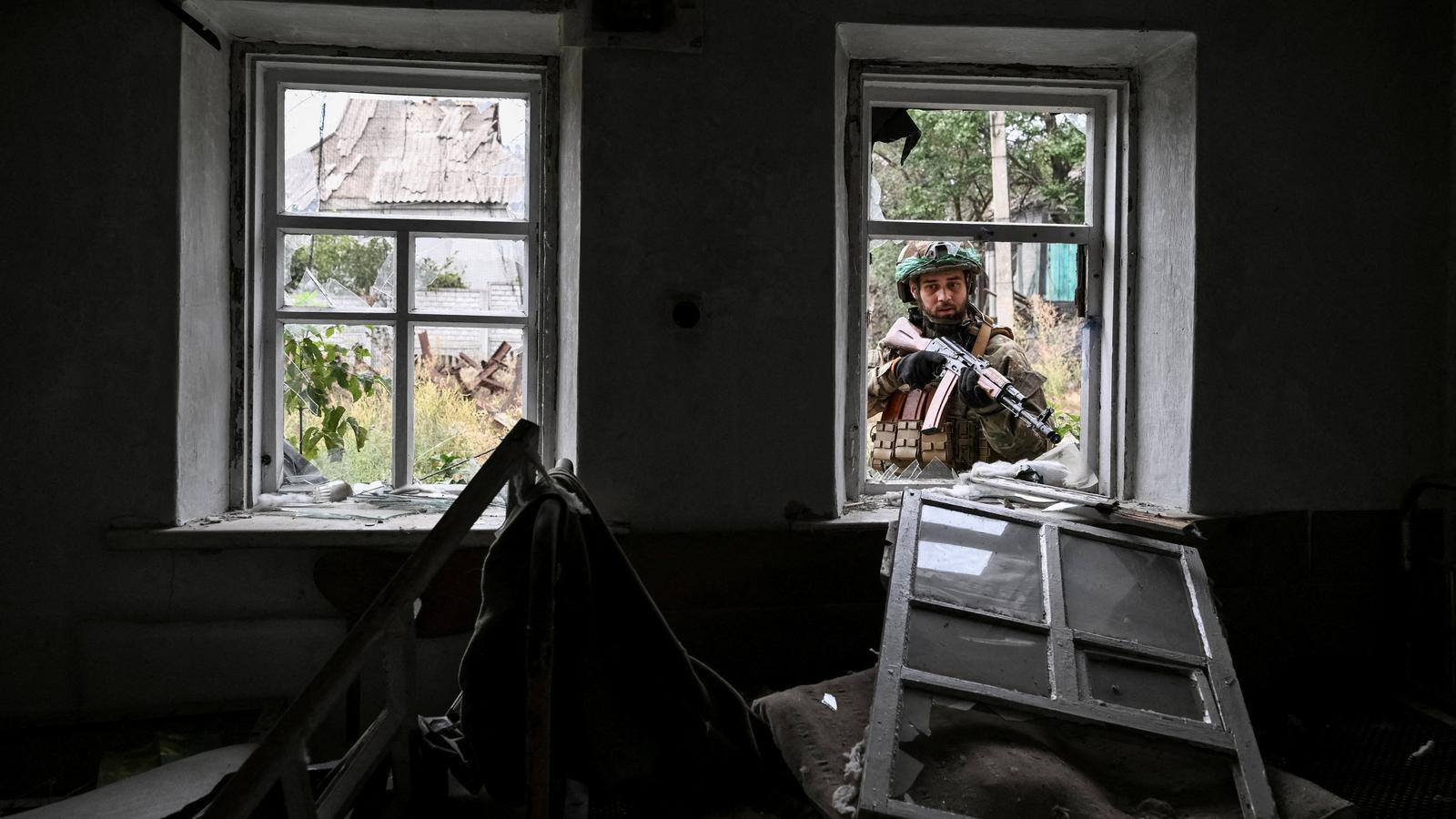
The three-way talks between Washington, Kyiv, and Moscow have been stalled since the start of the United States and Israel's war against Iran. Far from the conflict entering a phase of latency, this summer Ukraine and Russia have redoubled their attacks, with the Black Sea as the epicenter of much of the fighting. Moscow is trying to weaken Kyiv by boycotting its exports with attacks on major commercial ports, and Zelensky is trying to do as much damage as possible to the Russian economy by bombing the logistics centers of Wildberries, Russia's main e-commerce company, and oil refineries. Drones are the protagonists of long-range attacks that leave record monthly figures of civilian deaths. Meanwhile, Trump, who sees that the offensive against Tehran is depleting US armament reserves, is not making any move to increase shipments of Patriot missiles, which Zelensky repeatedly demands. Europe, however, provides Kyiv with the necessary information for it to produce its own missiles. A move that will only yield results in the long term.
The US is getting bogged down in the war in Iran
Six months after the start of the war with Iran, Donald Trump finds himself trapped in a conflict that was supposed to be brief and offers no favorable outcome for US interests. According to information gathered last week by The Wall Street Journal, American intelligence had already warned that an offensive against Tehran would not cause the collapse of the regime, but would strengthen the most radical sectors and increase regional risks. The failure of the military approach has given way to a strategy of economic pressure with uncertain results, especially due to Iran's dependence on the Chinese market. Despite the damage suffered, Iran has turned its survival into a strategic victory, while the war accelerates regional multipolarity, erodes US influence, and favors new alliances, such as the defense pact between Saudi Arabia, Turkey, and Pakistan, which points to a growing desire for autonomy from Washington.
Three years of genocide in Gaza and elections in Israel
In October, ethe genocide perpetrated by Israel in the Gaza Strip will be three years old. The ceasefire declared by Donald Trump has not led to the end of bombings, nor the withdrawal of Israeli troops, which continue to occupy 70% of the Palestinian enclave. Nor has sufficient humanitarian aid entered, and not even the international press has had access. Hamas has formally ceded power to a Palestinian body that the United States accepts, but which Israel vetoes, and has said that it will not only hand over its weapons to a Palestinian state that increasingly seems chimerical. In the West Bank, the expansion of Israeli settlements has accelerated –illegal under international law– and the attacks by settlers against the Palestinian population with the complicity of the army. And with this scenario, the Israeli prime minister, Benjamin Netanyahu, a true political animal, will face the polls on October 27, three years after the Palestinian attacks that represented the worst security failure in Israel's history.
The return of conflict in Ethiopia and Tigray
The war in the Horn of Africa is one of the bloodiest and most forgotten in the world. The conflict between the Ethiopian government and the Tigray militias has recently flared up again due to the fragility of the peace agreements that, in principle, were supposed to end it in 2022. Since then, it has worsened due to the internal political fracture between the Tigrayan factions. With the aim of dominating the Tigray region, both the army and the militias have stoked ethnic nationalism to the point of submerging the country in a spiral of violence in which episodes of ethnic cleansing and sexual violence have occurred. And there has been another twist: Eritrea – a historical enemy of Tigray – has intervened in favor of the militias to weaken its neighbor, Ethiopia, thus joining the tacit interests of Egypt. It is estimated that the fighting, bombings, and, above all, hunger have claimed more than 600,000 lives and have forced between 2 and 3 million people to leave their homes.
Immigrants, a geopolitical weapon
The combination of armed conflicts, famine, extreme poverty, and desertification is dismantling traditional mobility routes in the Sahel and pushing more and more people from Central and West Africa towards the Maghreb and the Mediterranean. Extreme phenomena such as droughts and floods are becoming increasingly frequent. Thepolitical instability and the advance of armed groups proliferates in countries like Mali, Burkina Faso, and Niger, destroying the population's livelihoods and forcing millions of people to abandon their homes. According to UN data, 24 million people need urgent humanitarian aid in the Sahel at a time when state investment in international cooperation has fallen to historic lows.
Europe's response to migratory pressure has consisted of strengthening borders and externalizing migration control to transit countries. Hate speech and fear fueled by Western leaders themselves have provided mafias and these governments with an incentive to instrumentalize migratory flows as a geopolitical weapon. We have seen this in Ceuta and also in Tunisia, Libya, and Turkey. Autocratic states take advantage of the desperation of millions of people as a bargaining chipand to obtain funds, diplomatic concessions or international legitimacy from the European Union.
Ebola and the fracture in global health
Africa concentrates some of the most serious focuses of global health crises. In the Democratic Republic of Congo, the epidemic of Ebola caused by the Bundibugyo virus already exceeds 5,700 cases and 2,700 deaths, according to data from the Congolese government collected by Reuters this week. It is the second deadliest Ebola outbreak in history and continues to expand. The World Health Organization has warned that $30 million is immediately needed to sustain the response, while more than 160 health professionals have contracted the disease and 43 have died. The case illustrates the consequences of lack of funding and research. The Bundibugyo strain has no approved specific vaccine or treatment. And the lack of resources does not only affect Ebola: in Sudan, war has left almost 40% of health centers out of service, while cholera, malaria, dengue, and measles are spreading in a devastated health system. By 2026, 33.7 million Sudanese will need humanitarian aid, also according to WHO forecasts.
The African situation is part of a much broader crisis. The WHO has 36 emergencies active worldwide and estimates that 239 million people will need humanitarian assistance this year. To respond, it requests nearly $1 billion. When resources are lacking, epidemiological surveillance, vaccination, and laboratories deteriorate, and the risk of outbreaks crossing borders increases. There are also not enough resources for research. In 2024, $4.31 billion was invested in research and development for neglected diseases, but more than 65% was concentrated on HIV, tuberculosis, and malaria. Some, like yaws – a chronic and tropical infectious disease that primarily affects the skin, bones, and cartilage of children – received not a single dollar. Less funding today means less prevention, less research, and less capacity to face tomorrow's health crisis. The world does not seem to have learned the lessons of the COVID pandemic.
Ecological crises push the planet to the limit
The collapse of a glacier in the Himalayas is behind the landslide that has killed hundreds of people in minutes this week in Nepal. While all attention and efforts are focused on war and military spending, global warming advances unchecked, leaving a trail of unprecedented ecological and human catastrophes everywhere. Oceans broke historic temperature records this July, and drought has parched Europe this August. The cyclone season in Southeast Asia, exacerbated by El Niño, has left hundreds dead and tens of thousands displaced in Taiwan, Japan, Thailand, Vietnam, Myanmar, and the Philippines. El Niño has also worsened the extreme drought plaguing the Amazon and threatens to create conditions similar to those of 2024, when a record number of fires were recorded. In the Sahel, desertification is advancing at an alarming rate, reducing harvests, increasing the number of climate refugees, and generating conflicts over water in a region of weak states and extreme poverty that is fertile ground for armed violence.
Meanwhile, world governments, starting with the United States, but also the EU, are backing away from climate commitments to prioritize the arms industry, one of the biggest contributors to climate change, and are still living at the mercy of oil prices.
