Russia and Ukraine redouble attacks after six months without talks
Without Trump's active mediation, negotiations to end the war have been on hold for half a year

-
CAT -
CAST
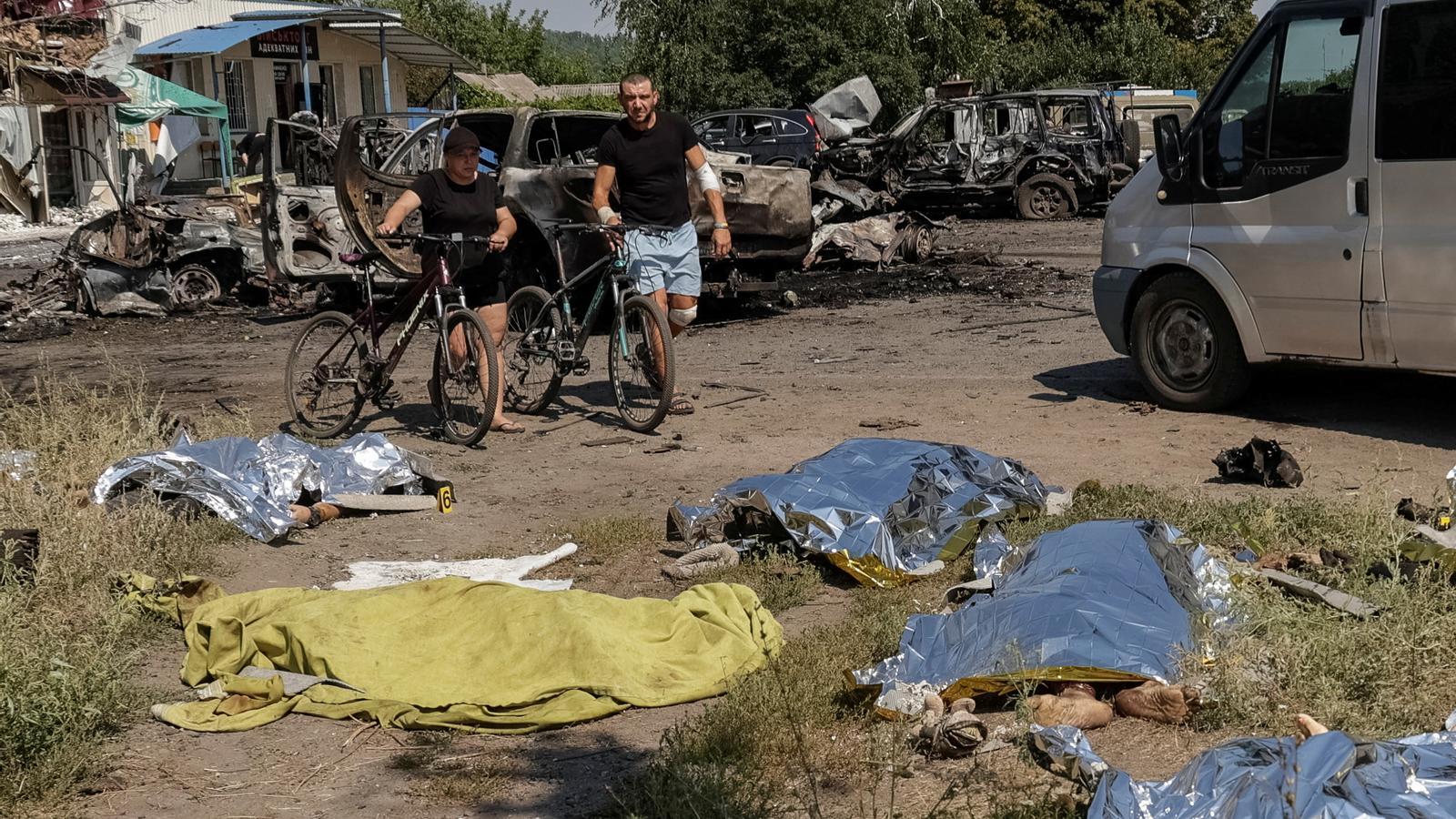
MoscowWhen the third round of trilateral talks between Russia, Ukraine, and the United States concluded on February 18, everyone took for granted that there would be a fourth in a few days. With the same conviction, no one expected those negotiations to lead to a short-term ceasefire. Although they had not been unfruitful, especially in the military aspect, political issues remained entrenched. What was unthinkable then was that, half a year later, there would have been no further talks to address the end of the conflict, that the peace process would be frozen, that the positions of both sides would have only moved further apart, and that the war would have entered its most destructive phase. Just this morning, ten people were killed and seventeen more were injured in a Russian attack in the Kharkiv region. This is because both Kyiv and Moscow believe they have more to gain on the battlefield than at the negotiating table.
The American campaign against Iran overshadowed the war in Ukraine. Vladimir Putin celebrated that Washington was dedicating part of its arsenal to another front – especially the Patriot defensive missiles that Volodymyr Zelensky needs so much – and that the pause in diplomacy left him free rein to continue attacks outside the international spotlight. That circumstance brought back to the table a reality that has been dragging on since the Republican returned to the White House: without the push from the United States, there are no peace negotiations in Ukraine.
Over the last six months, the American president has only seriously engaged in dialogue between the parties on one occasion. It was on the eve of May 9, when he asked Zelensky to refrain from threatening Red Square during Putin's military parade. refrain from threatening Red Square during Putin's military parade. The only success of that lightning truce was an exchange of a thousand prisoners per side. But one swallow does not make a summer, quite the opposite, and with the arrival of good weather, the door opened to one of the bloodiest periods of the conflict.
More civilian casualties
The increased long-range capabilities of both armies have made attacks with civilian casualties routine, breaking records each month. While Russia exploits the scarcity of Patriot missiles to punish Ukrainian cities, Kyiv is trying to overwhelm Moscow's nearly impregnable defenses with limited success. On two of the last three nights, it has surpassed the record for drones against the capital. This morning, it launched 627 without causing deaths; only three injuries. The aircraft hit a warehouse of Wildberries, Russia's largest e-commerce company, and left about 10,000 people without power in the region.
The recourse to these long-range bombings is a direct consequence of the interruption of negotiations and the stalemate on the front line. Ukraine has managed to slow down the Russian offensive on most fronts, but has not been able to reverse the trend of the conflict, despite having recovered some territories. Russia has concentrated a large part of its forces in Donetsk and has continued to advance towards the last bastions of Donbas. Despite the difficulties in progressing, Putin has become even more convinced of his possibilities on the battlefield and seems to have buried expectations of achieving his objectives through peaceful means.
Putin renounces nothing
The Russian president's latest statements show that his conditions have not changed at any time, but recently he has expressed them with the utmost forcefulness and has even threatened further conquests. At the end of June, Putin reiterated that his purpose is the control of Luhansk, Donetsk, Kherson, and Zaporizhzhia, and spoke of the need to establish a security zone along the border, meaning to occupy more parts of Ukraine north of the regions he annexed to the Constitution.
The prospect of a ceasefire also does not seem imminent. The Kremlin rejected a supposed Ukrainian offer to limit attacks to the four disputed regions, while in recent days it has dismissed a truce in the Black Sea. The end of the fighting remains the number one condition for Zelensky, but Putin insists that, before any substantive discussion and proposal of a truce, Kyiv must withdraw its troops from Donbas.
Thus, it is not only the mediation of the United States that seems to have limitations, but also the devised formulas. Zelensky assured last Tuesday that he had handed over new proposals to Washington's emissaries to end the war with the intention of overcoming this impasse. The White House envoys, Steve Witkoff and Jared Kushner, have been saying for weeks that they are preparing to visit Kyiv and Moscow, but, when it comes down to it, nothing is moving. Meanwhile, Putin is in no hurry to reactivate diplomacy, convinced that if Trump remains bogged down on the domestic and foreign front, no one will be able to stop him.
