Six months of war: Trump does not find a way out of the Iranian labyrinth
The sanctions announced this week will have no effect if they do not touch Chinese interests

-
CAT -
CAST
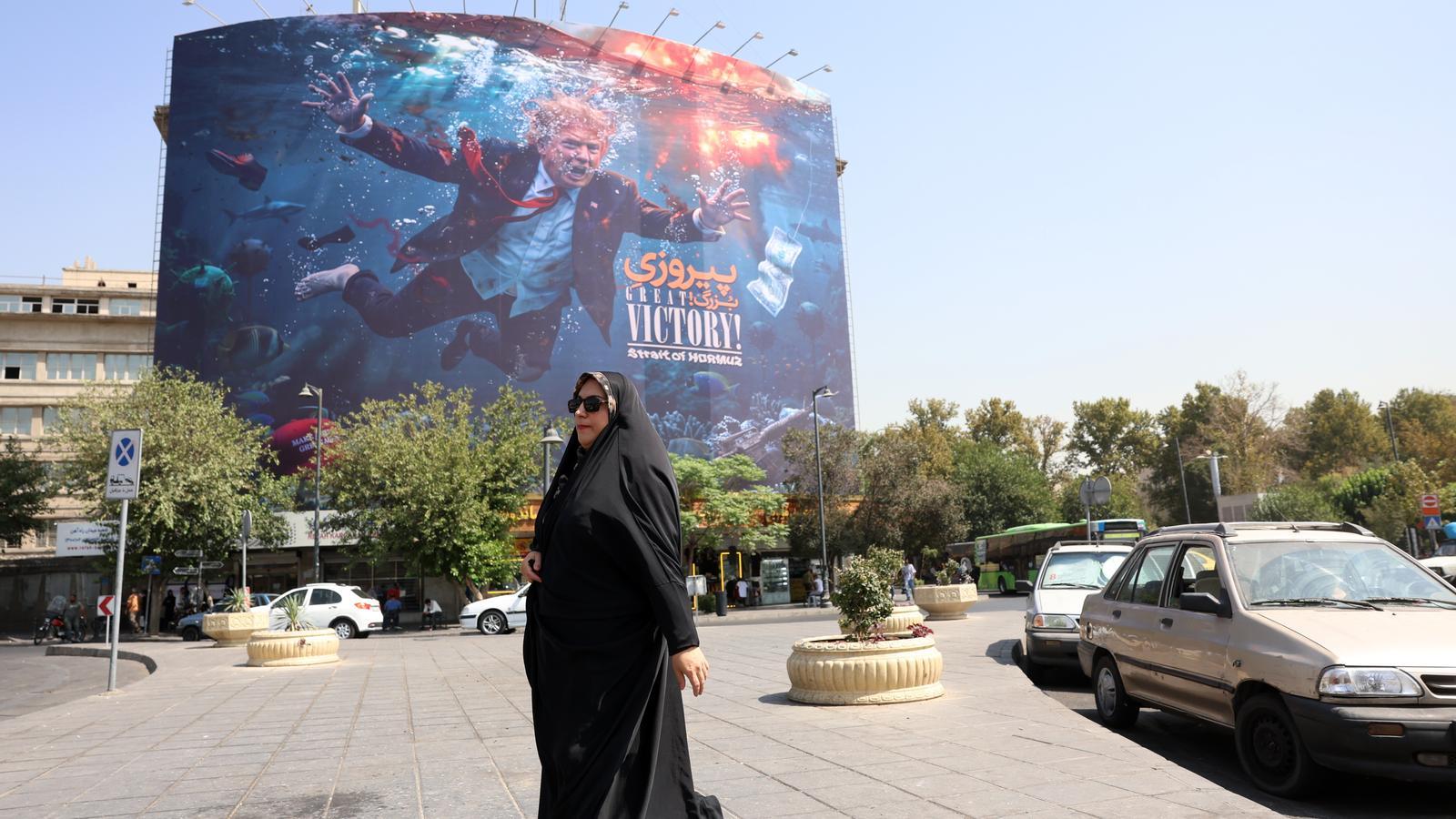
LondonDonald Trump continues trapped in the Iran labyrinth, a war with no exit that was supposed to last, at most, six weeks, and which has already been going on for six months. An excess of confidence in the whispered words of the Israeli Prime Minister, Benjamin Netanyahu, led the US president to disregard his advisors' warnings. The conflict has no end in sight. And above all, it has no good outcome for the interests of the United States, even though the president has decided to virtually annex the strait, as can be seen in one of his latest communications on Truth Social. Under the title "Territories of the United States", on Friday morning he tweeted that Hormuz is now another of Washington's domains.

The reality, however, is quite different. According to information published Monday by TheWall Street Journal (WSJ), the then national intelligence director, Tulsi Gabbard, warned the Republican against riding alongside Netanyahu in an uncertain venture. Ignoring her, Trump launched the "Epic Fury" operation on February 28th. The result is a disaster in humanitarian, economic, military, and political terms.
All the factors that advised against the action have come to pass, according to Gabbard's assessment as reported by the WSJ. The advisor had warned that an operation to eliminate the supreme leader of Iran, Ali Khamenei, would not cause the regime's collapse, but rather would strengthen the more radical sectors of the Revolutionary Guard and could accelerate the nuclear program. And she also warned of the evident danger in the Strait of Hormuz and the impact that the interruption of maritime traffic in the Gulf would have on energy markets.
In June, a 60-day truce was agreed, but negotiations failed on August 17th. Now, Washington has opted for the "Economic pariah" operation, focused on sanctions, maritime control, and selective prohibitions to asphyxiate the Iranian economy without resuming, for now, large-scale bombings. It is the more or less explicit acknowledgment of military failure. But the success of the economic strangulation of the Islamic Republic is equally uncertain, even more so if China's interests are not touched.
Tehran is content to survive
Despite everything; despite Trump's victorious proclamations, and his threats, the theocratic regime of Iran has achieved a kind of victory simply by surviving. Half a year later, the conflict has ceased to be a conventional military campaign and has become a war of attrition with regional and global consequences that will be projected for years or decades. Tehran, like a good judoka, has transformed its weakness into an element of strength and pressure that influences international markets and limits its antagonist's escalation capacity.

Analysts at the Atlantic Council, a Republican-leaning think tank in Washington, disagree on the extent to which the strategy – if there is one – is working. But they agree on a fundamental point: Iran has not capitulated. Andrew L. Peek and Jonathan Panikoff warned last week that the regime, forged in the experience of the Iran-Iraq war, remains willing to resist and that "time is not on its side," but it is also not proving sufficient to force it to surrender.
The aforementioned economic offensive by the White House confirms the paradox. Washington aims to cut off the commercial and financial channels that still keep the Iranian economy alive. But Daniel Fried, a former US Undersecretary of State, believes that the initial measures have been more of a "warning shot" than a decisive blow. To cause truly paralyzing damage, he says, the US "would have to act against major Chinese companies and banks," a move that would carry considerable risks for the global economy.
A view also shared in an email with ARA by Inderjeet Parmar, professor of international politics at City St George's, University of London: "China buys a very significant portion of Iranian oil and has already warned that it will respond if Chinese companies are subject to sanctions. Applying them fully against Beijing could cause a global economic crisis of enormous proportions, so Washington has limited room for action."
With Xi Jinping's visit to the United States scheduled for September 24, as a return for Trump's visit to Beijing in May, the White House's economic pressure on Tehran seems little more than another propaganda move. Otherwise, squeezing Chinese interests could trigger reprisals from Beijing and a new trade war, just as Washington and Beijing are trying to avoid an escalation of their own economic conflicts.
From a perspective closer to the Democratic Party, the diagnosis is even more serious for Washington. The Center for American Progress, one of the main progressive think tanks in the US capital, argues that Trump cannot easily exit the war or achieve victory. Allison McManus summarizes it forcefully: "Iran holds the upper hand and has used it to inflict maximum possible pain on the United States." The diagnosis does not mean that Iran has won militarily – its military apparatus has been deeply hit – but rather that American military superiority has not translated into the political results it was pursuing.
The difference between military victory and strategic victory is probably the best way to understand the six months of war. Washington and Tel Aviv may have destroyed a large part of Iran's conventional capabilities, but they have not managed to prevent Tehran from conditioning the price and transit of energy, nor have they forced the regime to accept American conditions.
Regional Reaction
The regional reaction has been marked by prudence and calculation. Gulf countries are trying to avoid direct involvement that would make them Iranian targets. At the same time, Washington needs them to cooperate with its economic strategy. Saudi Arabia, which is betting on de-escalation with Tehran, no longer has the same willingness as in the past to lead a policy of isolating Iran. Therefore, without much greater cooperation from the Gulf countries and, above all, from China, the maximum economic pressure strategy will hardly be able to succeed.
In parallel, alliances have been rebalanced. While the US has not stopped being the main external military power in the region, in the Iranian imbroglio they have lost credibility as the sole and automatic guarantor of Gulf security. The war has shown that depending exclusively on the American umbrella carries risks for Arab countries.
This explains why Riyadh has promoted the mutual defense pact with Pakistan and Turkey and why other states are seeking their own ways to reposition themselves on the region's chessboard. A chessboard that has become much more multipolar, with Oman trying to maintain a mediation path with Iran and Pakistan playing two games: acting as a powerful military player alongside Riyadh and Ankara, but also boasting as a diplomatic power.
Finally, American bases and forces in the Gulf have been exposed to Iranian attacks, and Washington is even reconsidering its military posture in the region. These facilities, especially the large bases, are very vulnerable. "We will see a reorientation of the American military presence outside the Persian Gulf," assured Hal Brands, a researcher at Johns Hopkins University. "The weight of bases within the range of short-range missiles and drones will be reduced," he commented last weekend in the Financial Times.
