Kallas warns: Europe “is falling into the trap” of Russia
The head of European diplomacy insists that she is “prepared” to lead the negotiations with the Kremlin

-
CAT -
CAST
Special envoy to DublinThe terms of the discussion regarding peace in Ukraine have changed. This is the warning that Volodymyr Zelenskyy issued to the rest of the European leadersgathered in Dublin this Thursday and Friday. If the issue before was security guarantees for Kyiv, now Vladimir Putin is using peace talks to redraw the map of security on the continent and revive his aspirations for Eastern Europe.
For this reason, the head of European diplomacy, Kaja Kallas, warned this Friday that Europe is "falling into the trap" that Russia has set for them. In her view, the Kremlin's intention is to "distract from the fact that there is no ceasefire" in order to legitimize "its aspirations." Before the journalists who asked her about the red lines regarding the new security architecture demanded by Moscow, Kallas insisted that we are facing a "victim" and an "aggressor" and that the aggressor, that is, Russia, "has no security concerns; no one has ever attacked them, it is they who have attacked others." "Let's stay focused, please," she claimed.
The community representative has laid out what the European strategy should be in these circumstances. Moscow, she said, is putting its maximum demands on the table: in addition to vetoing Ukraine's entry into NATO, it is now asking the Alliance to withdraw military presence from the countries that joined after 1997, that is, the countries of Eastern Europe. Thus, she considers that Europe must also start negotiating from an equivalent position and must show firmness: "If they start from maximums, we must also start from maximums," she argued.
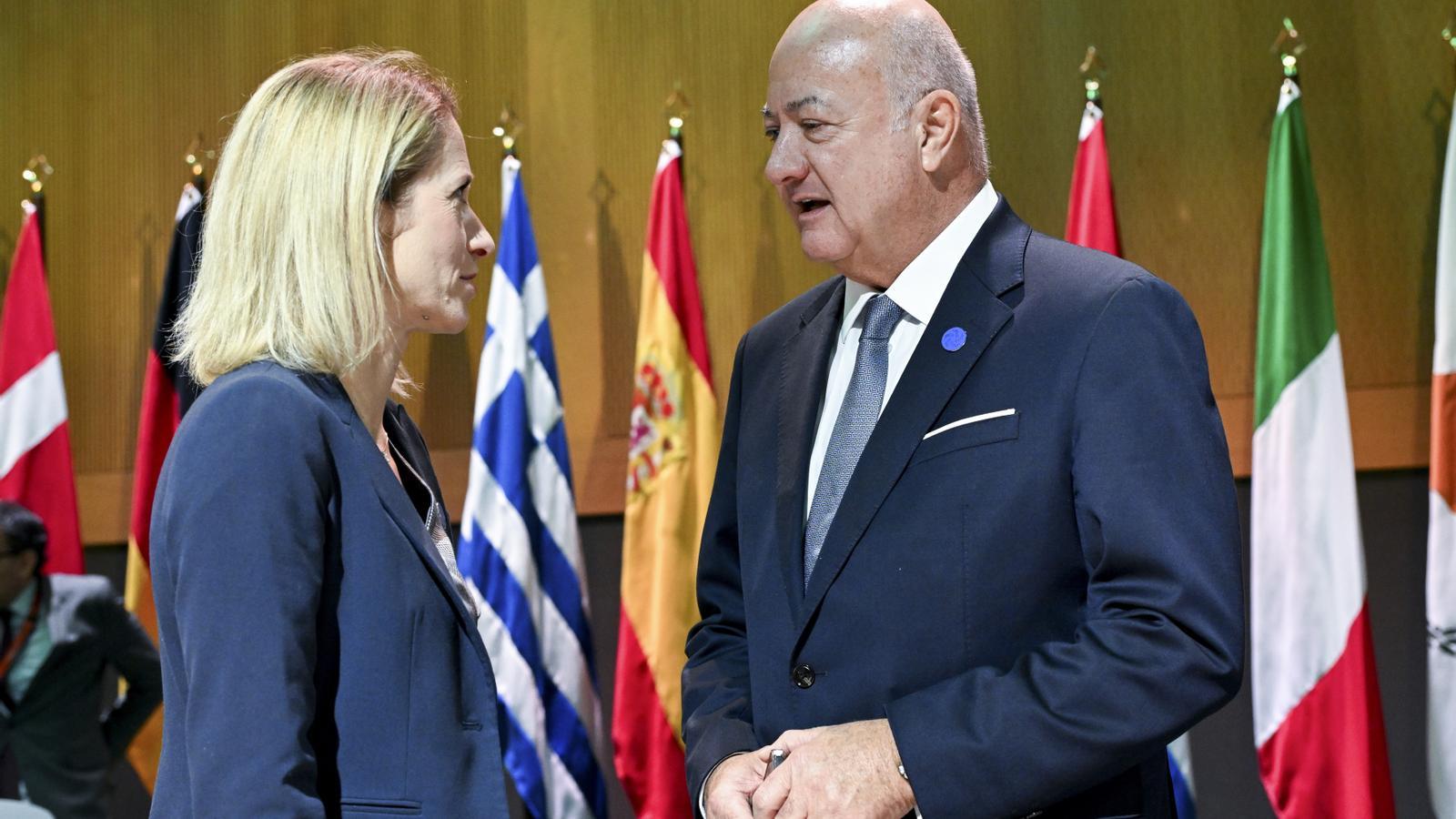
The European leaders met this Friday in the Irish capital – with the absence of Pedro Sánchez, who was absent due to the electoral campaign – to address who should represent them in these talks. However, until now, they have been unable to agree on a name. The Estonian leader has claimed, for the second consecutive day, the role of negotiator with the Kremlin, for which she says she is "prepared." "All member states agreed that it is I who represent Europe in foreign and security policy," she insisted.
In the face of critics who consider that her very tough profile on Russia could derail the process, she has acknowledged that the Russians “do not want her,” because “they do not want anyone strong at the negotiating table.” Likewise, she recalled that Europe has no voice or vote in the election of Russian representatives, so Moscow should not have any in the European ones.
Europe's place at the table
For now, however, Europe's place at the negotiating table is not entirely secured. Kallas has welcomed the fact that White House envoys, Jared Kushner and Steve Witkoff, have tried to convince the Russian delegation to accept that Europeans should sit at the table. In the same vein, the President of the European Commission, Ursula von der Leyen, has insisted that “it is evident” that Europe must be involved because it “must protect” European interests, but also Ukrainian ones.
However, Russia is delaying the decision as much as it can and is now conditioning the dialogue with the European Union on the attitude of the Twenty-seven. “When we know what their true intentions are and their willingness to drive the peace process, we will be able to make a decision,” asserted Kremlin spokesman, Dmitri Peskov.
The fear held by European leaders is that the Kremlin may end up linking European presence at the table to a debate that until now was taboo regarding changes to the continent's security architecture. This concern stems from the latest statements by Vladimir Putin, who has shown himself willing to negotiate peace with the Europeans only if the agreement serves to halt or roll back the expansion of NATO and the EU to the east.
