"Nothing will be decided without Spain": Albares attacks the negotiation format regarding Ukraine
The EU will approve new sanctions on Russia,

-
CAT -
CAST
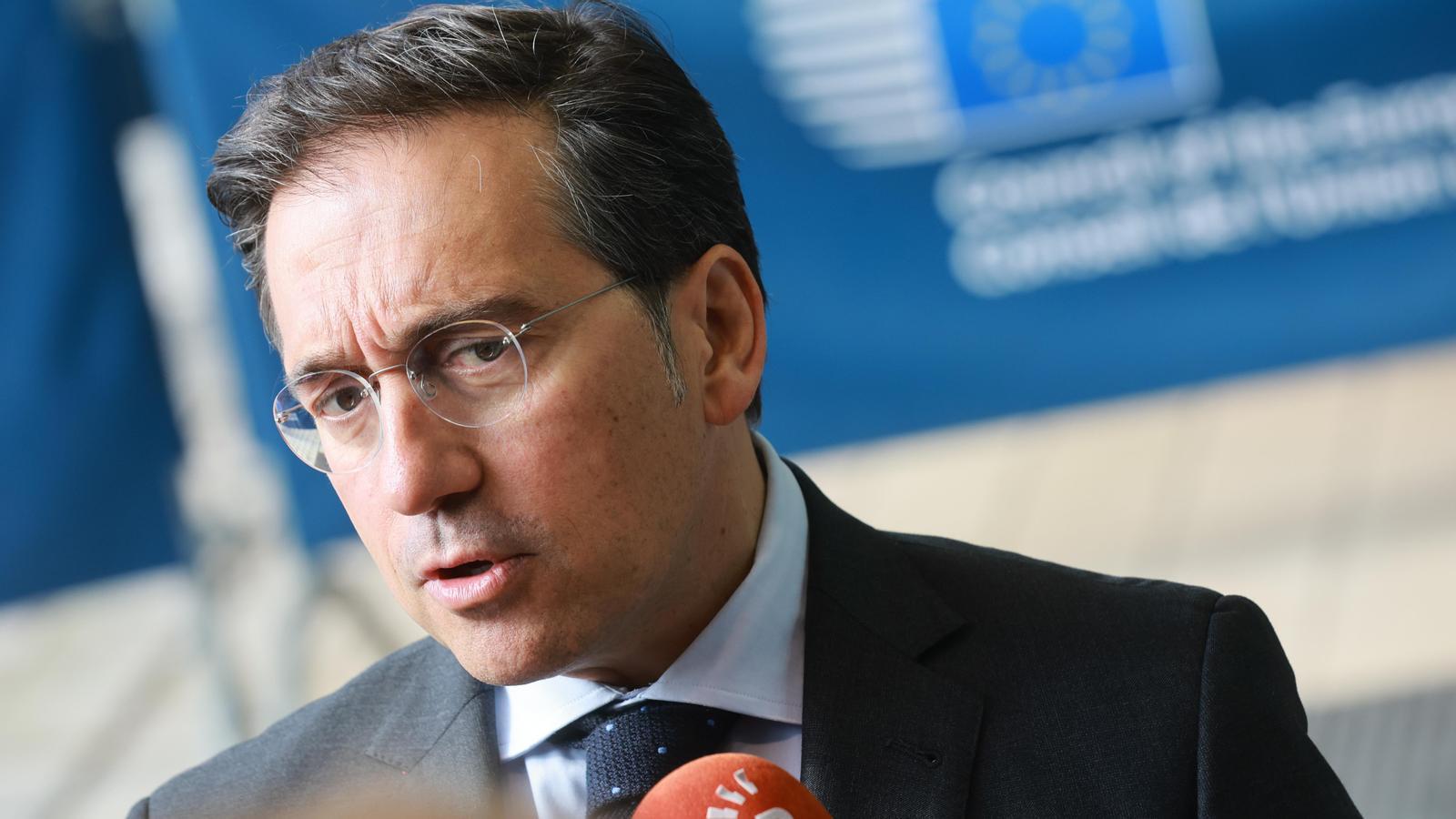
BrusselsThe Spanish Foreign Minister, José Manuel Albares, criticized this Friday the format that was agreed upon last week in Dublin —at a summit where Pedro Sánchez was absent— to negotiate peace in Ukraine with Russia. The pact included the heads of state of Germany, France, the United Kingdom, Italy, and Poland, and representatives of the European institutions; but it left Spain out.
“There are too many actors in this group; there could be a cacophony,” the Spanish foreign minister warned. At the same time, however, he pointed out that he also finds “some fundamental institutional actors” missing, such as the head of European diplomacy, Kaja Kallas, and the Spanish government itself: “One thing must be clear to everyone: nothing will be decided regarding European security and Ukraine without Spain being seated at that table and being able to decide,” he claimed.
Albares made these statements at the entrance of the meeting of European Union Foreign Ministers being held in Brussels to, among other issues, reach a consensus on a common position for the peace talks in Abu Dhabi. For her part, Kallas insisted that the negotiating team must not give in to Russian demands: “They are using their usual strategy: they present a long list of requests —to which they even add new ones— so that, if they later decide to withdraw some, they seem more reasonable.” “Faced with these maximum demands, the negotiating team should always ask itself: have we asked for something in return? If they demand the maximum, have we put forward our own demands?” she asked.
Kallas' diagnosis, shared by several European foreign ministers, is that the Kremlin has no interest whatsoever in agreeing to peace. They believe that Moscow is putting on the table the possibility of reviewing agreements regarding NATO on the European continent —of redrawing the security architecture— and other demands they consider “absurd” with the aim of diverting attention from the need for a ceasefire and “maintaining the war”.
The Estonian leader was excluded from the team agreed upon by the Twenty-seven to represent them in peace talks. However, she has defended the role she can still play in the process before her counterparts: “It is a decision for the leaders. But, as I have already said, I meet with the Foreign Ministers every month. I also count on the experts of the European External Action Service, who are familiar with previous negotiations and are experts on Russia. Therefore, I can continue working on the substance of the negotiations,” she defended.
This Monday's meeting is to serve to approve new sanctions against Russia that will affect 113 entities, including Russian oil refineries, ghost fleet vessels, and banking entities in the country. A response to the recent cyberattacks that have affected several countries on the continent will also be discussed.
