Guide to the 'midterms': 10 things you need to know about these crucial elections
Which are the key races, what is expected or how can they affect the two years of government that remain for Trump

-
CAT -
CAST
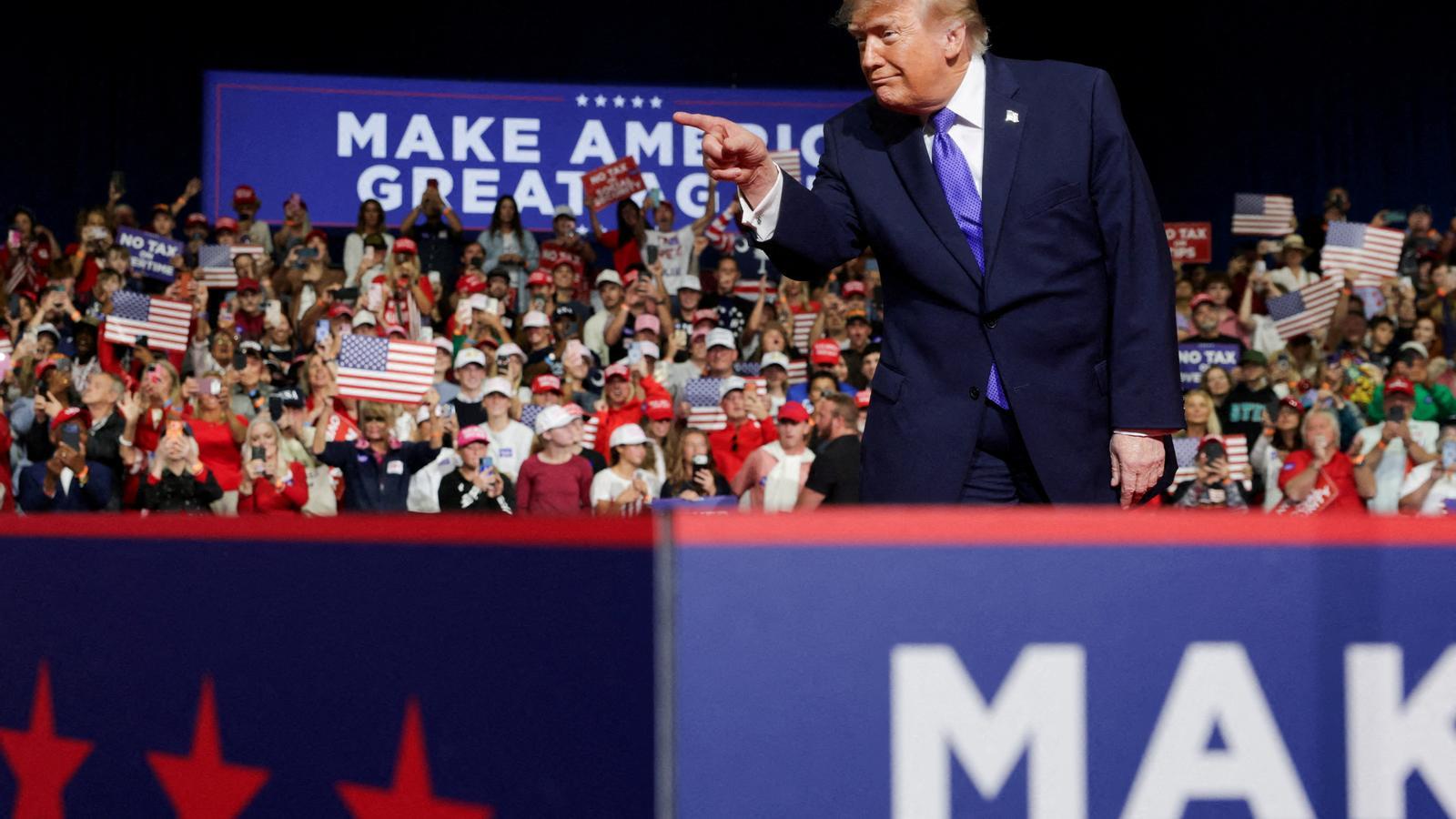
WashingtonThe midterms are held every four years, coinciding with the midpoint of presidential terms, and usually harm the party in the White House. Beyond the referendum on Trump, this year's elections represent an opportunity to try to recover some of the guardrails on the executive power that the Republican has eroded during the nearly two years of his term. With a conservative majority installed in the Supreme Court, if the Democrats manage to regain control of both chambers, they will have some margin to provide opposition.
1. What do the midterms decide?
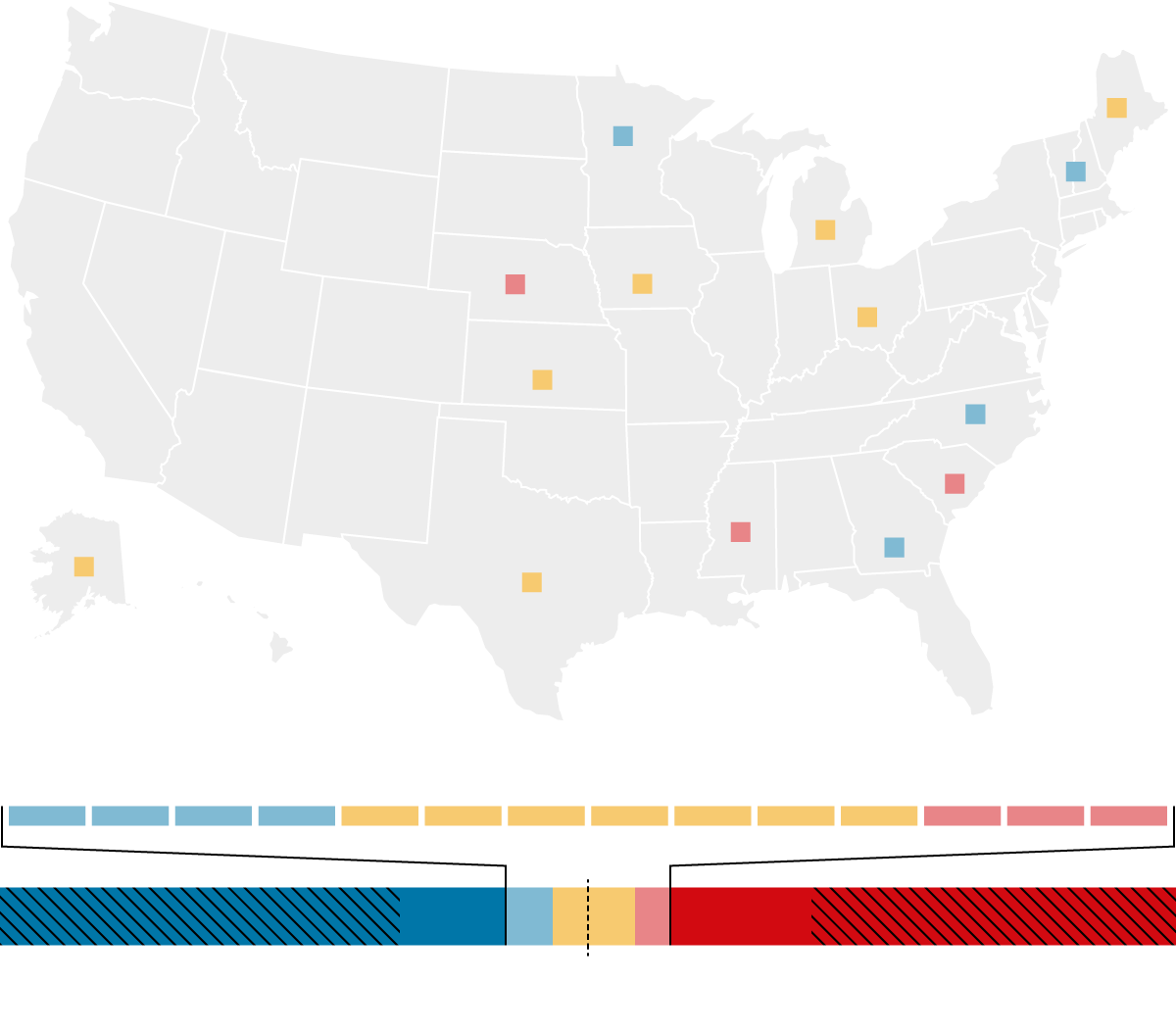
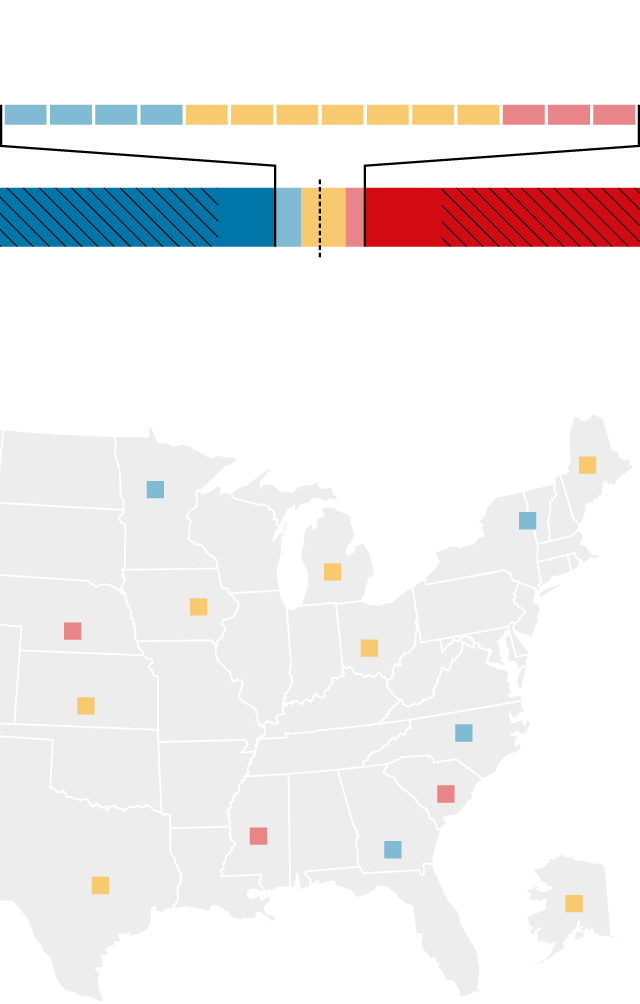
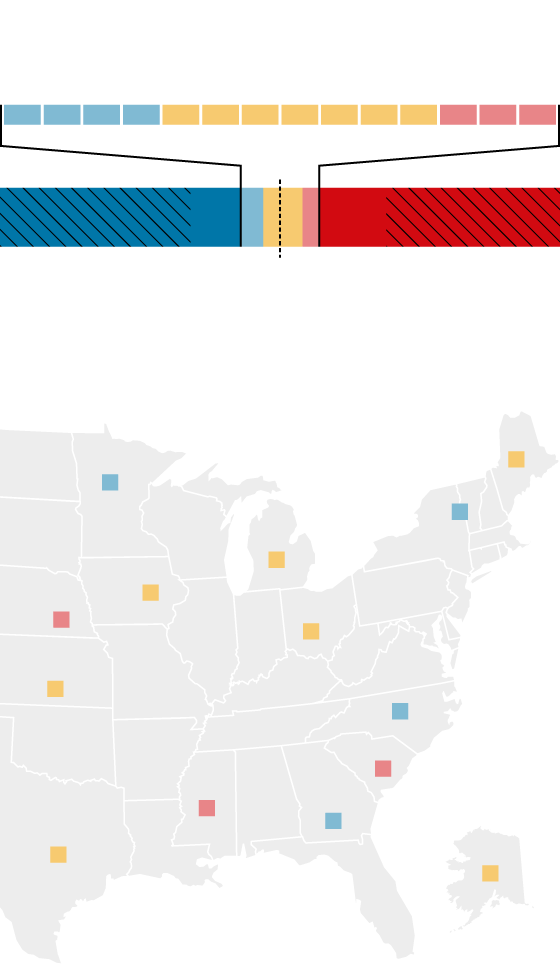
What is being voted on this Tuesday is the complete renewal of all 435 seats in the House of Representatives and one-third of the Senate, that is to say 33 seats out of the 100 that exist. On this occasion, two more seats are added, which are special campaigns to fill the vacancies left by J.D. Vance (in Ohio) and Marco Rubio (in Florida) when they entered the Trump administration.
2. How does the election day work and when will we have results?
The polling stations will close progressively, depending on each state's time zone. The first voting centers, in Indiana and Kentucky, will close at midnight (local time) and the last ones, at seven in the morning. It will not necessarily be known who controls Congress by Wednesday morning. Some races will be resolved quickly, while others may remain open for hours or days, especially if the margins are narrow and there is still a lot of mail-in voting left to count.
3. How do the chambers condition the two years remaining in the president's term?
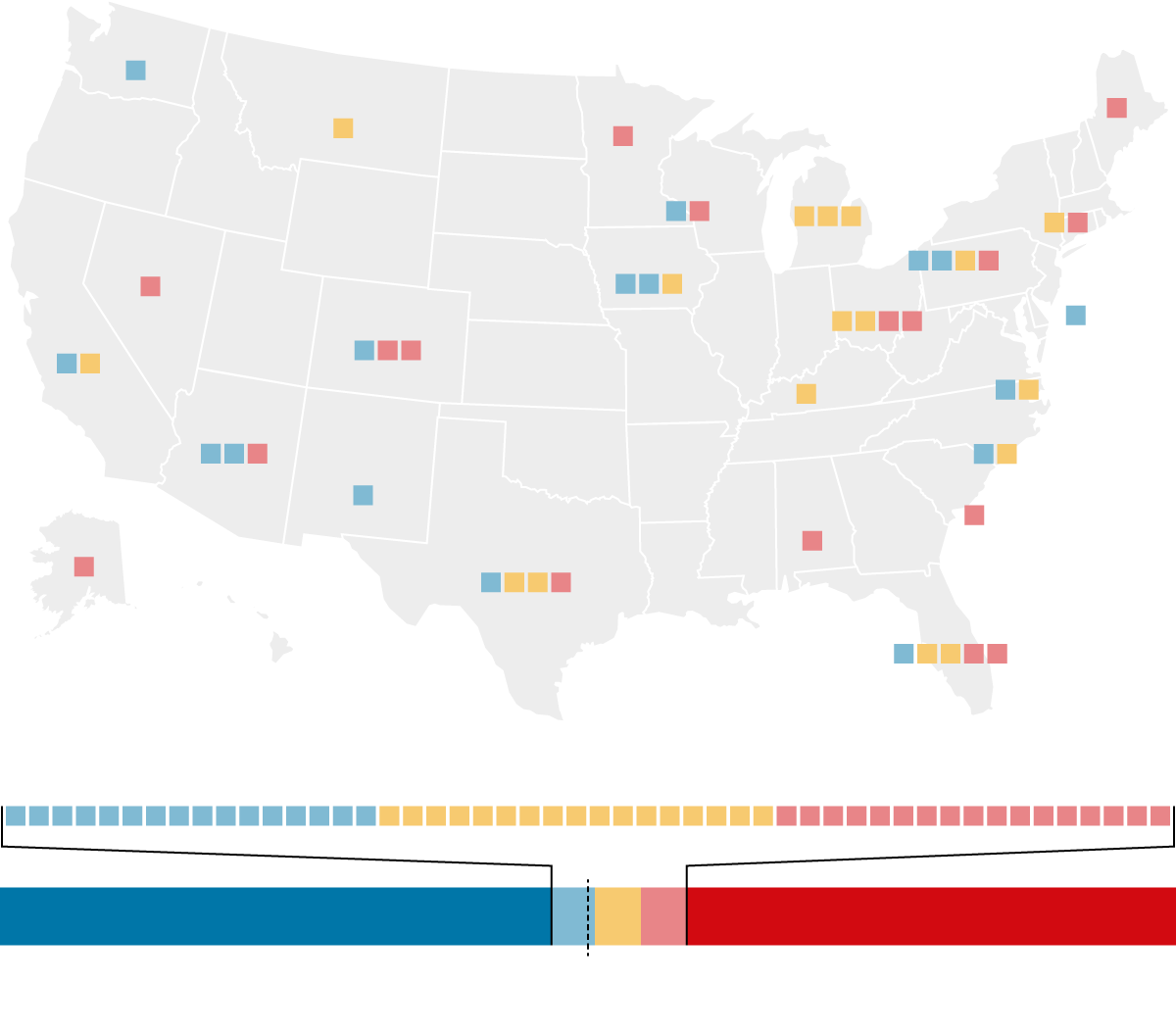
In the House of Representatives, Republicans have 218 seats, compared to 214 Democrats. There is, furthermore, one independent congressman and two vacancies. Democrats need to gain four net seats to regain the majority. In the Senate, Republicans have 53 senators, while Democrats have 47, including two independents. To reach the 51 seats that would give them the majority, they need to win four more.
If Democrats regain both chambers of Congress, they could block the passing of laws, as well as open investigations into how Trump and his family have enriched themselves from the office. Even though initiating an impeachment against the president might sound attractive, to do so requires two-thirds of the Senate, which is not expected to be achieved by the Democrats. Also on the table is the possibility of attempting to initiate a process to remove the Secretary of Defense, Pete Hegseth, or an investigation into how the Iran war has been handled.

Washington
Maine
Montana
Minnesota
Michigan
Wisconsin
Nova York
Pensilvània
Iowa
Nevada
Nova Jersey
Ohio
Colorado
Califòrnia
Virgínia
Kentucky
Arizona
Carolina del Nord
Nou Mèxic
Carolina del Sud
Alabama
Alaska
Texas
Florida
17
en dubte
16
tendència cap a Demòcrates
17
tendència cap a Republicans
Sòlidament o probablement Demòcrates
204
Majoria
218
Sòlidament o probablement Republicans
181
17
en dubte
16
tendència cap
a Demòcrates
17
tendència cap
a Republicans
Sòlidament o
probablement
Demòcrates
204
Majoria
218
Sòlidament o
probablement
Republicans
181
Washington
Montana
Nevada
Colorado
Califòrnia
Arizona
Nou Mèxic
Alaska
Texas
Minnesota
Maine
Wisconsin
Nova York
Michigan
Pensilvània
Iowa
Nova Jersey
Ohio
Virgínia
Kentucky
Carolina del Nord
Carolina del Sud
Alabama
Florida
17
en dubte
16
tendència cap
a Demòcrates
17
tendència cap
a Republicans
Sòlidament o
probablement
Demòcrates
204
Majoria
218
Sòlidament o
probablement
Republicans
181
Washington
Montana
Nevada
Colorado
Califòrnia
Arizona
Nou Mèxic
Alaska
Texas
Minnesota
Maine
Wisconsin
Nova York
Michigan
Pensilvània
Iowa
Nova Jersey
Ohio
Virgínia
Kentucky
Carolina del Nord
Carolina del Sud
Alabama
Florida

Maine
Minnesota
New Hampshire
Michigan
Nebraska
Iowa
Ohio
Kansas
Carolina del Nord
Carolina del Sud
Mississipi
Geòrgia
Alaska
Texas
7
en dubte
4
tendència cap a Demòcrates
3
tendència cap a Republicans
34 escons no es reelegeixen i
9 seran probablement Demòcrates
50
31 escons no es reelegeixen i
12 seran probablement Republicans
7
en dubte
4
tendència cap
a Demòcrates
3
tendència cap
a Republicans
34 escons no es
reelegeixen i 9
seran probablement
Demòcrates
50
31 escons no es
reelegeixen i 12
seran probablement
Republicans
Maine
Minnesota
New Hampshire
Michigan
Iowa
Nebraska
Ohio
Kansas
Carolina del Nord
Carolina del Sud
Mississipi
Geòrgia
Texas
Alaska
7
en dubte
4
tendència cap
a Demòcrates
3
tendència cap
a Republicans
34 escons no es
reelegeixen i 9
seran probablement
Demòcrates
50
31 escons no es
reelegeixen i 12
seran probablement
Republicans
Maine
Minnesota
New Hampshire
Michigan
Iowa
Nebraska
Ohio
Kansas
Carolina del Nord
Carolina del Sud
Mississipi
Geòrgia
Texas
Alaska
It remains to be seen whether regaining control of Congress can have a real impact. In the summer, the Senate approved – with the support of the Republicans – one of the largest sanctions packages for Russia, but at the beginning of October Trump announced an agreement with Vladimir Putin to acquire tons of Russian diesel, ignoring the economic sanctions imposed.
4. What are the key states that will decide the elections?
The seven races that must be followed especially to determine control of the Senate are those of the states of Michigan, Maine, Ohio, Iowa, Kansas, Alaska and Texas. In Michigan –one of the so-called swing states–, if the progressive Abdul El-Sayed wins, he would become the first Muslim senator in the United States. In Texas, the Democrat James Talarico tries to contest a traditionally Republican state against the candidate Ken Paxton. A Democratic victory in this state would be the first since Jimmy Carter won the state in 1976.
In Iowa, Josh Turek competes against the Republican Ashley Hinson in a race marked by the cost of living and cuts to healthcare subsidies. In Kansas, the Methodist pastor Adam Hamilton aspires to obtain a seat in a state where Democrats have not won a Senate election since before the Second World War. In Maine, Troy Jackson faces the Republican Susan Collins, while in Alaska the Democrat Mary Peltola contests the seat against the Republican Dan Sullivan.
Ohio, which had turned red in recent years, is also one of the decisive races. Apart from these states, it will be necessary to follow Georgia, where the Democrat Jon Ossoff defends his seat, and Florida, where the vacancy left by Marco Rubio is being contested.

5. Where might the main surprises be?
The main surprises could come from Texas and Kansas, two traditionally Republican states where Democrats aspire to win Senate seats. In Michigan, Abdul El-Sayed's candidacy will allow us to measure to what extent a left-wing agenda can be competitive in a swing state.
Another possible surprise would be for economic unrest to alter the electoral map in rural states like Iowa and Kansas. In Alaska, it will be necessary to keep an eye on what happens with the Trump administration's legal petition to annul the result if its candidate, Dan Sullivan, does not win, and with the investigation that the Republican governor has initiated against the campaign of Democrat Mary Peltola.
It will also be necessary to see what role the different groups of voters play. The Latino vote, which will punish ICE raids, will have a significant weight, as it has become a group with enough weight to tip the scales.
6. Who are the politicians who are defining the electoral campaign?
Donald Trump is the main protagonist of the campaign, because the elections have become an exam of his second term. But there also stand out candidates who represent generational renewal and the progressive turn of the Democratic Party. Especially, El-Sayed, son of Egyptian immigrants and with a distinguished career as a doctor, who defends a left-wing agenda with the slogan "Medicare for all"; James Talarico, a Presbyterian pastor, former high school teacher and state senator; and Jon Ossoff, who is taking on the appearance of a presidential hopeful with his campaign for re-election to the Senate in Georgia, where he has turned the denunciation of corruption in the White House into his main asset.

7. What will define the American vote?
The cost of living and corruption. A CNBC poll points out that the main concern is corruption (36%), surpassing the rising cost of food and gasoline (34%). The loss of purchasing power has accelerated with the increase in oil costs following the war in Iran. It is becoming increasingly difficult for Americans to ignore how large tech fortunes are pouring money into campaigns to advance their own interests.
The "golden age" that Trump had promised when he won the presidential election has only resulted in enrichment for him and his family while everyday people struggle to fill their car's gas tank and their grocery cart. Not to mention how the president's rural base – key to his 2024 return – have been some of the greatest casualties of his trade war.
8. What has Trump's election campaign been like?
Trump has been the first to want to turn the midterm elections into a referendum on himself. He has repeated the same old fallacies, and has claimed that he is creating new jobs thanks to tariffs and that he is generating more wealth. The president already started the year with the perspective that it would not be an easy campaign, but as the date has approached, the war in Iran has become entrenched and his approval ratings have plummeted, while his desperation has increased. The Republican went so far as to organize a Republican Convention –the first for legislative elections– where he promised that every adult American would receive $5,000 if the Republicans won.
The tycoon has also once again given wings to theories of electoral fraud, which have no longer just remained words but have turned into actions that prepare the ground, as happened with the recent raid in California to arrest people who had supposedly voted illegally. Trump has also promised a million dollars to those citizens who report cases of alleged electoral fraud that end in a conviction.
9. And what about the Democrats?
The Democrats seem to have taken note of 2024 and instead of simply pointing out the danger that Trump represents to democracy, they have gone further. The cost of living has been the pattern by which all programs have been cut. Whether it has been with more moderate proposals, such as Ossoff in Georgia, or with campaigns much further to the left like El-Sayed in Michigan or Angie Nixon in Florida, the issue of the right to healthcare has also been one of the major themes.
Since last summer when Trump cut a large part of medical subsidies to be able to maintain tax breaks for the wealthy, healthcare has become one of the major themes. It is in the proposals on how to address medical coverage that a gradation can also be seen between El-Sayed, Talarico, and Ossoff. El-Sayed, the one furthest to the left, defends a public healthcare system in the style of Spain's, although without the universal character, an idea that already served as a slogan in 2016 for Senator Bernie Sanders, the candidate's great godfather. Talarico and Ossoff, somewhat more moderate, opt for establishing a public health program that competes with private insurers.
10. What global impact can they have?
The result can have an impact on two major issues: the Iran war and the development of AI. If the Democrats manage to control Congress, they will have the power to influence the Defense budget, a more effective way than war powers to stop Trump from bombing Iran.
On the issue of AI, if the Democrats manage to control both chambers, they could advance more restrictive regulations. Bernie Sanders has already introduced two proposals into the legislative circuit: one to create a public sovereign fund from a large tax on AI companies, and another to create a federal agency to oversee and curb the development of AI.
In the case of Ukraine, hopes are somewhat slimmer. Military aid is no longer just a political whim, but a fact: the lack of Patriot missiles at the Pentagon is critical. Furthermore, Trump has already shown that he does not need government mechanisms to pressure Volodymyr Zelensky: the disconnection of Starlink –the satellite system owned by Elon Musk– was eloquent enough.

