Facing some aged leaders, a generation of young politicians clamors for a change in the United States
Behind the wave that has shaken the Democratic party there is a demand for new candidates on both sides of the political spectrum

-
CAT -
CAST
WashingtonDonald Trump returned to power nearly two years ago, driven by the disillusionment among a good portion of Americans with Joe Biden, who felt that he had failed to listen to their discontent. The current shift to the left within the Democratic Party is also challenging a dissatisfaction among the base towards an establishment that already failed to inspire them in 2024. The feeling that Washington does not understand the concerns of ordinary people is often materialized in a very concrete fact: an aging political class.
Over the last decade, Americans have only known elderly presidents: Trump, who is now 80 years old, first came to power in 2016 at the age of 70 and Biden left the presidency at 82 years old. In Congress, the average age is about 64 years in the Senate and 57 years in the House of Representatives. Most Americans believe that the average age is too high: 80% think that a maximum age limit should be established for members of Congress, according to a Marist Poll survey.
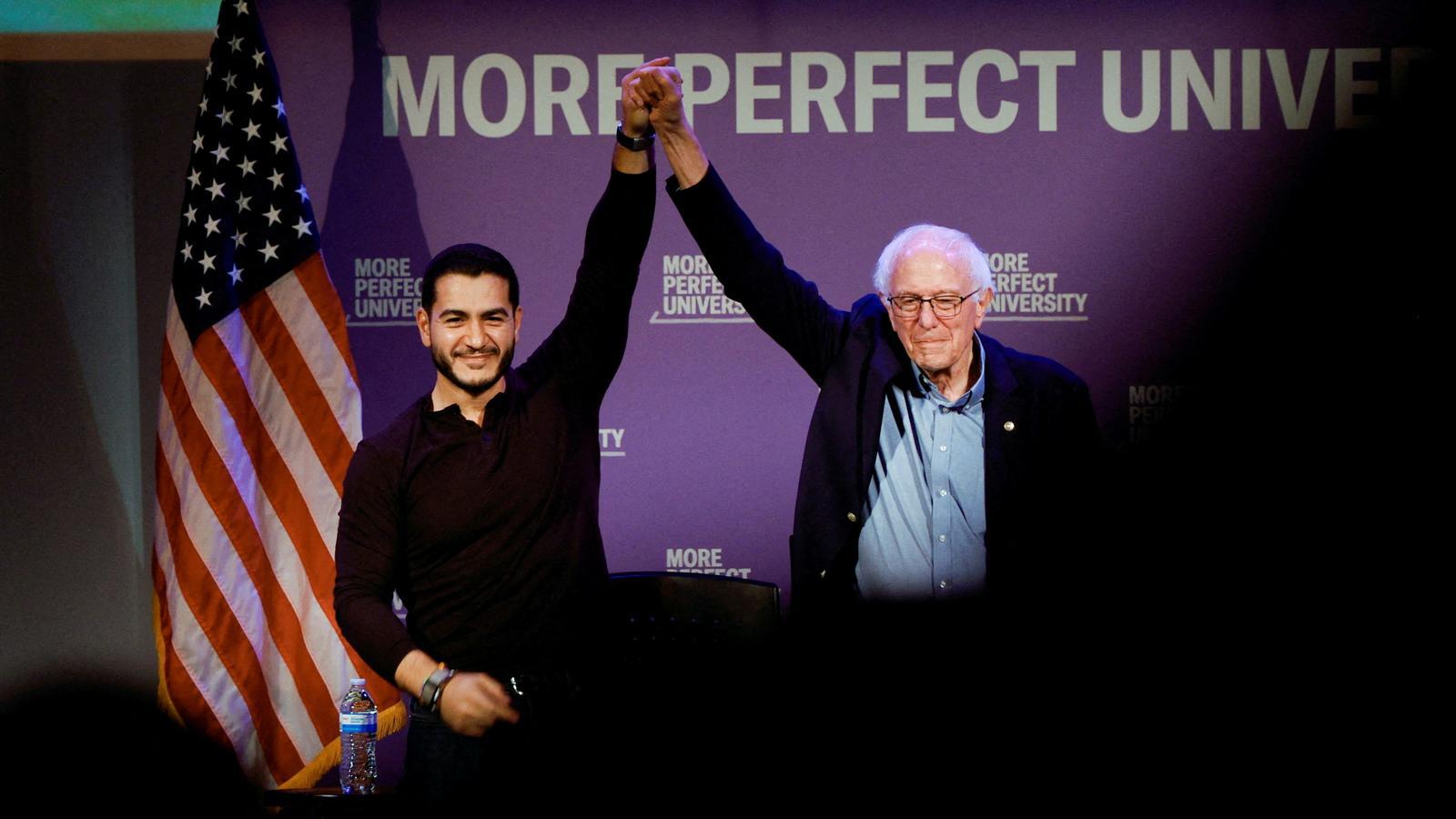
The reverse side of this aging political class is the emergence of much younger candidates who seek to bring about a generational change. More than a third of the people who have run for the federal Congress in this election cycle –36.7%– are under 45 years old, according to Future Caucus. Some of the new stars of the Democratic party fit this profile, such as Abdul El-Sayed (41 years old), James Talarico (37 years old) and Jon Ossoff (39 years old). Furthermore, 4% of candidacies submitted for Congress correspond to members of Gen Z: such as the socialist Melat Kiros (29 years old) in Colorado or the Republican Joe Mitchell (29 years old) in Iowa. In total, it is expected that this year some 50 million Americans belonging to Gen Z (20% of the electorate) will already be able to go to vote.
"The citizenry as a whole, regardless of party, is looking for change and looking for what we could call a generational change," explains John Sides to ARA, a professor at Vanderbilt University specializing in American political behavior. Sides underscores that "young Americans are not happy with either the Republicans or the Democrats; they are worried about jobs and the future." For the professor, the rise of the left wing within the Democratic Party has more to do with this real promise of change represented by new progressive candidates, rather than the fact that the base has become more left-leaning.
"What the Democrats did in 2024 was to present a more traditional candidate, like Joe Biden, and then, obviously, Kamala Harris," notes Sides. Both represented more of a continuity that Americans were already tired of than a real change. At the internal party level, the dynamics of Congress are repeating themselves.
The leadership of the Democratic Party is represented by some of the most veteran faces of the organization: the Senate Minority Leader, Chuck Schumer, 75, and Nancy Pelosi, 86, who already announced she would not run for re-election this year. However, within the party's traditional establishment there are also younger figures, such as the leader of the Democrats in the House of Representatives, Hakeem Jeffries, 54.
Many of these legislators have not been able to pass laws that directly address the material problems of young people. Nor do they share the same cultural codes. One of the successes of the campaign of socialist Zohran Mamdani in New York was the use of social media, with videos that young people felt identified with. El-Sayed has replicated this tactic with TikTok videos featuring Taylor Swift songs and participating in popular podcasts, such as the one hosted by Hasan Piker.
Post-Trump politics
Meanwhile, in the conservative sector, this generational wave is led by Joe Mitchell, who founded Run GenZ with the goal of having young conservatives enter Congress this November. Mitchell himself is competing for the seat vacated by Iowa Republican Congresswoman Ashley Hinson. Within the amalgam of currents into which Trumpism has transformed, Mitchell represents more the young men who became involved in conservative activism thanks to Charlie Kirk, the influencerof the far-right who was murdered a year ago. Even so, Mitchell's figure remains linked to Trump, to whom he presented the "Man of the Century" award.
Unlike previous generations, Gen Z has practically only known post-Trump politics. They barely remember what the presidency style of figures like Democrat Barack Obama or Republican George W. Bush was like. Their political awakening has been marked by COVID and the "American carnage" speech that Trump delivered when he took office in 2016.
The last primary cycle was already an incipient indicator of the desire for change on the part of the youngest. "Those who are now in their twenties voted in record numbers in the Democratic primaries, but not in the Republican ones, because the Republican Party was the one where they were looking for some kind of action in 2024. But they abandoned the party completely because they felt betrayed. And now they are looking for anyone who tells them that they will take care of the problems of the youth, that they will address them and that they oppose Trump," notes Morley Winograd, author of the book Millennial momentum: how a new generation is remaking America (Millennial momentum: how a generation is remaking America).
For Morley, both the last primary cycle and the legislative elections are also "a generational phenomenon" that will eventually hatch in 2028. A trend that is seen more clearly in the speculations about the possible Democratic candidates for the next presidential elections. "On the Democratic side, you know, you won't have Bernie Sanders. You will have AOC. Maybe you will also have Ossoff, from Georgia. These younger candidates will probably increasingly occupy this space, because they can convincingly argue for real change," says Sides, who assures that "all the pieces are aligned for this relief to occur".
Unlike the Democratic primary cycle, which served as a kind of internal debate to decide where the party is heading after its existential crisis, the Republican primaries were basically a competition to see who had Trump's favor. In the long run, this could place the Republicans in front of a serious problem for 2028 because the tycoon is no longer perceived as an anti-establishment figure.
Trump, who at the time became a kind of catalyst for the ultraconservative sector and the Tea Party to reach power, could now become a drag on generational turnover. "And that will not happen until Trump is no longer on the scene, because everything has to revolve around him," states Winograd.
