Gaza buries 112 bodies recovered from rubble three years later
Gazan services recover most victims of a 2023 Israeli attack, while 41 bodies remain buried
-
CAT -
CAST
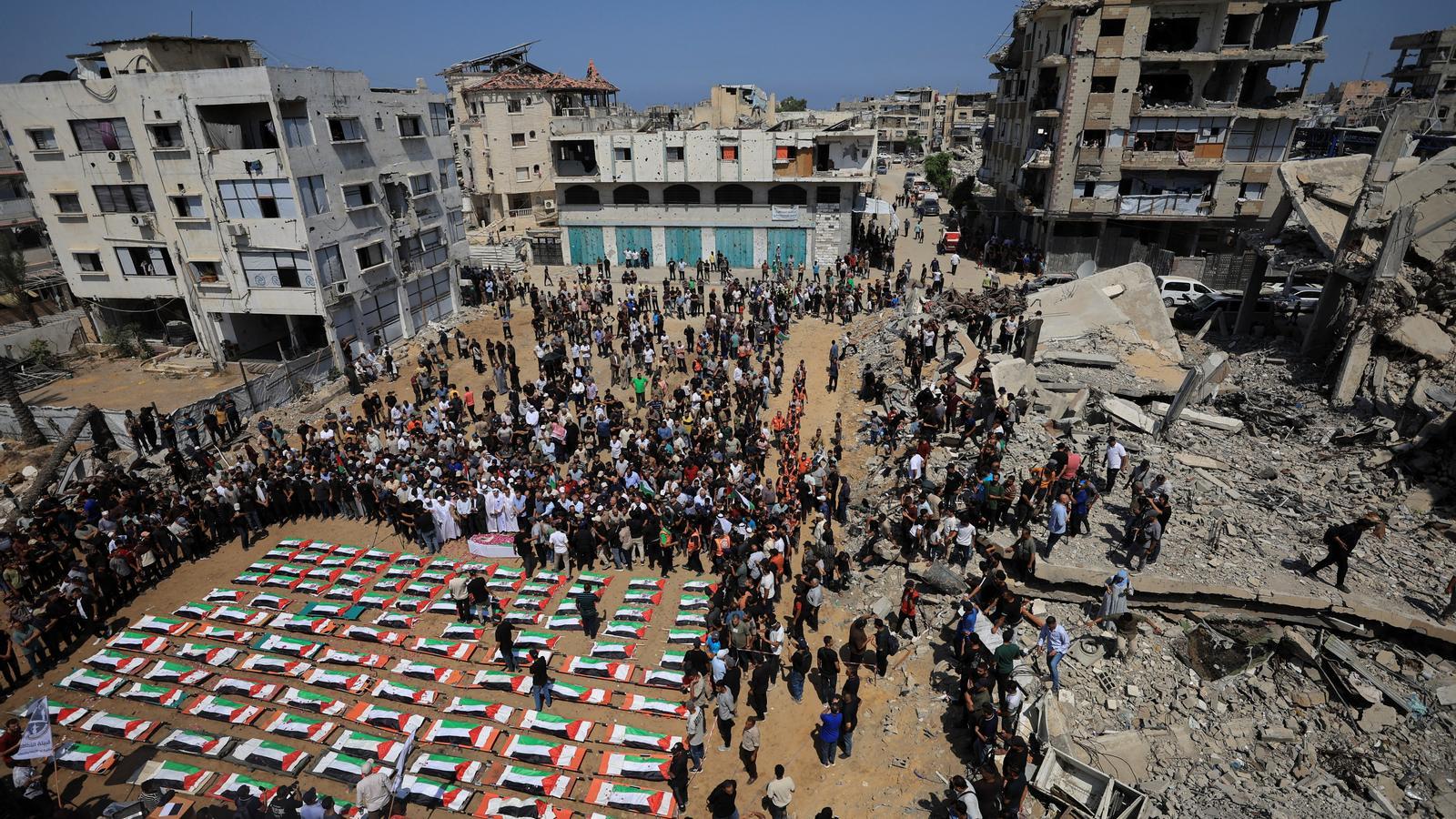
Barcelona112 people were buried this Tuesday in the largest funeral held in the Gaza Strip. Inside the coffins covered with Palestinian flags lie the victims of an Israeli bombing that took place almost three years ago, on November 22, 2023, six weeks after Hamas's attack on October 7.
The missiles hit a residential building in the Sabra neighborhood when about 180 people were inside, most of them members of the Hassayna-Abu Sharia family clan, according to Palestinian emergency services. Of the 112 victims located, 44 were children, nine were elderly, and seven had a disability. However, not all bodies could be identified due to the advanced state of decomposition. Furthermore, emergency services have not yet been able to locate the bodies of 41 more family members, who remain buried under the rubble of the building. "What crime did they commit? Their only "crime" was wanting to be in their own homes," lamented Bassim Abu Sharia, spokesperson for the affected family, to Efe.
On the same day of the attack, emergency services began recovering the first bodies, but constant Israeli bombings made it impossible to work safely. The development of the war against Gaza and Israel's restriction on reconstruction tools and materials have prevented emergency services from carrying out their work for more than two years. It has only been in the last two weeks that these tasks have been considerably sped up after the Netanyahu government allowed the Civil Defense service to use, for 2,000 hours, an excavator lent by the International Committee of the Red Cross.
Hospitals, at the limit
The situation in the Gaza Strip is critical despite the ceasefire signed last October. Israeli bombings have continued, especially this past weekend, while the only operational pediatric hospital in the northern Gaza Strip could be forced to close "within hours" due to a lack of electricity, given Israel's veto on the entry of fuel for generators. "We have a very serious and critical problem, and it's not a lack of medication, medical staff, or equipment. We are talking about something basic: electricity," pediatrician Samer Lubad, who works at the Beneficent Hospital Friends of Patients in Gaza City, explained to Efe.
In total, more than 73,000 Gazans have died since the start of the war and at least 8,000 people remain buried in the Strip under the rubble of buildings destroyed by Israel, according to data from the health ministry led by Hamas, considered reliable by the UN.
