How to block Blocus

-
CAT -
CAST
More than a dozen Catalan towns are on alert this Saturday due to the Blocus calls, a youth pseudo-revolt forged in the anonymity of the internet, without a clear ideological inspiration and behind which there is no specific organization or hierarchy. Hence the difficulty in tracking down its promoters and, therefore, its unpredictability and volatility. The arrest of some possible leaders who have acted as drivers for the calls to take to the streets via social media serves more as a deterrent message than as a way to dismantle a protest that is not at all cohesive but, even so (or perhaps because of this), effective for being chaotic.
If last weekend's outbreak of violence was largely unforeseen –there were warnings, but no one correctly gauged the volume the protest would reach–, what might happen this Saturday is a real unknown. But, in any case, we are now warned. This time, therefore, it cannot catch the police or the commercial sector off guard, the true sacrificial victim of a protest without a concrete objective, and for that very reason more dangerous. A movement that, as happens with youth fashions and trends, also plays with the FOMO effect (fear of missing out). With a desire for prominence or simply voyeurism, a segment of the adolescent population does not want to miss the chance to go against the system, even if it is at a very primary level.
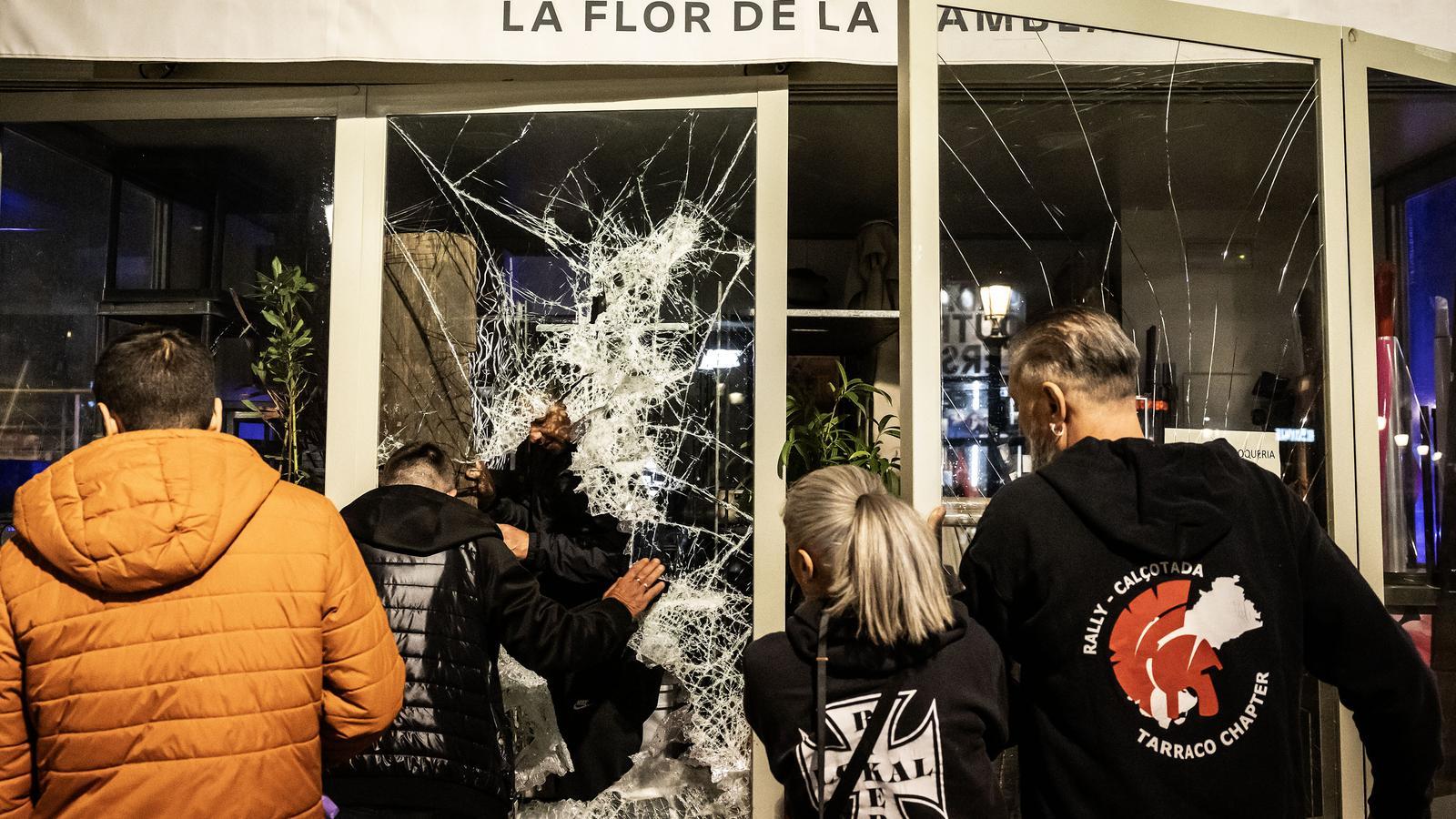
It is, yes, a movement that has more of hooliganism than anything else: a form of angry indignation –broken glass, robberies, burned containers...– that is serving to catalyze a real social unrest, largely generational, and which has its most obvious causes in the housing crisis and salary precariousness. But instead of transforming hopelessness into political or social mobilization, what we now see in Paris, Milan and Barcelona are outbursts of rage instigated from social media by people not quite known. Can we talk about hybrid warfare? Who does Blocus benefit politically? Who orchestrates it? What remains quite clear is that the agitation comes from the screens, feeds on the aesthetics of video games, and drags along above all boys from urban environments that are socially and economically precarious, but not always marginal.
How can the Blocus phenomenon be reversed? First of all, and in the most immediate term, it is evident that it is necessary to protect businesses and the integrity of shops in the historic centers of the threatened cities. Preventively, city councils and the Government must deploy police forces on the streets. The administration must also grant permits and facilities so that establishments that feel threatened can install shielding on their storefronts and doors. Security is a basic right. In the medium term, it would be necessary to influence secondary and high school education centers to short-circuit the penetration of this type of violent, neo-reactionary, countercultural messages. It is not easy, and we cannot trust everything, once again, to the educational world. But doing nothing in the preventive field is the surest path for these types of aimless protests to consolidate, as an end in themselves.
