Netanyahu stirs up the ghost of fraud and places the Arab vote under suspicion
Accusations of irregularities and foreign interference shake Israeli politics after the elections

-
CAT -
CAST
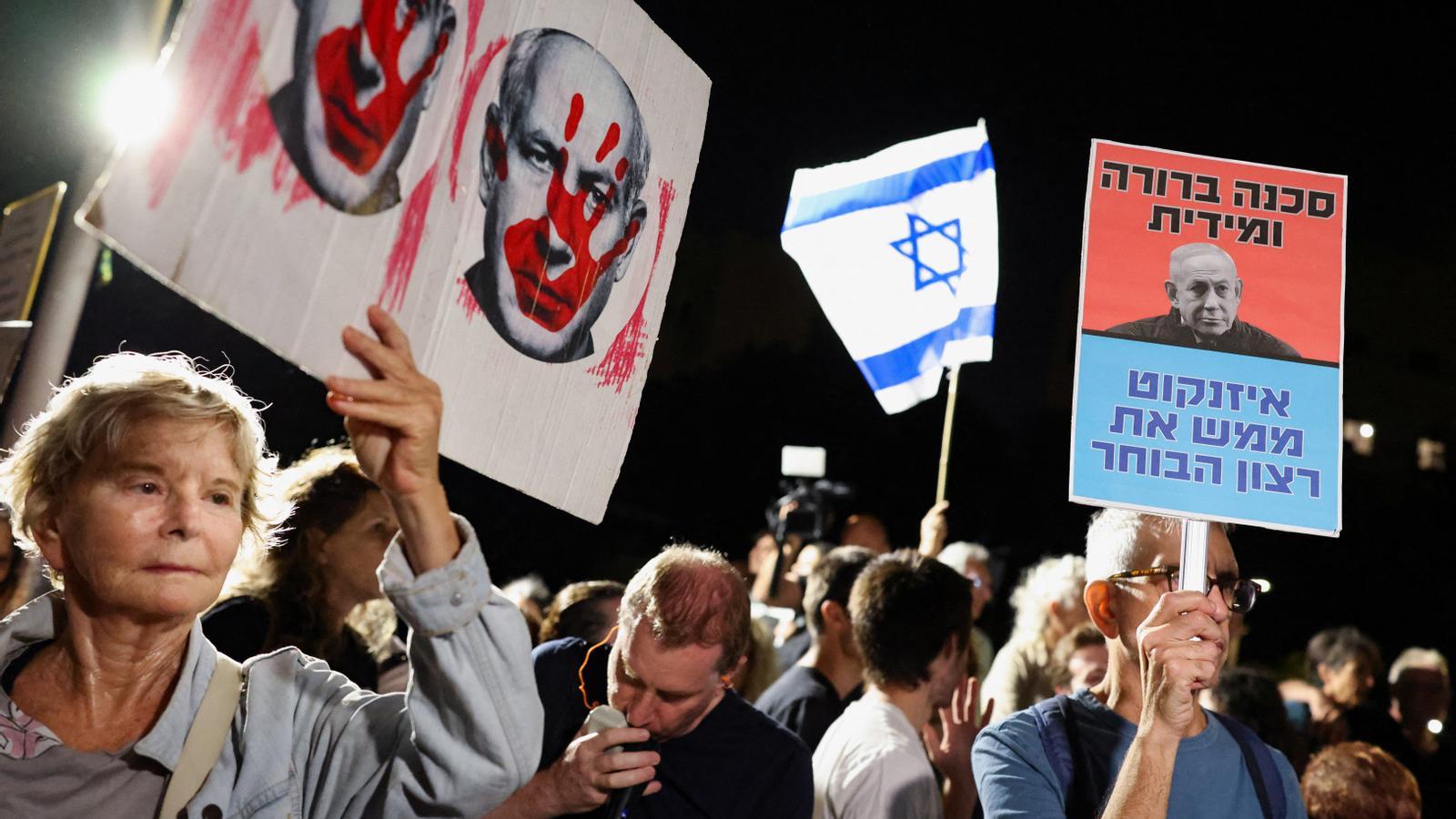
JerusalemBenjamin Netanyahu, amid the difficulties in gathering the necessary support to remain at the head of the government, has opened a new political front: questioning Tuesday's elections, in which he lost his parliamentary majority. “The elections in Israel have been stolen,” the prime minister's party, Likud, has repeated on several occasions, accusing Arab parties of having manipulated the result.
The controversy began before the polls closed. In a video released during the election day, Netanyahu denounced that Arab voters in the south of the country were “running to the polls”, –he claimed that they were trying to “steal the elections”– and alluded to the arrest of three people suspected of buying votes in favor of the United Arab List (Ra'am), the Arab party of Mansour Abbas. Although the investigation remains open, the prime minister presented them as prominent leaders of the party. All three have been released this Friday.
The prime minister thus recovered a strategy already used in other elections: presenting the mobilization of Arab citizens, which on Tuesday was historic, as a threat. After the closing of the polls, Likud maintained the accusations of fraud and demanded an investigation into alleged irregularities, including the use of supposed software to mobilize voters illegally. According to the Israeli media Channel 12 and Haaretz, the party had already studied before the elections the possibility of challenging votes in Arab localities if Netanyahu lost, filing complaints about voting by women with their faces covered and voting times separated by sex.
Accusations of foreign interference
The case has acquired an institutional dimension after the chairman of the Election Committee, Supreme Court judge Noam Sohlberg, asked the internal intelligence service, the Shin Bet, to investigate "serious suspicions" of foreign interference. The Committee has demanded a report within a week, but has ruled out evidence of systematic violations and has assured that the investigation does not affect election results. Among the possible countries involved, Israeli media have pointed to Qatar, which allegedly funded networks linked to the mobilization of the Arab vote, with the intention of influencing turnout. The emirate has rejected the accusations, which it has described as "ridiculous and dangerous".
Despite the caution of the institutions, Likud has turned the suspicions into a far-reaching political accusation. In a statement published yesterday, the party reiterated that the elections had been stolen and attributed the alleged interference to an attempt to facilitate a “foreign takeover” of Parliament, the “Islamization” of Israel, and the fall of the right-wing government.
For the opposition, all this responds to a strategy to question the result of the polls. Gadi Eisenkot, the main opposition leader, has accused Netanyahu of pushing "an orchestrated and organized campaign to delegitimize the electoral results". The former general has demanded that any suspicion of foreign interference be thoroughly investigated, but has warned that this cannot be used to cast doubt on the elections or to delay the constitution of the new parliament.
Incitement to hatred
The Arab parties have also denounced the Likud's words as a racist campaign. Mansour Abbas has denied any involvement in possible foreign interference and has accused Netanyahu of inciting hatred against Arab citizens following the good results of the Arab groups, which have achieved 19 seats, a record number. Abbas has welcomed the investigation, but has summarized his position with a phrase: “There will be nothing, because there is nothing”. The United List, the Arab force that obtained the best result, with 11 seats, has asked the opposition parties to reject the accusations and cooperate with the Arab parties. “These racist accusations only show that they are afraid of the power of our community”, he stated in a statement.
Behind the dispute lies a decisive issue for the future government. The Arab parties are essential for the opposition to obtain the necessary support to unseat Netanyahu, even though such an alliance is politically delicate and some Zionist parties reject it. In this context, questioning the legitimacy of the Arab vote can serve to delegitimize a new alternative parliamentary majority.
