Europe begins a super-cycle electoral that can shake the foundations of the EU
More than half of Europeans are called to the polls in a year, with Spain and France as great thermometers of the ultra wave

-
CAT -
CAST
BarcelonaIn the golden age of pushing for the construction of the European Union – between the late eighties and nineties – social democrats and the traditional right shared power in the main European capitals. The Franco-German engine was propelled by the social democrat François Mitterrand and the Christian democrat Helmut Kohl, while in Italy, various social democratic, conservative, and technocratic governments succeeded one another. In the United Kingdom, the then-most Eurosceptic partner, Downing Street was occupied by the conservative Margaret Thatcher, and the socialist Felipe González governed a Spain that was taking its first steps as a European partner.
Three decades later, the consensus that led to strengthening the foundations and expanding the EU has been diluted by the rise – and now consolidation – of parties critical of European construction. The EU has become accustomed in recent years to facing elections and challenging leaders, but in the electoral supercycle that begins this Sunday with the Spanish elections, the community club is wagering its very foundations. More than half of Europeans are called to the polls in the next twelve months, including the citizens of four of the five most important countries by economy or population. And the European political landscape could change with the Eurosceptic far right aspiring to reach power in key countries like France or Spain, and to remain in power in Italy.
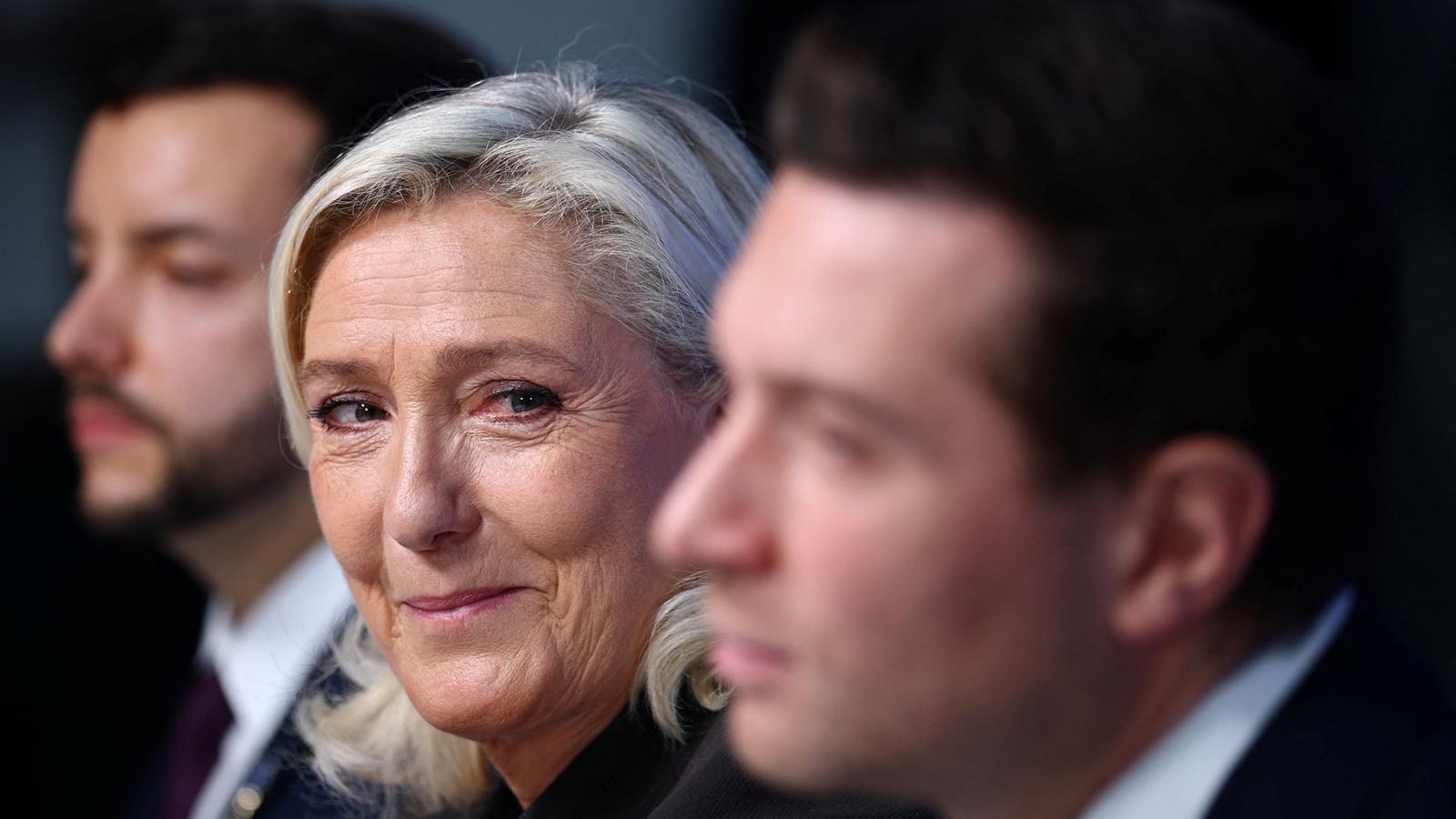
The Spanish elections will be a thermometer of to what extent the conservative and ultra-right wave can shake the foundations of the EU. The next key elections will be the French presidential ones, with the first round in April and the second in May. Emmanuel Macron has exhausted his maximum of two terms and will be a spectator of elections in which polls currently show Marine Le Pen as the winner. Unlike previous elections, the centrist vote is divided, and forecasts point to a struggle between the far right of Le Pen, who will finally be able to be a candidate despite her conviction for misappropriation of European Parliament funds, and the left of Jean-Luc Mélenchon in the second round. Le Pen's chances of reaching the Élysée make France the most decisive electoral contest for the immediate future of the EU. After two defeats against Macron in the second round, Le Pen has made her intentions clear: reduce France's financial contribution to the EU by up to 60%, dispute powers with Brussels so they return to Paris, and suspend aid to Ukraine.
Poland will also hold parliamentary elections in November 2027. The ultra-right Law and Justice party is losing steam and the Civic Coalition of liberal Donald Tusk remains the top choice, but the ultra-right parties of the Confederation and the Confederation of the Polish Crown –a monarchist and ultranationalist breakaway from the former– are comfortably exceeding 20% of the vote. Italy, where the extreme right has been governing since 2022, will foreseeably close the electoral supercycle with parliamentary elections in December 2027.
Giorgia Meloni has a good chance of remaining in power, but a competitor has emerged from the right. Retired general Roberto Vannacci has founded a new ultra-right party and polls place him above the far-right League and Forza Italia, the party founded by Berlusconi.
Greece, Slovakia, Slovenia, and Finland will also hold parliamentary elections next year and, although no federal elections are expected in Germany in the coming months, there will be some in certain states that will serve to determine the extent of the growth of the far-right Alternative for Germany.
The hollowing out of the EU?
With social democracy already at a minimum in the EU and the traditional right progressively undoing the cordon sanitaire against the far-right, the electoral super-cycle will elucidate the result of the European political battle between pro-European forces and the far-right ones that advocate returning power to the European capitals. Unlike the Eurosceptics who defended leaving the EU years ago, now the far-right parties that question the community club do so not necessarily to undo it, but to claim another European structure that prioritizes the interests of their countries.
Le Pen embodies this shift. She has gone from defending France's exit from the EU (and the euro) to claiming the Europe of Nations. In practice, the EU would become a framework of cooperation between sovereign states and would empty the signs of integration, where state laws prevail over those of Brussels, without sovereign concessions. It is, from this vision, that the non-compliance with community norms is justified if it is to preserve the country's interest.
Support for Ukraine may also be one of the major casualties. If the priority is to preserve a country's interest, allocating resources to Kyiv prevents them from going to national priorities, argue the far-right. Furthermore, a good part of the far-right parties advocate for recovering the relationship with Russia because they consider that they can profit from it, for example, in the energy field. It is the same approach that led Donald Trump to agree with Vladimir Putin on the purchase of Russian diesel. This vision, however, divides the far-right forces: those in Eastern Europe, who feel the Russian threat to their security more closely, maintain their firmness against Moscow.
Be that as it may, Russia, like China and Trump's United States, are the great beneficiaries of a weakened Europe. And, paradoxically, the great shake-up to the foundations of the EU could arrive at a time when 74% of Europeans consider that their country has benefited from being part of the EU.
