Does the ghost of Le Pen no longer scare European leaders?
The member states face the European budget negotiations divided and cool the expectations of an agreement before December

-
CAT -
CAST
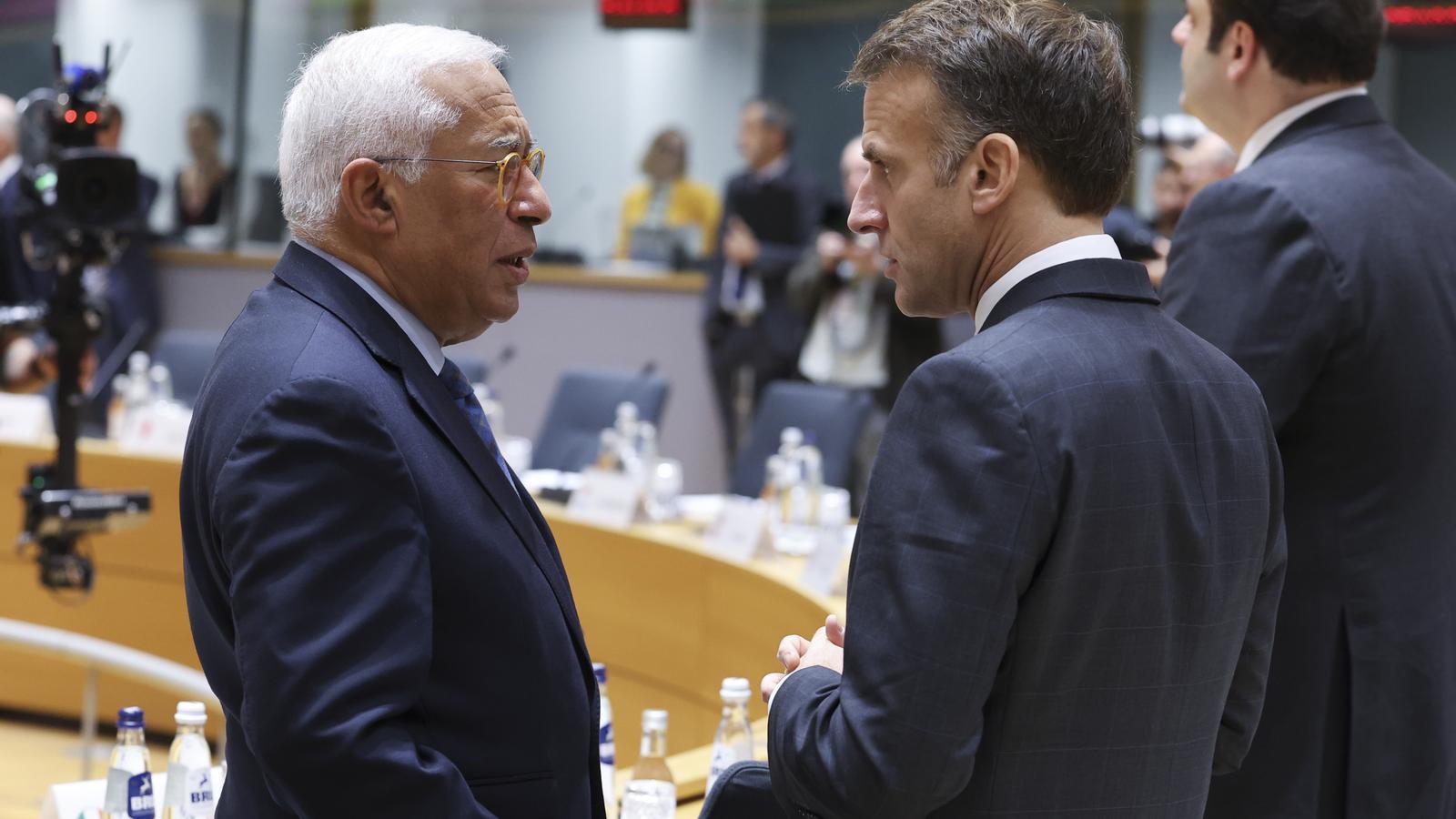
BrusselsEuropean leaders are in a race against time to approve the European Union's next budget. Both France and Germany, the bloc's economic and political engines, are pulling out all the stops to try to secure a deal before Marine Le Pen has a chance to reach the Élysée. This threat has served to set December of this year as the deadline for the approval of the 2028-2034 accounts. But the positions with which the leaders arrived at the summit in Brussels this morning are so far apart that they call into question whether the deadline can be met.
Italy, for example, has made it clear that it is not willing to approve a budget in which Rome “would have to give more to receive less.” Prime Minister Giorgia Meloni has asserted that the EU is “light years” away from reaching a compromise and has ruled out the goal of reaching an agreement by the end of December. “I will not let the timeline dictate the outcome,” she said. The leaders of the Netherlands and Sweden have expressed themselves along the same lines. “We have time. I want a good deal, so there is no rush,” said Dutch Prime Minister Rob Jetten. His Swedish counterpart, Ulf Kristersson, has warned that he will not accept accounts he does not believe in “just because there is a deadline.”
Despite everything, there is still a majority of leaders committed to closing a deal in December. They fear that if the far-right leader comes to power, she will cut France's contribution to the EU in half and create obstacles for any pact regarding the community accounts. “They don't talk about it out loud, but it is on everyone's mind,” note community sources familiar with the conversations, referring to the French leader. “The feeling prevails that if we do not reach an agreement by the end of the year, we are making ourselves vulnerable,” the same sources have expressed, assuring that “there is no plan B.”
Le Pen, for her part, has used the summit to fuel her rhetoric. “According to the international press, the European Commission is maneuvering to rush an agreement on the next multi-annual budget of the European Union before the French presidential elections,” the National Rally leader wrote on X.
Fear has an institutional basis. The multiannual budget must be approved unanimously, so a single government is enough to block it. Furthermore, when the leaders give their approval, the approval of the European Parliament and the ratifications of the national parliaments are still required, a process that lasts several months.
Round of confessionals
The president of the European Council, António Costa, presented a new proposal on Saturday with new community taxes (on technology companies and tobacco) to try to unblock the situation, which is what the leaders are discussing this Thursday. The states, however, have barely moved since the last discussion. They remain divided between those who ask to maintain the economic resources for cohesion funds and the common agricultural policy (among which are Spain, France, or Italy) and the so-called frugals, who demand cuts and more investment in defense and competitiveness (which include Germany, the Netherlands, and the Nordic countries).
To pressure them and try to reach a consensus, Costa has met with the twenty-seven leaders in small groups, formed according to their priorities (in groups that are called confessionals in community jargon), in half-hour slots. The leaders are expected to meet again at midnight to share the progress. Community sources warn that the negotiations are so immature that it is “practically impossible” to reach a consensus this Thursday, and they foresee that the heads of state and government will return home earlier than expected, on Thursday instead of Friday, to rethink how they approach the December negotiation.
