Brazil, the most prized piece on the Latin American board for Washington and Beijing
Trump demands the political submission of the country, while Xi cultivates a pragmatic relationship to protect access to raw materials, trade and investments

-
CAT -
CAST
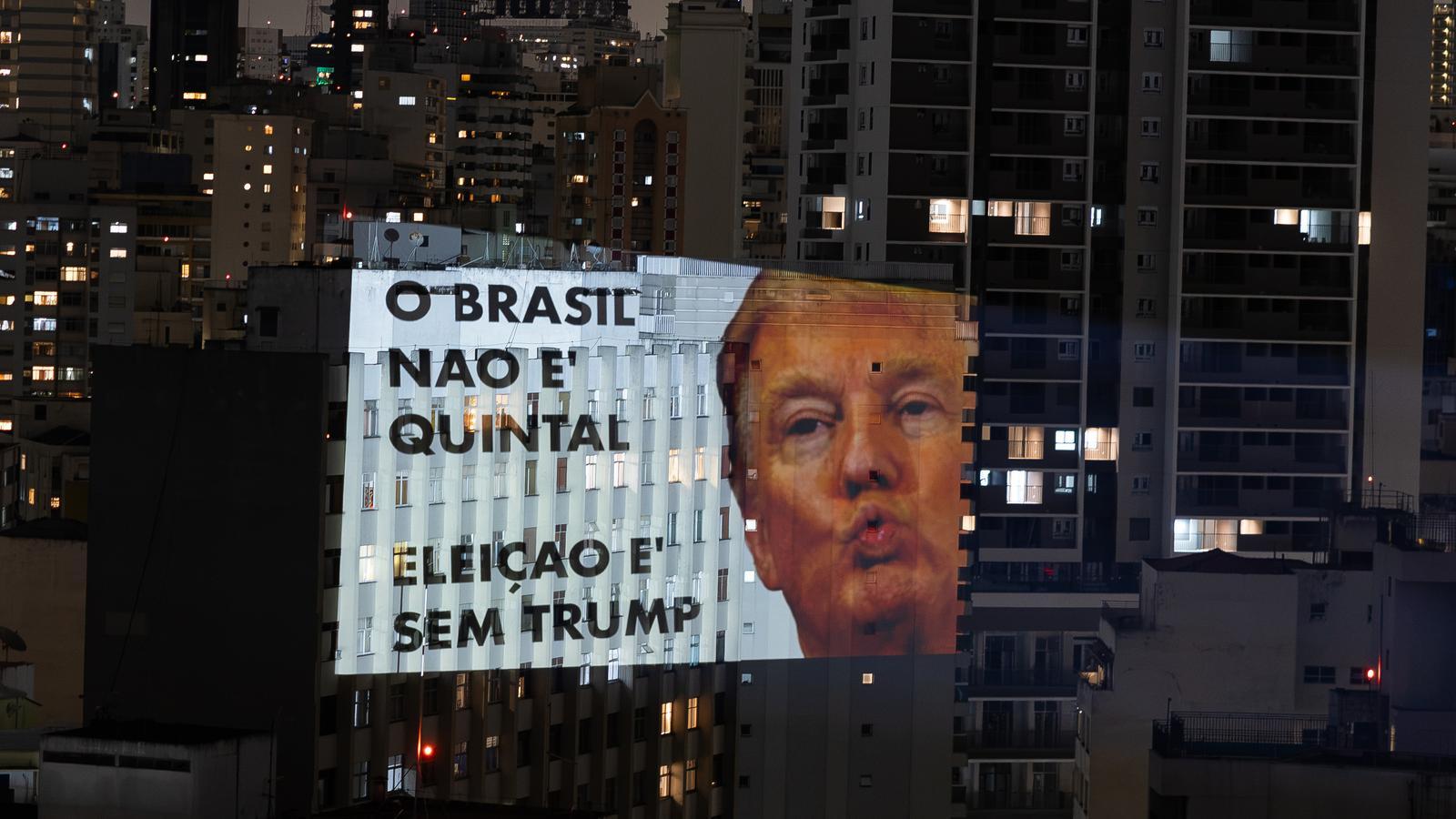
São PauloOn Friday, 48 hours before Brazil's elections, Washington suspended consular services throughout the country “for security reasons,” a controversial decision supported by Australia, which added tension and further distrust from Luiz Inácio Lula da Silva's government regarding the Republican administration's interference in the Brazilian electoral process.
United States President Donald Trump and his Secretary of State, Marco Rubio, have taken sides with the Bolsonaro family's candidate, submissive and willing to kneel before Washington. The Republicans are achieving their goal of cornering the left and, as if it were a domino effect, have been gaining support in the region that they consider their natural zone of influence. The ideological alliance with the Brazilian extreme right is one more geopolitical move in an underlying war in which the United States is attacking Chinese economic and commercial interests in Latin America.
Lula da Silva, on the other hand, has stood up to Trump, who has imposed two tariff hikes on Brazil since 2025 and has intensified diplomatic pressures. The South American giant has, until now, remained outside the Shield of the Americas, a multinational military cooperation and security initiative devised by the Republicans that already groups fifteen Latin American and Caribbean countries with conservative executives. The veteran leader has made the defense of sovereignty one of his electoral banners, and at the last UN General Assembly, he asserted that “Brazil does not fit into anyone's backyard” when he denounced “a context in which hegemonic temptations have intensified.”
China, with calculator in hand
If the United States has chosen to play a political game in Brazil openly, China, on the other hand, with a much more cautious and pragmatic stance, prefers to remain publicly on the sidelines of the electoral contest and base its relationship with the South American giant on the commercial and economic orbit.
Xi Jinping prefers Lula da Silva. However, the experience during the government of Jair Bolsonaro, now imprisoned for an attempted coup d'état, is very much present in the Chinese imagination. Despite the attacks received from the Brazilian president, Beijing continued with the policy of strengthening commercial ties with the country, where then—and still now—it had a strategic ally: the lobby of agricultural and livestock commodities producers and exporters, who, despite being one of the most loyal voters of the Bolsonaro family, continue doing business with the Asian superpower.
The relationship between both countries, which maintain cross-interests, is very consolidated and does not depend on the political color of whoever governs from the Planalto Palace. Since 2009, China has been the main buyer of Brazilian products, with soy, oil, and iron as the three great pillars. Trump's tariff war has had as an unintended side effect for Washington the preference of Brazilians for a more predictable commercial ally such as Beijing, which does not want conflicts with its main food supplier.
In parallel, in 2025, Brazil became the main global destination for Chinese investments, with 6.1 billion dollars, which have entered strongly into the sectors of mining, energy and oil, technology, and electric cars. The harmony between Lula da Silva and Xi Jinping, who maintain fluid communication, has been key. Both leaders share the commitment to multilateralism, strengthening the BRICS bloc, and to the dedollarization of international transactions—made in yuan and reais—to mitigate American influence during Trump's outbursts.
Rare earths, a new battlefield
Brazil has the second largest reserve of rare earth elements in the world (estimated between 23% and 25%) and, in the next legislative term, everything points to it becoming a new source of conflict between the United States and China to secure control over them. Brasília's challenge will be to find the point of balance.
Donald Trump has already conveyed his interest in this field to Lula da Silva, an interest in which family matters are intertwined: the son of the American president is reportedly one of the investors in a mining conglomerate that wants to exploit these raw materials in the state of Minas Gerais.

