A 'blue tide' opens the door to the 'Trumpization' of Latin America
Support for United States interventionism ceases to be a taboo among right-wing parties, but continues to generate opposition among the population
-
CAT -
CAST
BarcelonaColombia, Peru, Chile, Argentina, Ecuador, Paraguay, Panama, Costa Rica, Guatemala, and El Salvador. A blue tide has changed the political map of Latin America since 2023. What seemed like a new pink tide a few years ago – the way the wave of left-wing governments on the continent was called in the early 2000s – has only lasted one term. Now, the ideological shift is even more abrupt. If 15 years ago South Americans turned to the right, now, following the global trend, they are turning to the far-right, paving the way for the United States' plans to re-establish the region as Washington's backyard.blue tide has changed the political map of Latin America since 2023. What seemed like a new What seemed like a new pink tide – the way the wave of left-wing governments on the continent was called in the early 2000s – has only lasted one term. Now, the ideological shift is even more abrupt. If 15 years ago South Americans turned to the right, now, following the global trend, they are turning to the far-right, paving the way for the United States' plans to re-establish the region as Washington's backyard.
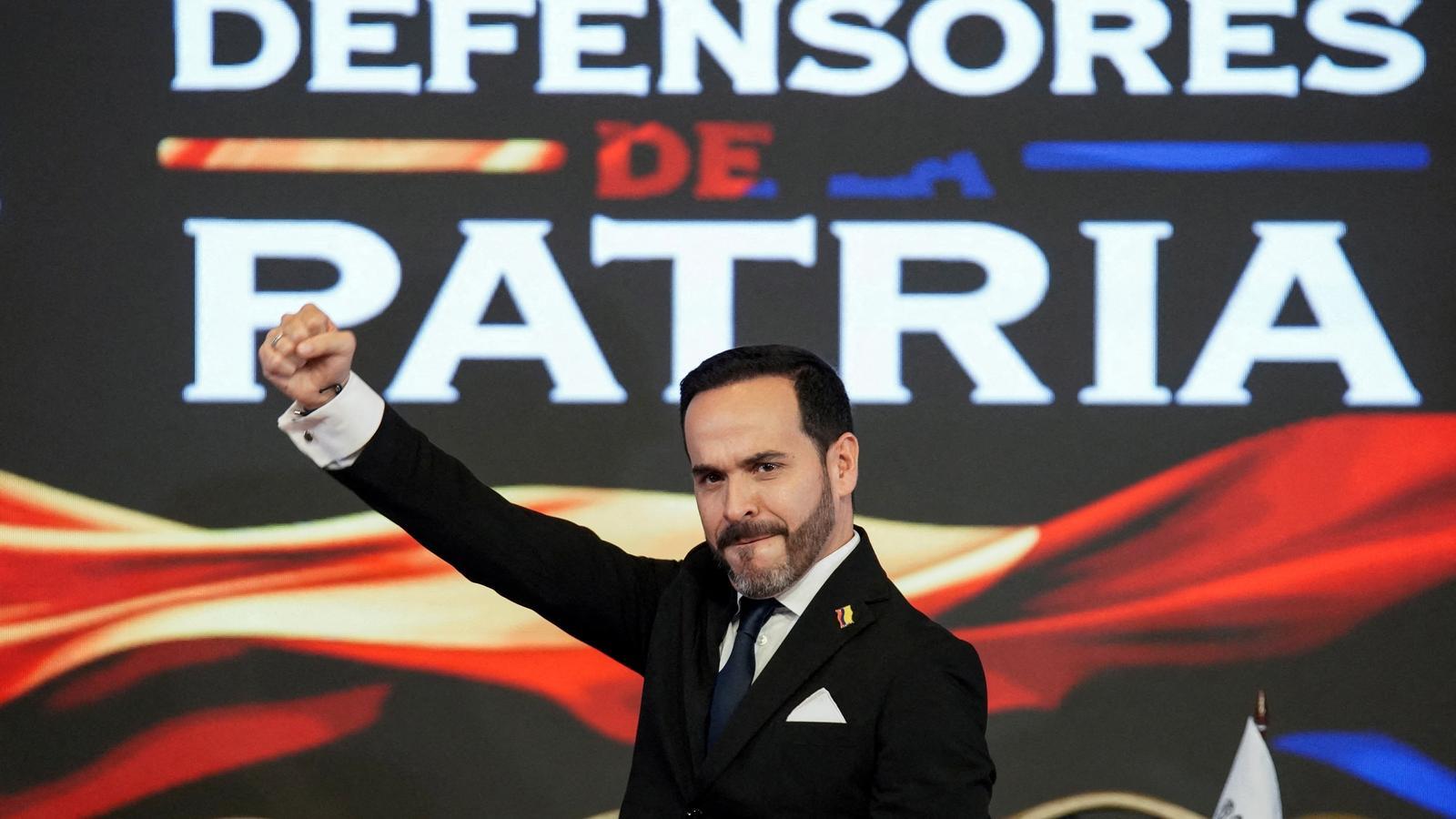
The latest have been Peru and Colombia. Keiko Fujimori and Abelardo de la Espriella, respectively, will soon assume the presidency of their countries, joining the list of ultraconservative leaders on the continent aligned with Washington, including names like José Antonio Kast (Chile), Nayib Bukele (El Salvador), and Javier Milei (Argentina). The unity of the right and far-right with the United States has been evident in the electoral campaigns that have led to victory for these political options, but it was particularly evident at the meeting in Miami organized by Donald Trump in March, when Latin American leaders and the New York magnate presented what they called the Shield of the Americas, an alliance of 12 leaders from the region loyal to Trumpism.Shield of the Americas, an alliance of 12 leaders from the region loyal to Trumpism.
Although right-wing formations on the continent have traditionally aligned themselves with Washington, this positioning often took a back seat in public discourse, as rejection of tutelage by the White House has been a widespread sentiment among the Latin American population in recent decades. "It was politically incorrect to say you were aligned with the US. But now, among right-wing political formations, this has ceased to be a taboo," Melisa Deciancio, a researcher at Flacso and Conicet, explains to ARA.
However, even though the population may support political options at the polls that advocate for close collaboration with the White House, in most countries the figure of Donald Trump generates distrust. According to data from Pew Research Center, in Argentina, Chile, and Peru, between 60 and 70% of citizens distrust the US president.
That citizens do not sympathize with Trump's figure does not necessarily mean they view the United States unfavorably. In Colombia, 60% of the population has a favorable opinion of their northern neighbor. This percentage stands at 51% in Peru, drops to 44% in Argentina, and is 37% in Chile. As the data show, it must be taken into account that it is "very difficult" to read Latin America as a whole, especially when it comes to citizen opinions, as Palmira Tapia, a political scientist at the Center for Economic Research and Teaching (CIDE) in Mexico, warns.
In any case, what is a fact is that the triumphs of the far-right – with leaders who, to varying degrees and in different ways, assimilate to Donald Trump and align with him – are proliferating on the continent, especially when it comes to presidential elections. "The hyper-presidentialism of the region favors candidates who present themselves as outsiders in politics, who run campaigns very focused on hyper-personalism," describes Deciancio. A paradigmatic case is Colombia. In June, the far-right won the presidential elections, but in the spring, the party of the then-president, Gustavo Petro, from the left, achieved victory in both chambers of the country.
Beyond the implications that voting for pro-Trump parties may have, the reasons that lead citizens to vote for these options rarely have to do with foreign policy or the candidate's stance regarding the United States. Tapia points out that, although the elections cannot be understood without Trump's open interference in supporting certain candidates and conditioning aid or credit on specific victories, what really determines the vote are usually internal dynamics and problems, as well as an intention to punish the parties that had governed until then. "I would be cautious about the idea that there is a rightward shift of the Latin American electorate. Most countries where the far-right governs are still in their first term in which this political option achieves power, and we will have to see what happens when they finish their first term," she warns, recalling the case of Brazil and Jair Bolsonaro.
Brazil and Mexico hold their ground
In fact, amid the rise of the far-right on the continent, Brazil and Mexico – the region's two largest economies – maintain left-wing executives with a discourse clearly contrary to Washington's intervention. It is evident to everyone that the reality of these two countries is very different from that of states like Venezuela and Cuba which, with more left-wing executives, have ended up adopting policies aligned with the interests of the United States.Although quantitatively they are only two states, the countries governed by Lula da Silva and Claudia Sheinbaum together contribute more than 60% of the regional GDP, according to IMF data from 2025, and their leaders are part of global social democracy that champions opposition to the US president.
Beyond their weight in the region's economy, factors such as Mexico's geographical proximity to the United States – for whom it is not convenient for the neighboring country to destabilize – or Brazil's diversification of international trade partners, looking towards China, mean that Washington has to balance rhetoric and collaboration with the two states, at a time of growing influence of Beijing on the continent, one of the main threats to Trump's plans to control the region. A right-wing victory in these two countries would be the final push for Washington to reintroduce the Monroe Doctrine without major obstacles. For now, however, Sheinbaum is the Mexican president with the most support at the polls in the country's recent history, and Brazil holds elections in the fall with Lula leading all polls.

