Cuba seeks a way out with the most surprising announcement since the Revolution
Castrism drives reforms to liberalize the economy that will hardly right the situation in the country by themselves
-
CAT -
CAST
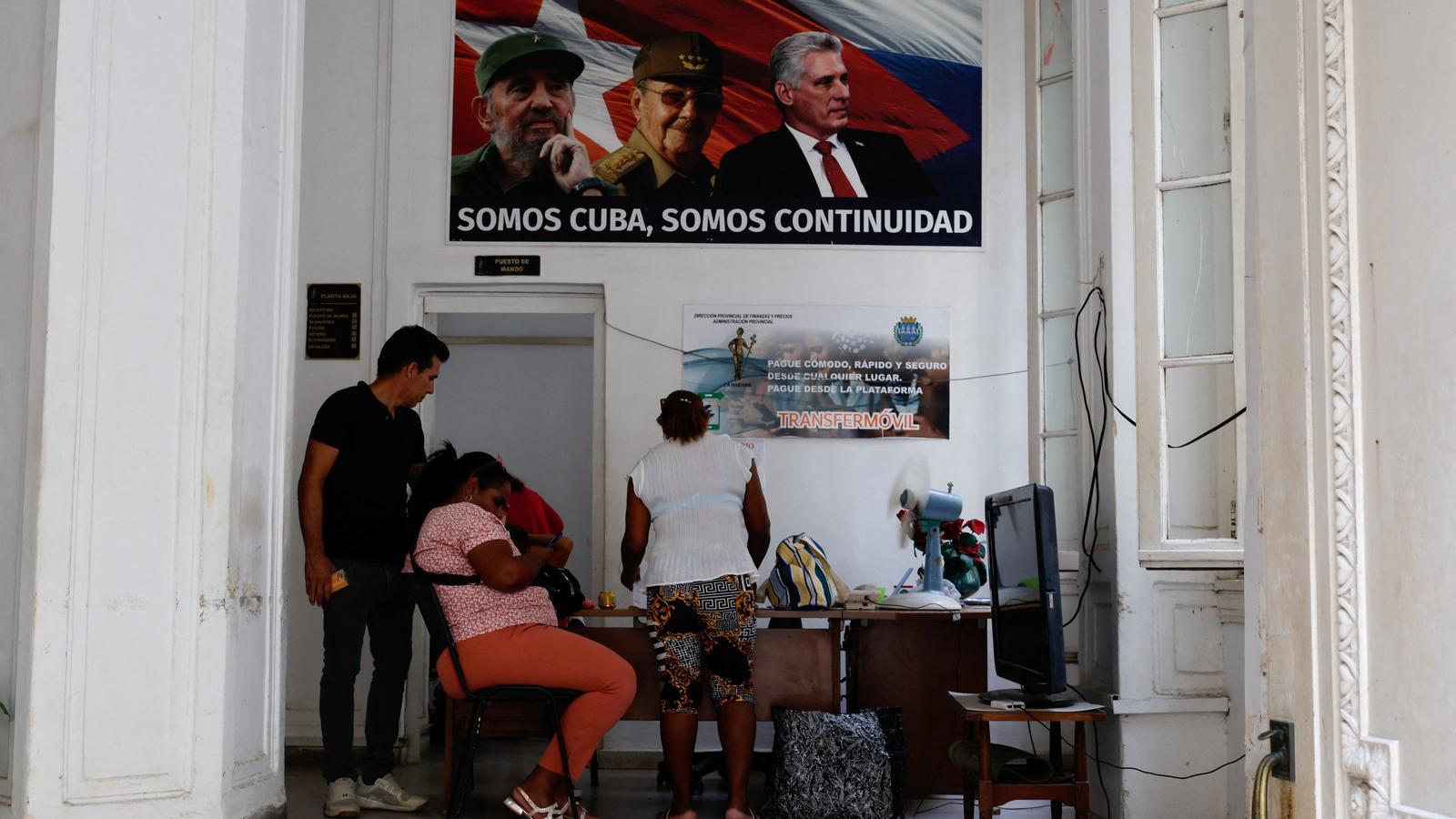
BarcelonaCuba has for years remained firm in the economic and political model adopted after the Revolution. Despite some specific and limited reforms, Castroism has been tenacious in applying changes to the socialist model. Until now. On June 12, Miguel Díaz-Canel surprised by announcing liberalizing measures that were approved this week. The president of the Caribbean country explained that the reforms must allow the private sector's "business scope" in Cuba to be "as broad as possible" in order to adapt the island to "the demands of the current times". Among the approved measures, the authorization to open private companies in areas until now reserved for the State stands out, the elimination of prices set by the administration (which will be determined by the market), the permission for the private sector to buy and sell fuel, the end of the public banking monopoly, and reforms aimed at reducing bureaucracy and state centralism.
The country is on the verge of a humanitarian crisis. This is warned by NGOs operating there and by Cubans themselves, who portray a notable degradation of living conditions on the island. The tightening in January of the historic siege that the United States maintains on the island – the longest that Washington has ever applied – has led the Cuban population to get used to living on average with only four hours of light per day. Not even the capital, Havana, escapes decrepitude anymore. The Cuban executive has been negotiating with the United States since at least March. It is in this context that it has announced reforms to liberalize the economy. But these are changes that most experts point out have arrived precipitously, years late, and will hardly reverse the country's social and economic situation.
"Everything indicates that the measures are clearly inspired by what China or Vietnam have done before," asserts Ricardo González, an economist at the University of Havana, recalling the economic liberalization processes carried out in the past by these two countries. "The question is whether these types of transformations can take place in a context like the current one, in which there are neither the economic, political, nor institutional conditions to manage such a transition," he adds, and emphasizes that for a reform process like this to end satisfactorily, "the country would first need to recover the flow of basic resources and investments."

Few expectations of improvement
All the experts consulted agree in pointing out that the reforms will hardly serve to improve the lives of Cubans. "They are probably calculated to see if there is a change in attitude from the United States, and not so much to lift the country up," points out Albert Recio, an economist from the UAB, who emphasizes that "with the criminal blockade of the US, no matter how many reforms it makes, Cuba will not get out of it." Furthermore, González points out that the effects will take time to be noticed: "Economic reforms are useful for promoting changes years in advance".
The move seems risky. Internally, González sees it as "unclear" that the measures will serve Castroism to gain support. "There are transformations that will be painful for a part of the population, and far from generating hope, they may initially generate frustration." Externally, Recio recalls the "erratic" component of the Trump administration, and Anna Ayuso, senior researcher for Latin America at Cidob, points out that for Florida voters, the US Secretary of State, Marco Rubio, of Cuban origin and who maintains a rigid anti-communist discourse, will hardly be satisfied with economic reforms, and will most likely seek a symbolic victory.
Late and to please the US
In any case, most economists agree in pointing out that these are positive changes that should have been made a long time ago. It has been more than a decade since Cuban economists, not necessarily opposed to Castroism, emphasized the urgency of an economic opening in the face of the lack of a power that would politically and economically support a country as small as Cuba, subjected to the United States embargo and abandoned since the fall of the USSR, and even more so since the US assault on Venezuela, the last support that Castroism had left. While the reforms alone will not be the panacea that will save the Cuban population, Recio states that, taking into account Cuba's geopolitical situation, "a market socialism," the economic model that the announcement points to, "can surely work better in the country than the current, extremely vertical system".
"A lot of time has been lost. During Obama's mandates [when an rapprochement between Cuba and the US occurred], the changes now proposed could have been promoted. These types of measures, implemented at that time, would have left a very different country from the one we have today," asserts González. At that time, the then-Cuban president Raúl Castro promoted a series of reforms under what was called the update of the Cuban model, but not all were approved. The ideological battle with the United States weighed heavily, but also "the opposition of the most orthodox sector of Castroism, which feared losing control of the country and power," points out Ayuso, who points to the same reason to explain why measures like those now announced have not been taken in recent years.

This time, however, the Cuban Communist Party has made it clear that the reforms, despite their liberalizing nature, "in no case constitute a deviation from the socialist project." Raúl Castro has said he is "fully in agreement," and the party's hard core has also given the green light. Díaz-Canel presented them assuring that "these are times when change is necessary" and to respond to the "demands of current times." All in all, Ayuso sees her thesis reinforced that the movement is "a first sign of rapprochement" with the US at a delicate moment for Trump: "Although he sells Iran as a victory, everyone knows it is not, and he will most likely seek to have a triumph in Cuba that he can sell in the run-up to the midterm elections in November."

