Who is Abelardo de la Espriella, the Trumpist lawyer and businessman who will contest the presidency of Colombia?
The far-right candidate will face Iván Cepeda, Petro's successor, on June 21

-
CAT -
CAST
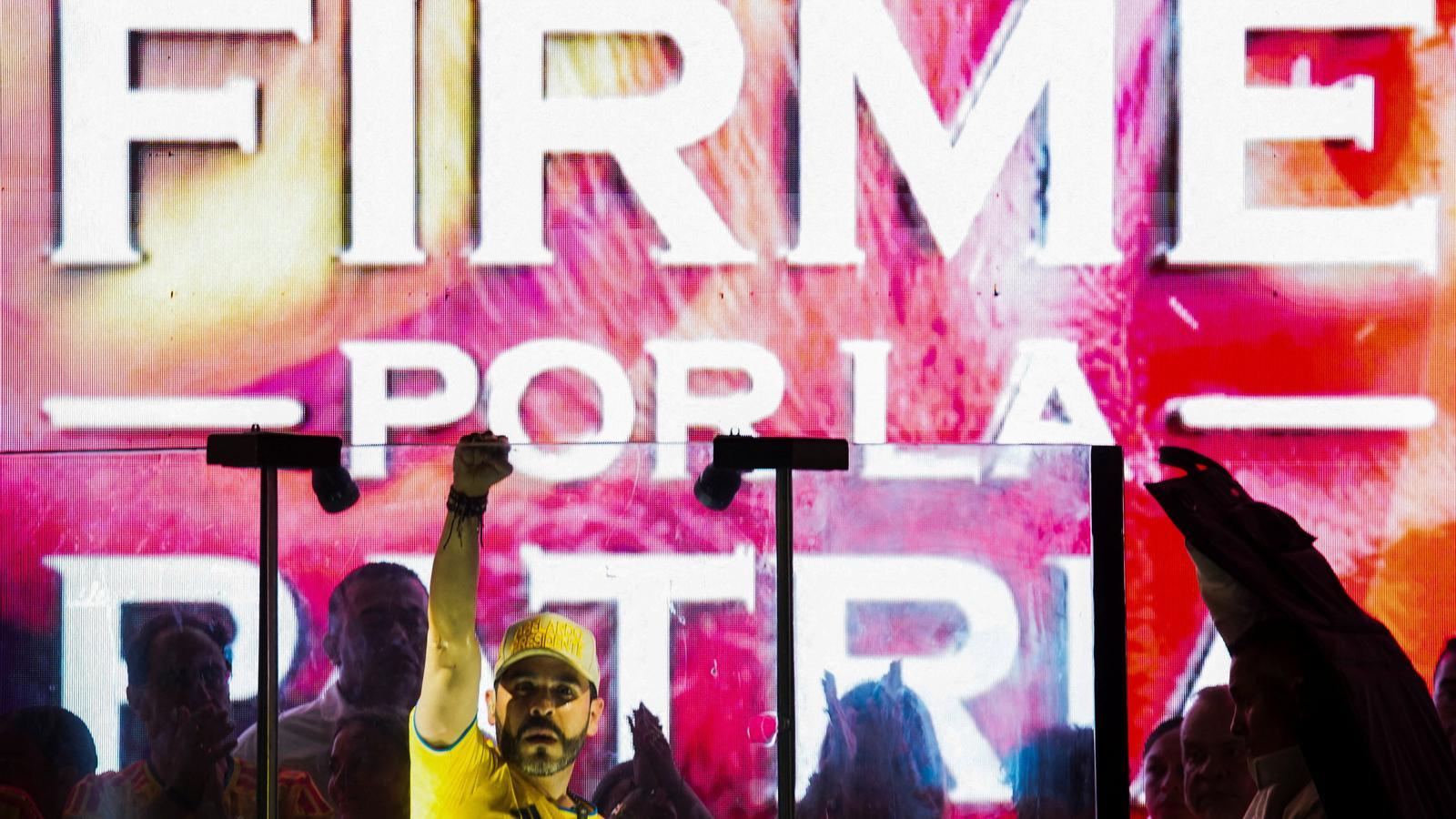
BarcelonaDressed in the yellow jersey of the Colombian national team, and addressing his followers, whom he calls "the tigers," lawyer and businessman Abelardo de la Espriella has celebrated the surprising victory in the first round of the presidential elections. With 43% of the votes, the far-right representative came ahead of Ivan Cepeda (40.9%), the candidate of the left and of continuity with President Gustavo Petro. The triumph of the leader of the new movement Defensores de la Patria has shaken politics in the Latin American country.
De la Espriella is an avowed admirer of Donald Trump, Javier Milei, and Nayib Bukele. He presents himself as an outsider What do you see here, darling? Come, zoom in, zoom it in". The apology he issued afterwards was even worse: "Qué ves aquí, cariño? Ven, acércalo, hazle zoom". The apology he issued afterward was even worse: "Entiendo que, aunque no haya existido intención de mi parte de ofender y mucho menos de irrespetar, si una mujer se siente incómoda, un caballero tiene la obligación moral de ofrecer disculpas", he said later on X. He has also made homophobic comments.

De la Espriella said he would run for president less than a year ago, when presidential candidate Miguel Uribe Turbay was shot at a campaign event in Bogotá. Security has been one of the main themes of his campaign, focused primarily on the failure of Petro's "total peace" policy, which has not prevented the proliferation of armed groups in the country, linked to the increase in drug trafficking. The lawyer promises to end crime by following the hard-line model of Salvadoran President Nayib Bukele and his mega-prisons, and a message of strength conveyed from behind bulletproof glass and his nickname: the Tiger. The far-right candidate promises to "eliminate" narcos and guerrillas, and has announced that he wants to fumigate coca plantations and bomb "narco-terrorist" camps. He promises an "iron fist" against crime and corruption, and says he will ask for help from the United States and Israel.
He combines his strongman stance with praise for traditional family values and is often accompanied by his wife, the also businesswoman Ana Lucía Pineda, and their four children. Regarding the economic model, he defends mining and hydrocarbon exploitation, tax cuts and wage reductions, and praises Milei's chainsaw.
Devouring the traditional right
Salvador Martí, professor of political science at the University of Girona specializing in Latin America, points out that De la Espriella's victory responds to the moment. "The right is advancing on traditional right-wing parties, and in the case of Colombia this has been clearer, because the uribista right-wing was already very hardline and he has swallowed it up. More than a political project, it represents an anti-political message, of fiscal rebellion, of a vote of no confidence." The candidate of the traditional right, Paloma Valencia, has not surpassed 7% of the votes. Martí highlights that in his four years in office Gustavo Petro "has not managed to conduct consistent policies or articulate a solid proposal" and that Cepeda's campaign has been "that of a moral left, which has not attracted the economic vote." The mayors of Medellín and Caracas, who represented the centrist bet, have also obtained a very low result, and now the second round will be a dispute for the centrist electorate.
For the Colombian political scientist, De la Espriella "is a danger to Colombian democracy: someone who does not respect legal minimums, who is not interested in human rights, someone capable of lying, falsifying, ignoring the law, Congress, and whatever it takes," she warns. In his campaign, the presidential candidate has spoken of "tearing apart the left," which in Colombia resonates with dictatorship and civil war. Gamboa also highlights the anomaly of Petro's refusal to recognize the result of the first count: "He is the first president in Colombia's recent history not to accept the results. But the electoral system works in the country and there is no reason to doubt it. It is the sign of a populist president who delegitimizes his opponents," he says. And he warns that with this strategy his candidate will not attract the centrist voters who will decide the outcome on June 21.
