Ceuta, forbidden word in Brussels

Let's talk about Ceuta, a European border, a sensitive point for the entire European Union. And here comes the first paradox: from the beginning, a cornered Pedro Sánchez has insisted on interpreting the massive crossing of July 30th as a European crisis. His European allies have done precisely the opposite: reiterating that, above all, it is an internal affair, a Spanish crisis.
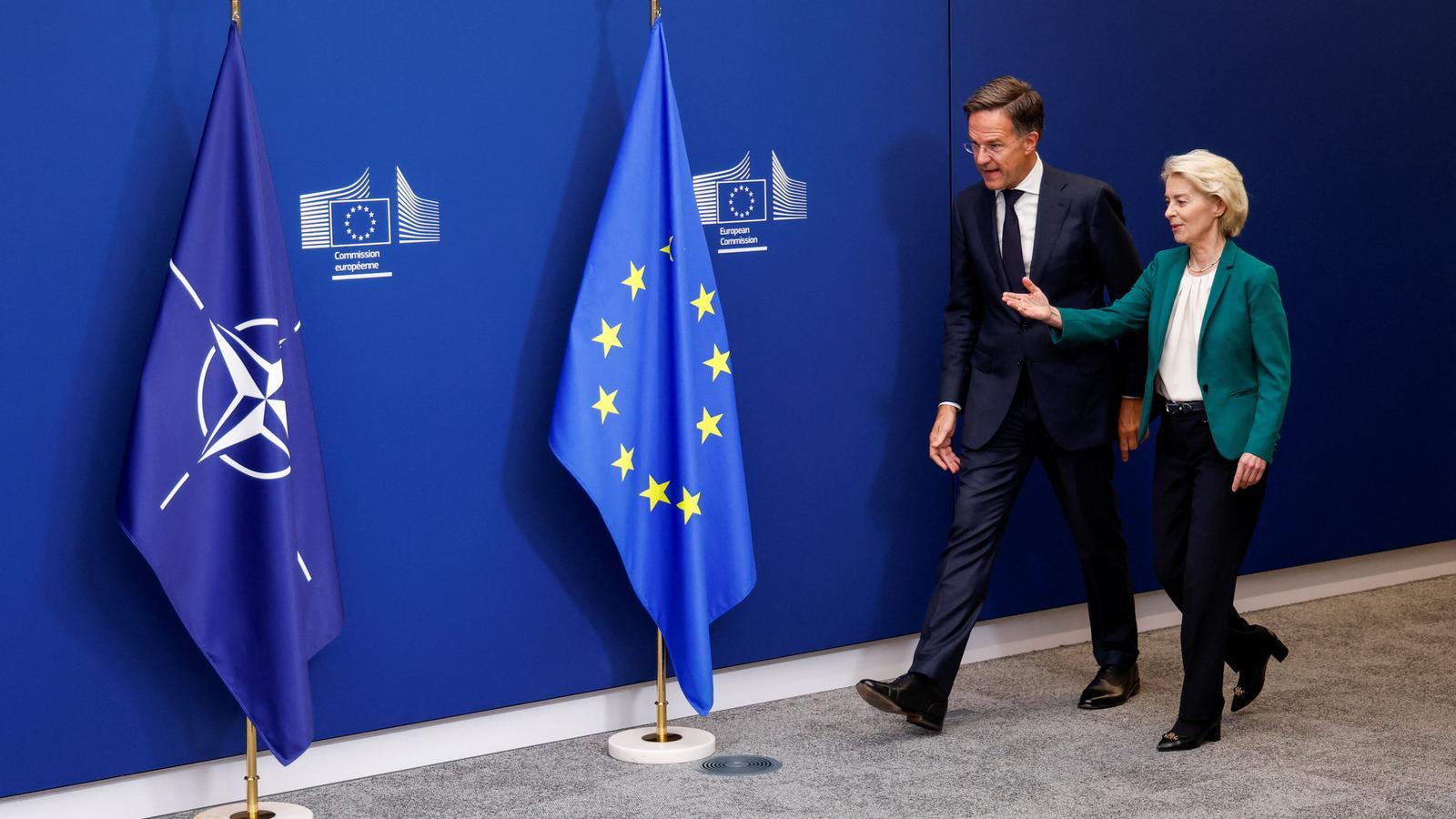
On Wednesday at noon, in Brussels, we saw the height of the paradox, another hard blow for the Spanish executive. Ursula von der Leyen and Mark Rutte, two very European voices, appeared urgently to speak about hybrid warfare after Berlin, the engine of the EU, directly accused Moscow of being behind the attempted bomb-drone attack at Leipzig airport. The leaders of the Commission and NATO also pointed to Vladimir Putin, and conveyed a message of gravity to European citizens: we must prepare ourselves for "the harsh reality that this is the new normal." The change in tone is no small matter. The landscape that surrounds us Europeans is not either.
It is surprising that during the ten and a half minutes that Von der Leyen and Rutte spent talking about this new phase of more aggressive hybrid warfare no reference was made to the crisis in European Ceuta. Beyond the internal interpretations that may be made in Madrid, from Europe, the massive crossing of July 30th should be understood as another form of foreign interference, a profoundly geopolitical move. Hours earlier, Sánchez himself had clumsily pointed towards Moscow, a zero-risk target, much easier than pointing at Rabat. Russia, just like Israel or even the United States, could have played an amplifying role in the crisis, but everything suggests that it was Morocco, as it has been other times, the great facilitator of the arrival of tens of thousands of migrants to Spanish territory.
The silence on Ceuta from Rutte and, above all, from Von der Leyen in a speech dedicated to highlighting the foreign interference that Europe is suffering lends weight to this thesis. And it demonstrates that the fear that Madrid has of Rabat is shared by a good part of the European Union's chancelleries. Morocco, one of the countries with the most lobbying power in the corridors of Brussels and the best treated economically by the EU, takes advantage of the position of geostrategic superiority that Europe has provided it and keeps the discourse of European capitals in check. This is not new, but it has become especially notorious these days. It is one of the many tolls to pay for externalizing borders, a controversial formula that may have worked a few years ago, but which, in a world as aggressive as the current one, will be increasingly difficult to sustain. The context surrounding us is clear: strategic vulnerabilities are being accentuated and traditional alliances are fading.
Some questions arise from all of this. Would Sánchez's internal discourse have been different if he had known he had the support of his European partners? Does Brussels prefer to anger Madrid rather than Rabat? By pointing to Moscow, was Sánchez desperately attempting to get a better response from his European allies? There is only one certainty: that Morocco is consolidating itself as the great obstacle in the foreign policy of Pedro Sánchez's eight years in office, and that only the Alawite monarchy is capable of making the Moncloa shudder with such intensity.
The European coldness towards the Spanish government during the Ceuta crisis is a defeat for Sánchez, but also for the strategic future of the continent: the first thing needed to confront the growing hybrid war –which does not only come from Moscow– is unity and cohesion. These two capitalized concepts are a utopia, a mirage, an adolescent fantasy. The coldness of the Twenty-seven is also a demonstration that migratory pressure is the most effective weapon to achieve the final purpose of the hybrid war: to fracture the EU's common project. And that immigration continues to be the great taboo and, therefore, the great fear of European policies.
The regularization of immigrants promoted by the socialist executive, which has nothing to do with the Ceuta episode, still stings in many EU chancelleries. The socialist leader has felt alone in Brussels, a city that had been a refuge and consolation for him in the last thorny months in Madrid.
