Americans settle accounts with Trump
The midterm elections become a stress test for the checks and balances system of American democracy

-
CAT -
CAST
WashingtonIt cannot be said that Donald Trump did not know. In the first days of the year, just after kidnapping Nicolás Maduro, the US president addressed Republican legislators at an annual event at the Kennedy Center in Washington. "They say that when you win the presidency, you lose the midterm elections. I wish you could explain to me what the hell goes through people's minds," he said then. Nine months later, Trump is probably still asking himself the same thing as projections inflate Democratic hopes.
Without even having started the war in Iran, polls already placed Trump at one of his highest peaks of unpopularity, with only a 36% approval rating from voters. A curve that has not stopped falling as the calendar has advanced, until reaching the current situation: only 31% approve of his management as president. Republican legislators were already concerned then about how to build the election campaign for midterm elections in which the Republican Party has become Trump's party. Just as the tycoon was the great attraction in the presidential election, on this occasion he could become a burden.
The worst fears were confirmed as the campaign in the Middle East bogged down and fuel prices rose. The little political capital that Trump believed he still had was confirmed at the Republican convention in Dallas –the first in history that the party has held for a midterm election–, when he offered 5,000 dollars to every American adult if the Republicans won. The tycoon made explicit what everyone was thinking and what his legislators did not want to hear: "I ask you to pretend that I am on the ballot when you vote." Whether he had said it or not, the elections this November 3 would have ended up being a referendum on his first two years of his second term.
Trump is no exception. Historically, the party in the White House tends to be the one most harmed in the midterm elections. The exceptional nature of this year's elections is driven more by the erosion that the system of checks and balances has suffered over these two years with the Republican governing, and by the growing unrest in American society. There are two issues that completely run through the electoral contest: that the Democrats regain control of Congress to begin overseeing the executive branch after the Republican majority has abdicated its duty to do so, and the question of whether the Republican will accept defeat.
The midterm elections once again place the country before a question that remained unanswered in 2024. Trump won the presidential election against Kamala Harris and, therefore, did not need to activate the theories of electoral fraud he had been sowing during the campaign. Now, the mogul has revived the ghosts of electoral fraud, with the difference that he is in power.
The ghost of electoral fraud
For weeks, Trump has moved from words to actions. In July, he addressed the nation to claim that they had discovered vulnerabilities in the electoral system that needed to be corrected. Specifically, that undocumented people had been voting illegally to favor the Democrats. The accusation was not new; it is a fact he had already been spreading during the presidential elections. The novelty is that, thanks to his total control of the Department of Justice – led by his former lawyer, Todd Blanche – last week the US administration carried out Operation Protect the Vote in California.
Within the framework of this operation, aimed at reinforcing theories of electoral fraud, eleven people were arrested in different cities in California, while 17 others were charged for allegedly registering to vote illegally and, in some cases, casting a vote. The California election has clear political relevance: it is the country's main Democratic stronghold and the state that provides the most seats to the House of Representatives.
In Alaska, which in recent weeks has become a crucial state for determining control of the Senate, the White House has also filed a lawsuit before the judge requesting that the result be declared null if the Republican candidate does not win; it has already been dismissed. The reason is that a third candidate has been added to the race in which Democrat Mary Peltola and Republican Dan S. Sullivan are competing: Dan J. Sullivan. Reports from the New York Times indicate that J. Sullivan had registered after the Democrats encouraged him to do so, a fact that he and Peltola's team deny. Republicans say it is a maneuver to confuse voters with the similarity of the name and divide the vote.
Fear of an ICE deployment
To the actions underway, there is also the fear that the administration might deploy ICE agents to polling places. It is not a fact that Trump has confirmed, but it has been hinted at by the Secretary of Homeland Security, Markwayne Mullin. This Monday, just on the eve of the election, the White House has once again filed an appeal before the Supreme Court requesting that some 20,000 mail-in ballots in California be excluded, alleging that they could have been cast by people who are not citizens.
Beyond what might happen during the vote count, Georgetown University constitutional law professor David Super points to a more distant horizon: the certification of the new Congress in January. Super does not rule out that if Trump loses, he may try to avoid certifying the victory of key representatives in order to maintain the Republican majority. "He could ask Mike Johnson [Speaker of the House of Representatives] and John Thune [Senate Majority Leader] to refuse to recognize the new Democratic members," he says.
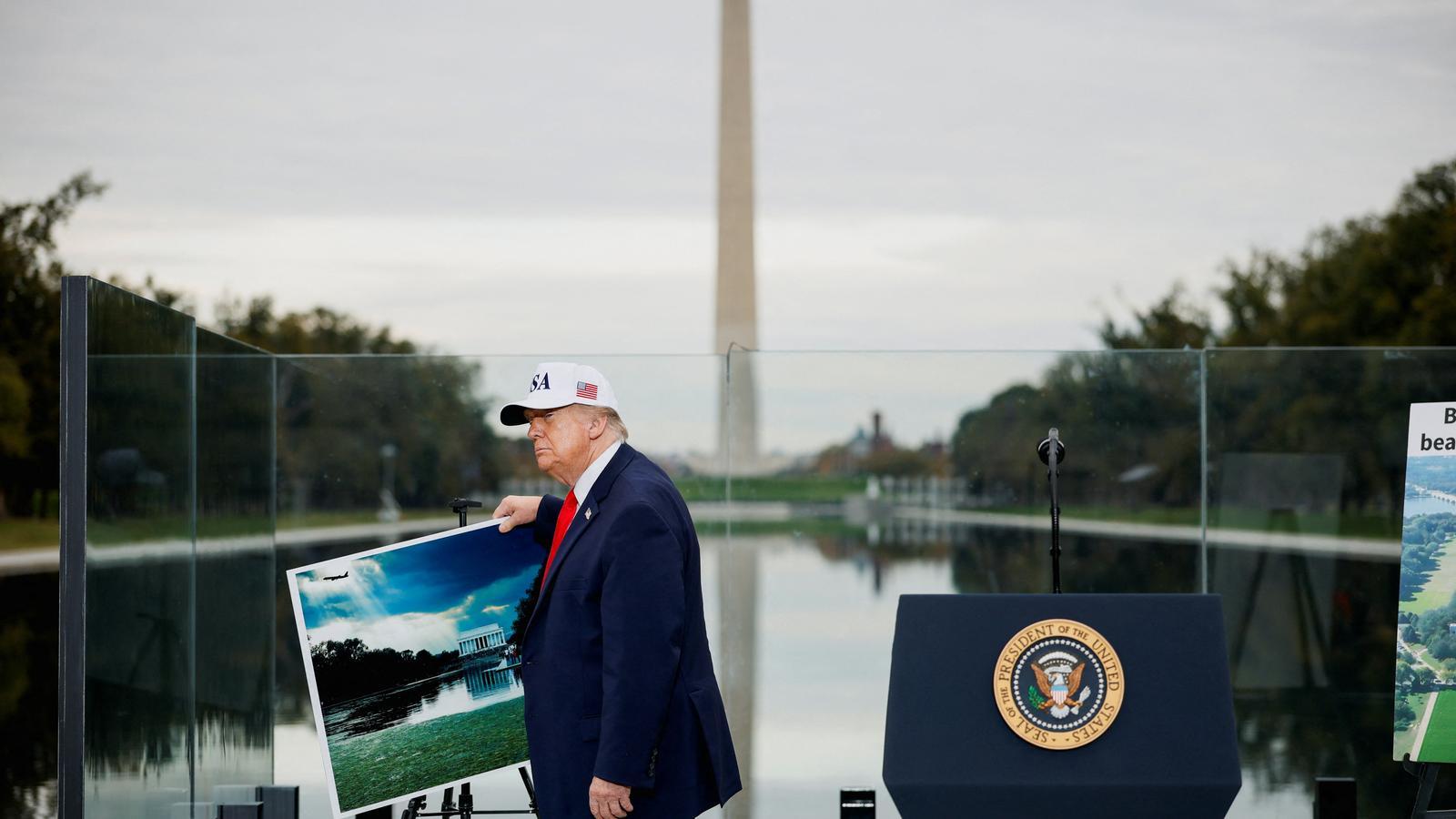
Meanwhile, on the day prior to the opening of the polling stations, Trump took the opportunity to deliver his final speech in front of the capital's reflecting pool, right at the foot of the Lincoln Memorial. Almost as if he were oblivious to the polls, the tycoon insisted on the "beautification" of the city and the future pharaonic works he wants to build there: a new golf course near the Potomac and a triumphal arch, with military capacity for drones. "These are the midterms most important of your life," he stated.

