Sculptor Miquel Navarro dies at 81
Awarded with numerous prizes, the artist had work at the IVAM and the Guggenheim, among other museums
-
CAT -
CAST
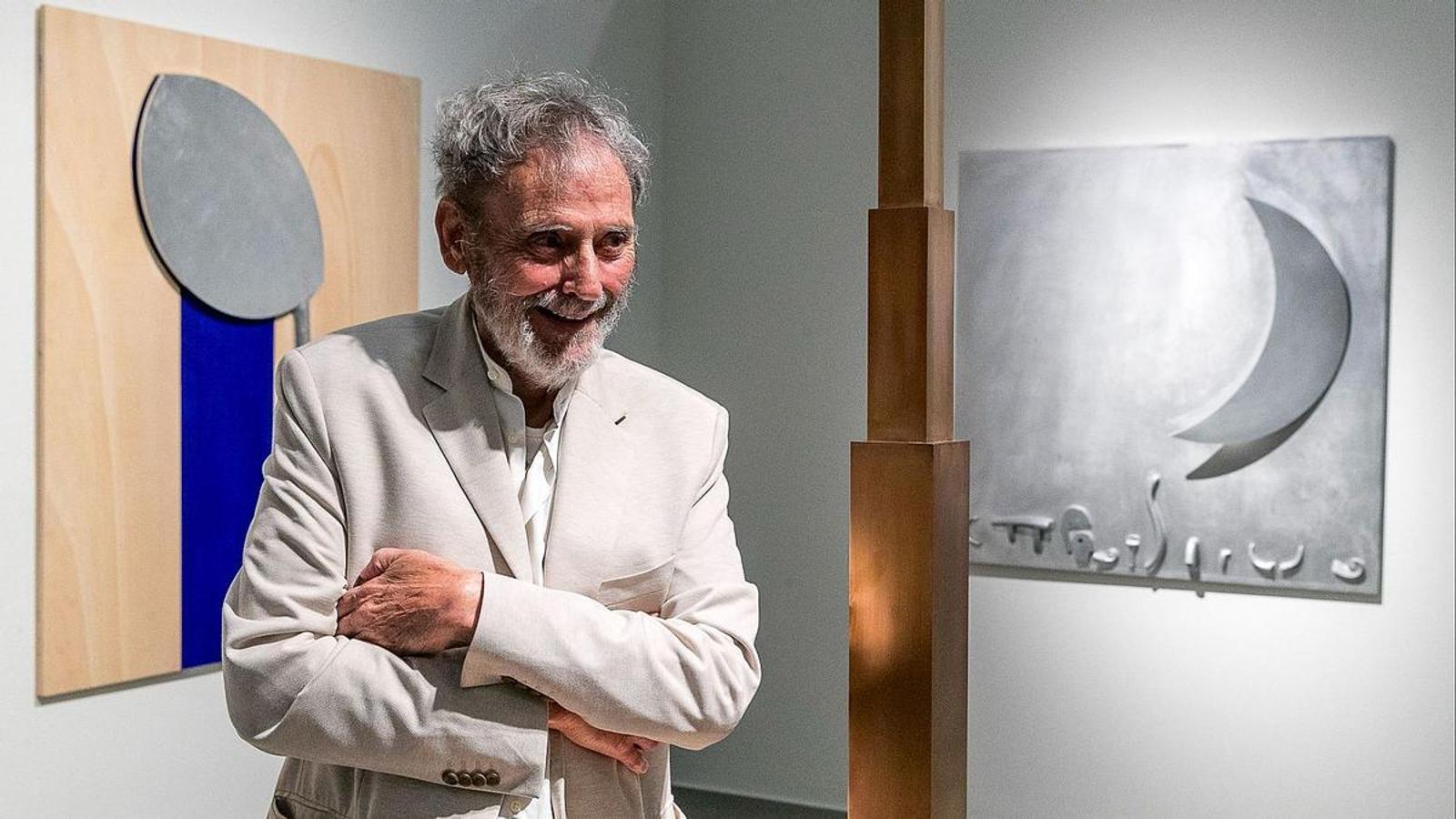
BarcelonaThe Valencian sculptor Miquel Navarro died this Sunday at the age of 81, reports the City Council of Mislata, the town where he was born and lived. In a statement on social media, the council recalls that Navarro was a "cultural reference and a key figure in the creation of the house-workshop that bears his name and in the artistic legacy that will always remain in Mislata." "He leaves an indelible mark on our city, and on Valencian culture," says the City Council, as reported by the Efe agency.
Miquel Navarro, born in 1945, trained at the San Carlos School of Fine Arts in Valencia and began his artistic career as a painter, although from 1972 he dedicated himself almost entirely to sculpture. His work is characterized by the representation of the city as a sculptural landscape, with a language that unites sculpture and architecture. From the seventies, he developed installations and sets of small elements that evoke urban landscapes, and later he also created monumental sculptures in public spaces.
In 1968, he participated in the collective exhibition Our Self (Our Self), in Valencia. His first solo exhibition was at the Tassili Gallery in Oviedo in 1972, the same year he created an experimental piece, The Chimney Volcano (The Chimney Volcano), made with refractory material, loose sand, and incense. Starting in 1973, he developed one of the essential lines of his entire career: the cities, sculptural sets that turn space into an urban metaphor.
From 1974, he focused his work on sculptural landscapes, installations, and assemblies of small variable elements that evoke urban landscapes and blur the boundaries between sculpture and architecture. In these compositions, he used materials such as clay, lead, zinc, aluminum, terracotta, glass, stone, plaster, and wood. His international recognition was boosted by his participation in 1980 in the exhibition Images from Spain at the Guggenheim Museum in New York.
During the eighties, his miniaturized sets evolved towards monumental works, both in galleries and in public spaces. In 1984, he installed in Valencia the sculpture popularly known as The Pink Panther (The Pink Panther), and in 1989 he presented at the Crystal Palace in Madrid Paranoid Minerva (Paranoid Minerva), a large iron figure. He also developed public sculptures such as Fraternity (Fraternity), in Barcelona; Moon Mouth (Moon Mouth), in Brussels; and The Big Dragonfly (The Big Dragonfly), in Valencia.

Among the awards he received are the National Plastic Arts Prize from the Spanish Ministry of Culture in 1987, the CEOE Arts Prize in 1990, the one from the ARCO Art Critics Association in 1995, the Distinction for Cultural Merit from the Generalitat Valenciana in 2002, and the Julio González International Award in 2008.
His work became part of top-tier museums and collections, including the Guggenheim in New York and Bilbao, the Reina Sofia in Madrid, the Centre Pompidou in Paris, the Lambert Foundation in Brussels, and the IVAM. In 2005, he donated more than 500 works and artist notebooks to the IVAM that reflected his creative evolution since 1964.
