Trump, against the ropes: what do the polls say about the 'midterms'?
The New York tycoon arrives at the midterm elections with his popularity in free fall and the burden of inflation


-
CAT -
CAST
BarcelonaThe wind is blowing in favor of the Democrats, but the United States midterm elections will be very contested and will depend on the results in less than a dozen states. This is what polls suggest about an election in which President Donald Trump risks being able to continue deploying his political and economic agenda without the brake of Congress for the last two years of his term. The Democrats, however, aspire to turn the majorities around and snatch the control that the Republicans now have in the House of Representatives and the Senate.
The Democrats, with an advantage
The polls paint a favorable scenario for the Democrats, which has led Trump to redouble his campaign efforts with almost daily events in the states that will be decisive. According to the Decision Desk portal, which averages different polls, the Democrats have a 79% chance of winning the House of Representatives. Furthermore, the trend is in their favor: they have added two percentage points to this figure in just one week.
Cook Political Report, a publication that analyzes elections and political campaigns in the United States, has also revised its projections in 19 districts in favor of the Democrats. Many of them are in traditionally Republican states, and, according to these calculations, the Democrats have practically guaranteed 220 seats in the House of Representatives, above the 218 that mark the majority.
According to the Reuters and Ipsos poll, conducted with interviews this same week, 53% of respondents who say they will likely go to vote will do so for the Democratic candidates, while the voting intention for the Republicans stands at 44%. The figures are very similar to those pointed out by CNN, which with various aggregated polls gives 52% support to the Democrats and 43% to the Republicans. Since August, voting intention has remained relatively stable, with maximum variations of two percentage points.
Trump's popularity, at a minimum
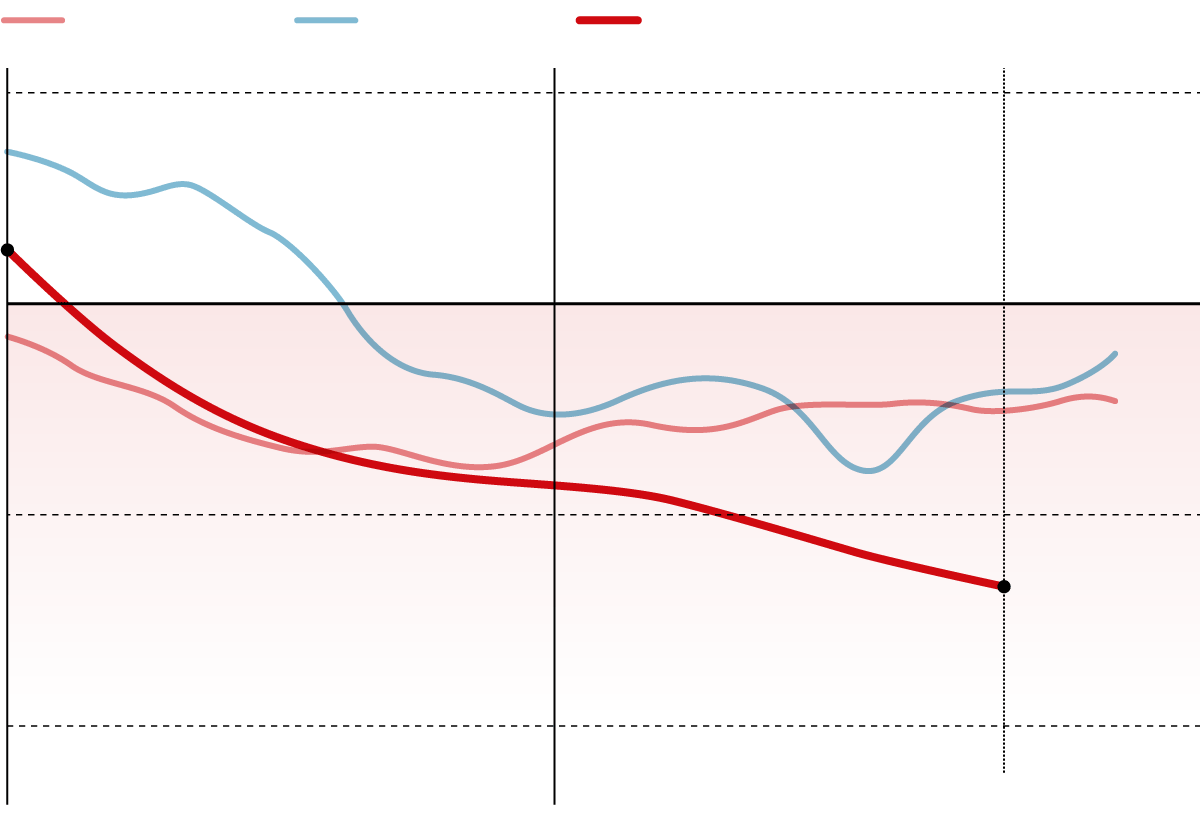
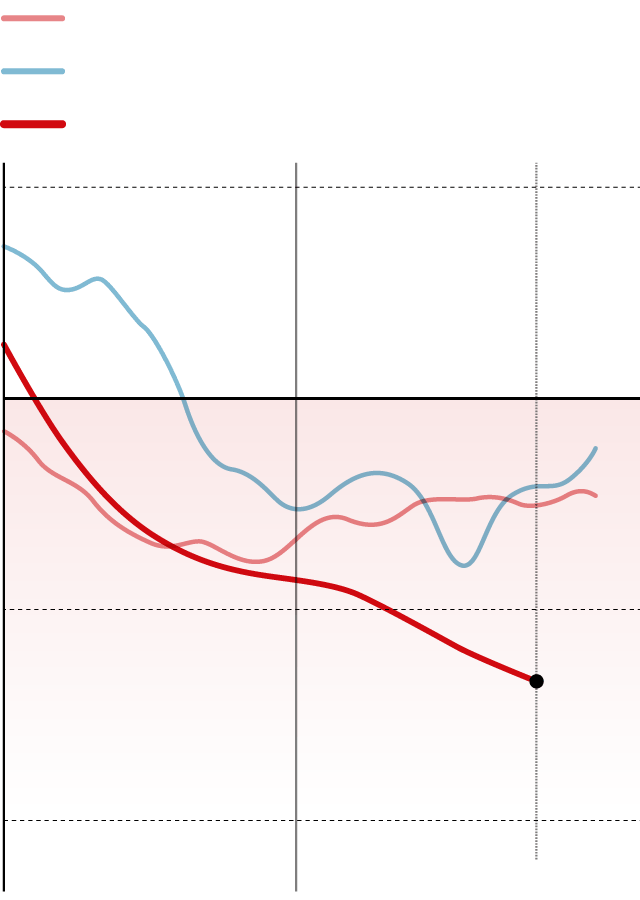
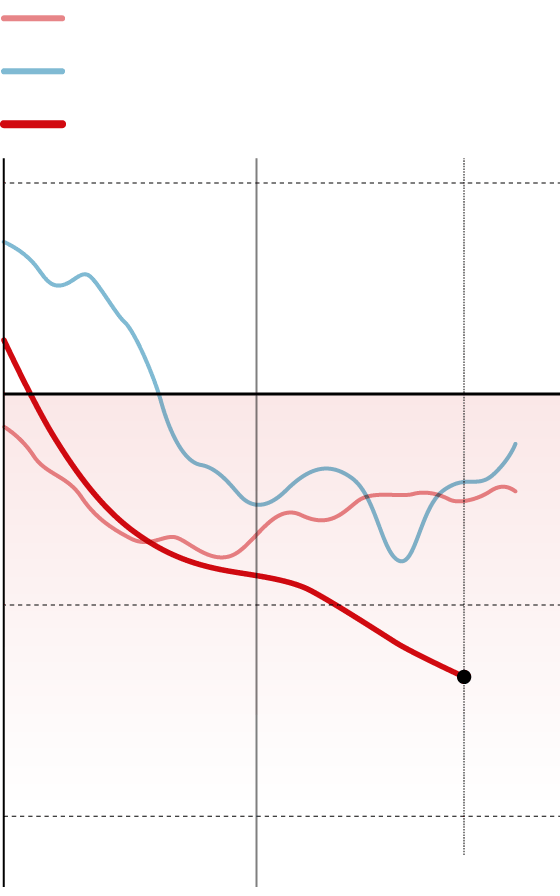
Trump arrives at the midterm elections at a low point. The The Economist poll shows that his popularity has been in free fall since the beginning of 2025, when he returned to the White House, and the decline continues week after week. The rising cost of living and the Iran war have taken their toll.
The same poll shows that, in Trump's first term, his popularity began to rise after his first year in the White House. Conversely, former Democratic president Joe Biden arrived at the midterm elections with higher popularity, despite his term also being marked by inflation and the economic impact of the war in Ukraine.
Dissatisfaction with the management
Polls also agree that the majority of US citizens disapprove of Trump's management as president. The study by The Economist says that 61% disapprove of his management, while 34% approve of it and 4% are not sure. The CNN poll agrees on the figures, and the Reuters and Ipsos poll raises to 66% the citizens who say they disapprove of Trump's management.

Trump 2017
Biden 2021
Trump 2025
+20
+15
+5
Més aprovació
0
-3
Més desaprovació
-20
-27
-40
2025
2026
19 de gener
1 de gener
11 d’octubre
Trump 2017
Biden 2021
Trump 2025
+20
+15
+5
Més aprovació
0
-3
Més desaprovació
-20
-27
-40
2025
2026
19 de gener
1 de gener
11 d’octubre
Trump 2017
Biden 2021
Trump 2025
+20
+15
+5
Més aprovació
0
-3
Més desaprovació
-20
-27
-40
2025
2026
19 de gener
1 de gener
11 d’oct.
The increase in prices, the cost of living, and the economy are the main reasons why citizens disapprove of Trump's management, followed by the war in Iran, corruption, and foreign policy. Crime and immigration are in last place, behind other issues such as artificial intelligence.
However, if one exclusively analyzes the concerns of Republican voters, immigration plays a prominent role: 13% believe it is the main problem for the US, while only 1% of Democrats consider it so. The conclusions of the survey by The Economist also point to a soaring concern among Republicans regarding taxes and public spending compared to Democrats. The positions are reversed in the case of healthcare and climate change, areas in which the fear of Democrats far exceeds that of Republicans. That said, Republican and Democratic voters do coincide in pointing to inflation, employment, and the economy as the main problem in the US.
As expected, Trump's disapproval is higher in states that have traditionally voted for the Democrats and lower in those that tend to support the Republicans. However, the The Economist poll, which uses data from YouGov, points out that dissatisfaction with Trump is widespread, even in states that contributed to his return to the White House. It is in these states where the Republicans are at risk of losing control of Congress in elections that are expected to be highly contested.
