How much more time will we have to wait for the mushrooms to come out?
The drought and high temperatures have slowed down the season, but mushroom pickers and experts trust that the rains at the end of September will begin to bear fruit in two or three weeks

-
CAT -
CAST
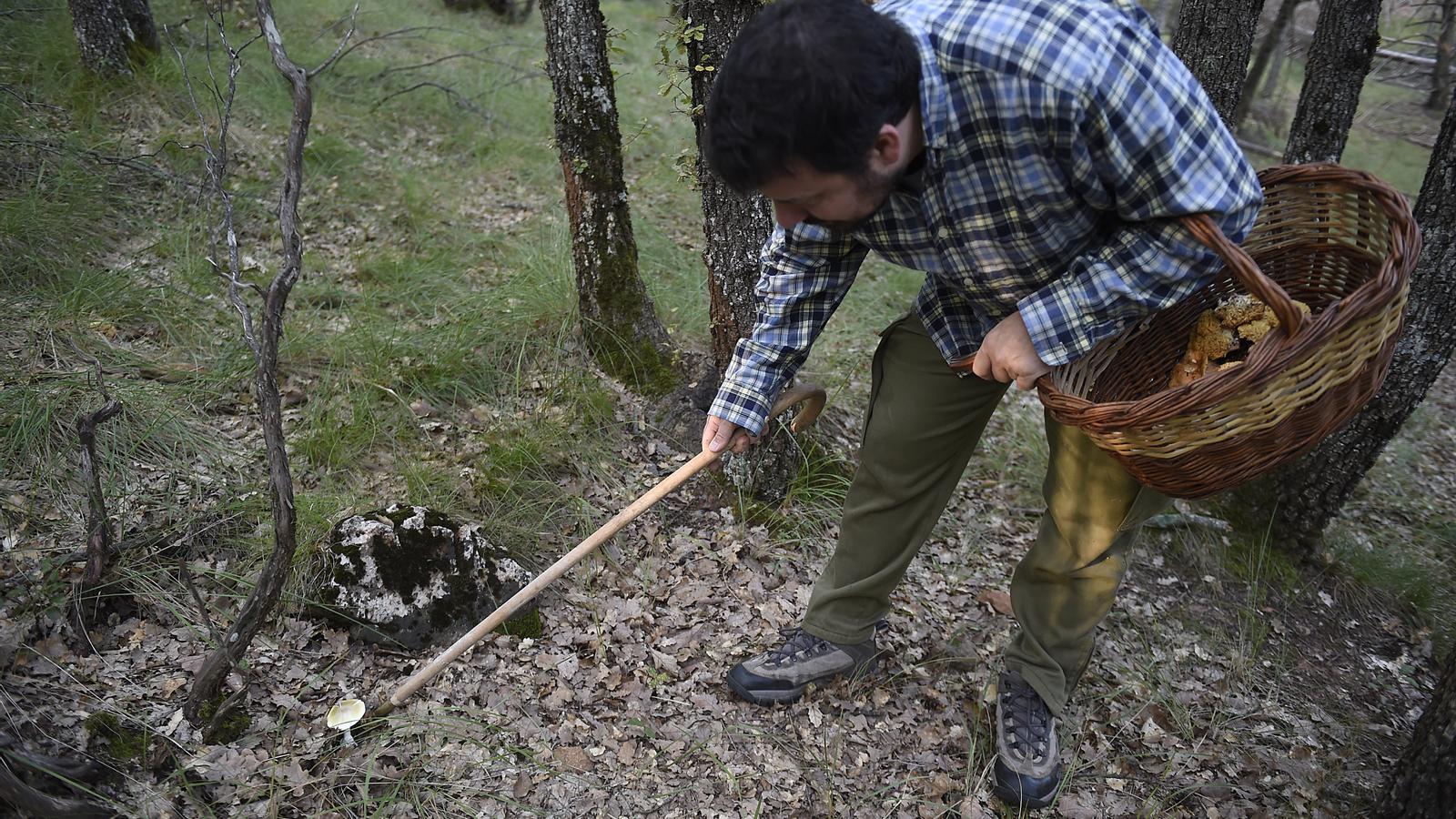
GironaA year ago, the mushroom season was very good. In the months of October and November, the craze for finding them filled the forests of Catalonia with cars and enthusiasts with full baskets. This 2026, however, the forecasts are much more pessimistic and the calendar has been delayed. Mushroom hunters, farmers, forest owners and mycologists, who know the terrain closely and know exactly which shady spot to search in depending on how the weather evolves, agree on the diagnosis: everything is very dry and so far very few have come out, even though the heavy rains of the last few days may improve the situation. Mind you, the rainfall needs to remain constant for a few days, the temperature needs to moderate, and the results will begin to be noticed in two or three weeks.
"We are expectant and have a little hope. Basically, we need it to rain and also for there to be no wind, which is the worst enemy of mushrooms, as it lifts the surface layer of the forest where the fungi fructify," explains Miguel Ángel Pérez, a mycologist from the Girona-based Joaquim Codina association, linked to the University of Girona, which is in charge of X-raying the situation week by week and works with fairs and natural parks. Pérez points out that a 'llevantada' (easterly wind event) would be needed, with light rain for two or three days, and then, since it has been a very, very dry summer, a "spectacular fructification" could occur. "Most of the mushrooms we cook to eat are mycorrhizal, those that form an association with trees and plants, and these, if they do not have the conditions, do not come out, but they can come out the following year or after two years. They do not need to fructify to stay alive, because the mycelium, the underground fungus, is waiting for the ideal moment," argues the mycologist.
If these meteorological conditions are met, by mid-October, porcini mushrooms, penny buns, and Caesar's mushrooms could begin to appear. Others, such as tricholoma terreum, saffron milk caps, and pine mushrooms, which need the temperature to drop a little more, are usually later.
Fairs on hold and worried farmers
The presumed first bloom of October will coincide with the first mushroom fairs throughout Catalonia. One of the most famous is that of Llagostera, a town with a strong mushroom-picking tradition, flanked by the Gavarres and Cadiretes massifs, which is held during the Puríssima long weekend. "On the 11th we have a mushroom hunting contest, we trust that some will have already come out, although it will surely be after the fair when there will be the burst derived from the rains of late September," comments Adrià Guinó, Councilor for Culture and Festivals of the Llagostera City Council. Other fairs, such as the one in Albons, have been postponed until November in anticipation of better omens.
Faced with the possibility of few mushrooms, and with the recent experience of the harshest years of drought, the fairs have also become accustomed to seeking alternatives to the freshly picked local mushroom with offers of derivatives such as dried mushrooms, jams, creams, preserves, or pâtés.
For their part, the farmers, who are accustomed to walking in the forests and feel the state of the land very well to know when to sow, are also a good thermometer: "As long as the reservoirs are full and they have water in Barcelona, everyone is calm. But the reality is that after a very hot summer, without rain, with low humidity and long days, we have a deep drought. The springs, which had a good dynamic, are back in regression. And many holm oaks, hackberry trees, ash trees, and oaks, which have had to draw water from the subsoil and have transpired more than normal, have died and are letting their leaves fall," says Josep Valldossera, a farmer from Santa Coloma de Farners, who moves through the Selva and Garrotxa regions.
In the Pyrenees, a summer without mushrooms
And, in the mountains, where conditions are usually more favorable, it is much the same. Above a thousand meters, mushrooms bloom during the summer until October, and this year there haven't been any. This is how Eva Martínez, an environmental activist and resident of Espinavell, near the Ulldeter valley, describes it. "It has been a terrible year, not only for mushrooms but also for the grasses. The drought has ravaged everything. Since it didn't rain until the second half of August, the first bloom already passed by. Many days you see people coming down with half-empty baskets and long faces. Every now and then, someone finds a sheltered spot and fills a basket, but in general, it is a bad season," she corroborates.
And towards the Cadí, it's the same. Josep Pintó, a forest owner from Sant Llorenç de Morunys, below the Port del Compte station, summarizes it: "Zero, and now in October, it is already late. With the rain these days, I don't know if we'll get there, because the temperature drops immediately and, with the frosts, they don't grow anymore." His property, in other years, was full of them, to the point that there was a constant trickle of mushroom pickers. To control it and encourage respect for the environment, Pintó established a system twelve years ago for access with a reservation phone number and a five-euro ticket. Last year he had to limit visitors to ten a day, but this summer no one has called to request entry.
