Gardiner Harris: "It is the greatest, most expensive and deadliest criminal conspiracy in the history of the United States"
journalist
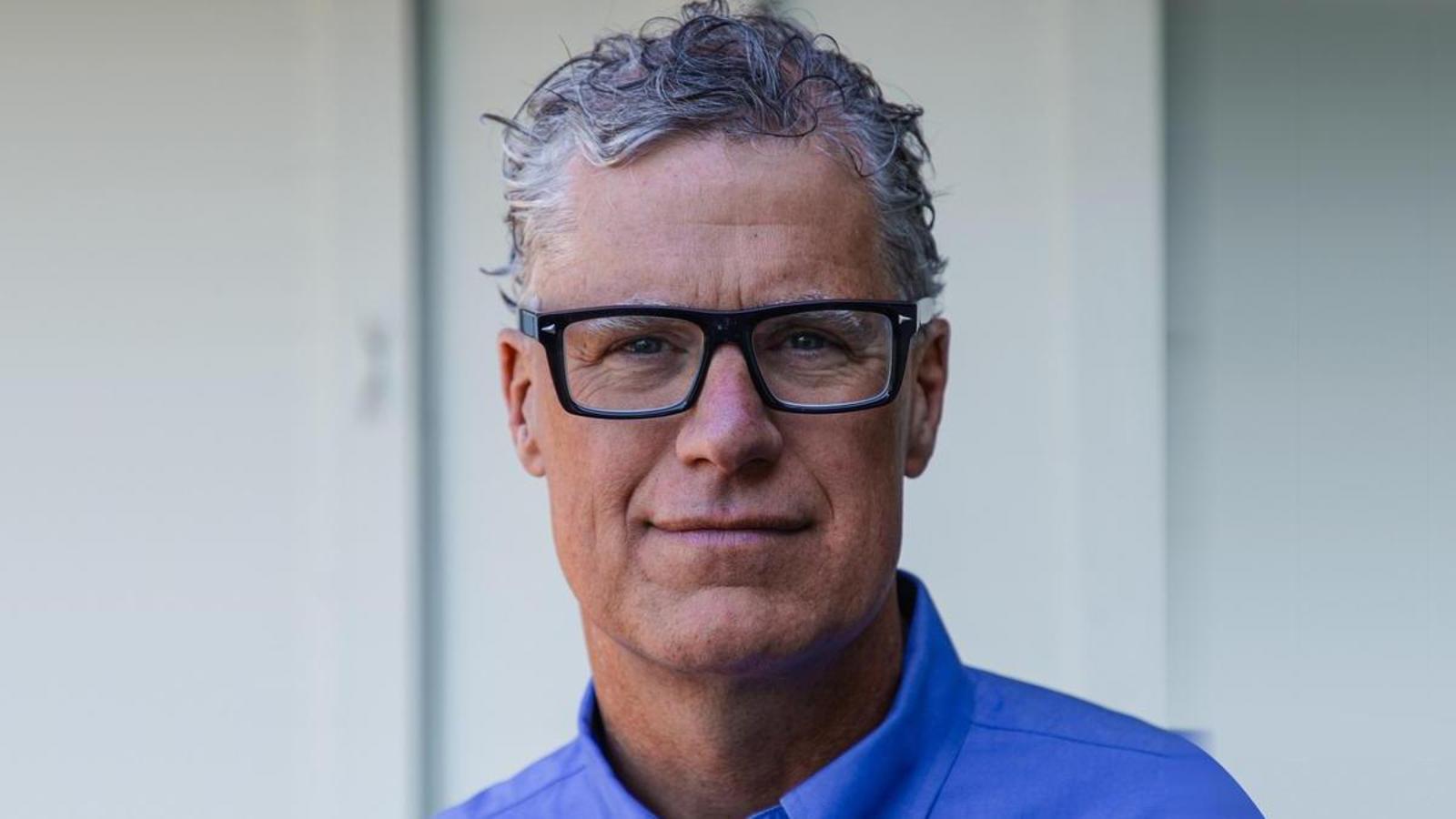
He was a correspondent for the New York Times at the White House and in New Delhi, and a reporter for the same newspaper covering the pharmaceutical sector. As a symbol of how he understands the profession, he has no photograph on WhatsApp. He says that neither his name nor his face matters: only the stories he tells. Many of these stories have had important consequences, such as the report that led to the Sunshine Act, the law that forces pharmaceutical companies to make payments to doctors public. One of the major companies in the sector, Johnson and Johnson, became, in his own words, an “obsession.” He wanted to investigate its malpractice and ended up leaving the newspaper and current affairs to address it, in depth, in a book. The result is No more tears, translated into Spanish by Capitan Swing as No llores más. Los oscuros secretos de Johnson & Johnson.
Your story begins at a Chicago airport.
In a bar, while I was waiting for the plane, they were showing a college basketball game. The woman next to me was experiencing it intensely and we started talking. She ended up explaining to me that she was a pharmaceutical sales representative for Johnson & Johnson. And she told a terrible story about her nephew with a drug.
Specifically, Risperdal.
She got him an appointment with a psychiatrist, who gave him doses of Risperdal that she herself had given him days earlier. The boy gained a lot of weight, started not wanting to leave the house... and she saw that perhaps what was coming did not fit with reality.
What does Risperdal do?
What Johnson & Johnson has done with this medication is the largest, most expensive, and deadliest criminal conspiracy in the history of the United States. It is estimated that one million people died due to the misuse of antipsychotics, especially the elderly. It was given to nursing home patients with dementia and all it did was leave them sedated, so that there wouldn't have to be a nurse on night duty. But it didn't help them with their dementia, it left them worse off.
And why was it given to children?
They managed to convince child psychiatrists to prescribe it to disruptive children. More than half experienced drowsiness, the other half, nausea. They stopped being disruptive because they were too tired. 10% developed breasts, which is a terrible side effect, because if you want to get them removed you have to undergo a double mastectomy. And around 15% of prepubescent girls produce milk in their breasts. Johnson & Johnson knew what they were doing: killing elderly people and causing terrible effects in children.
But if it was illegal, how could they do it?
Because they are one of the largest corporations in the world, and the most profitable. They pleaded guilty to having marketed the drug for uses that had not been approved by the FDA. And I have the grand jury records: the sworn testimonies of their own representatives where they admit these behaviors. What did they do? Pay a fine. It is what we see today with social media as well: when you make a lot of money, you can literally get away with it.
Do fines not work?
This company earned between 100,000 and 200,000 million dollars from Risperdal and the drugs that followed it. They view the fine simply as a cost of doing business.
This is also true in the opioid crisis...
It drives me crazy how the story has been told.
Why?
Everyone thinks it was caused by Purdue Pharma and the Sackler family, who own it. It is false. I tried to make the editors of the New York Times understand, and when I saw they were not interested, I ended up leaving the job to write the book.
What role do they play in the fentanyl crisis?
It is a medication from Johnson & Johnson. They bought the discoverer's company and sold the product. When Purdue Pharma begins to aggressively market opioids as non-addictive products, Johnson copies this with fentanyl, a completely synthetic opioid that is 75 times more potent and addictive than Purdue Pharma's, which was Oxycontin. That is why the crisis worsened so much, because Purdue Pharma said that opioids were not addictive and the most respected and largest medical products company in the world repeated the arguments.
And why isn't it explained like this?
Purdue Pharma does not advertise in mainstream media. Why did we focus on them? They could not threaten us because they did not advertise with us, nor did they have consultants at major medical centers or an army of lobbyists on Capitol Hill. The financial situation of the media allows companies like Johnson & Johnson to act with more impunity.
The image of this company is a super-cute baby, from a company that sells talcum powder…
The story of Johnson's baby powder is one of the most interesting and frightening in the entire history of business. When they launched the talcum powder they did not know it, but the company discovered in the fifties that these powders contained asbestos. And it begins to be demonstrated that asbestos is a dangerous and carcinogenic mineral. They could do two things: replace it with another similar product, such as cornstarch, or cover it up. They did the latter, and once you have decided that it is okay to poison babies, you can do almost anything.
I think the case that seems most terrible to me is that of Procrit.
Why is it prescribed to chemotherapy patients. The active ingredient is EPO, a hormone that stimulates red blood cells. It was intended to be used for kidney dialysis cases, because it is a process that ends up destroying red blood cells and makes people become anemic. And Johnson & Johnson thought: who else becomes anemic? Cancer patients often have brief anemia, and they gave it to them. And this program was so successful that EPO became the most used cancer drug in the United States. Problem? There was a risk of making the tumors grow.
But did they know?
They created an anti-EPO research project to create an anticancer compound, because they knew that tumors could grow. They sponsored many clinical trials. And when they showed that patients with EPO were dying more, they did not make them public. It had to be a German company, Roche, that published results that Johnson & Johnson hid for 10 years.
Can we not trust the FDA?
No, it is held captive by the pharmaceutical industry. The problem is that the federal government did not provide enough money to quickly approve drugs, and an agreement was reached: if they funded it, review times could be accelerated. This has resulted in it protecting the pharmaceutical industry more than the public today.
You are harsh with doctors, you say they accept bribes.
They don't do it explicitly, because they cannot pay them to prescribe drugs, but what they do is say that they pay them for advice. And the payments are only maintained if the doctors, in reality, increase the prescriptions.
Weren't you afraid to publish the book?
I provide documents for everything I say, but although it is a bestseller in the United States, it has not been published in England, Germany, or most of the world, because libel laws do not protect me. This company has spent more than 35 billion dollars since 2001 on litigation costs and they have some of the toughest and most aggressive lawyers on the planet.
Did you expect more consequences within the company after the publication?
I have been able to publish investigations that have had consequences, but nothing I have done against Johnson & Johnson has had any real effect on this company. When I give talks to young journalists, they are always disappointed when they hear this sentence. I say that there are battles that are worth having, even when you know you will lose them.
