The Government approves aid to those affected by African swine fever
The measures, through the ICF, are for companies in the restricted zone, slaughterhouses and farms
-
CAT -
CAST
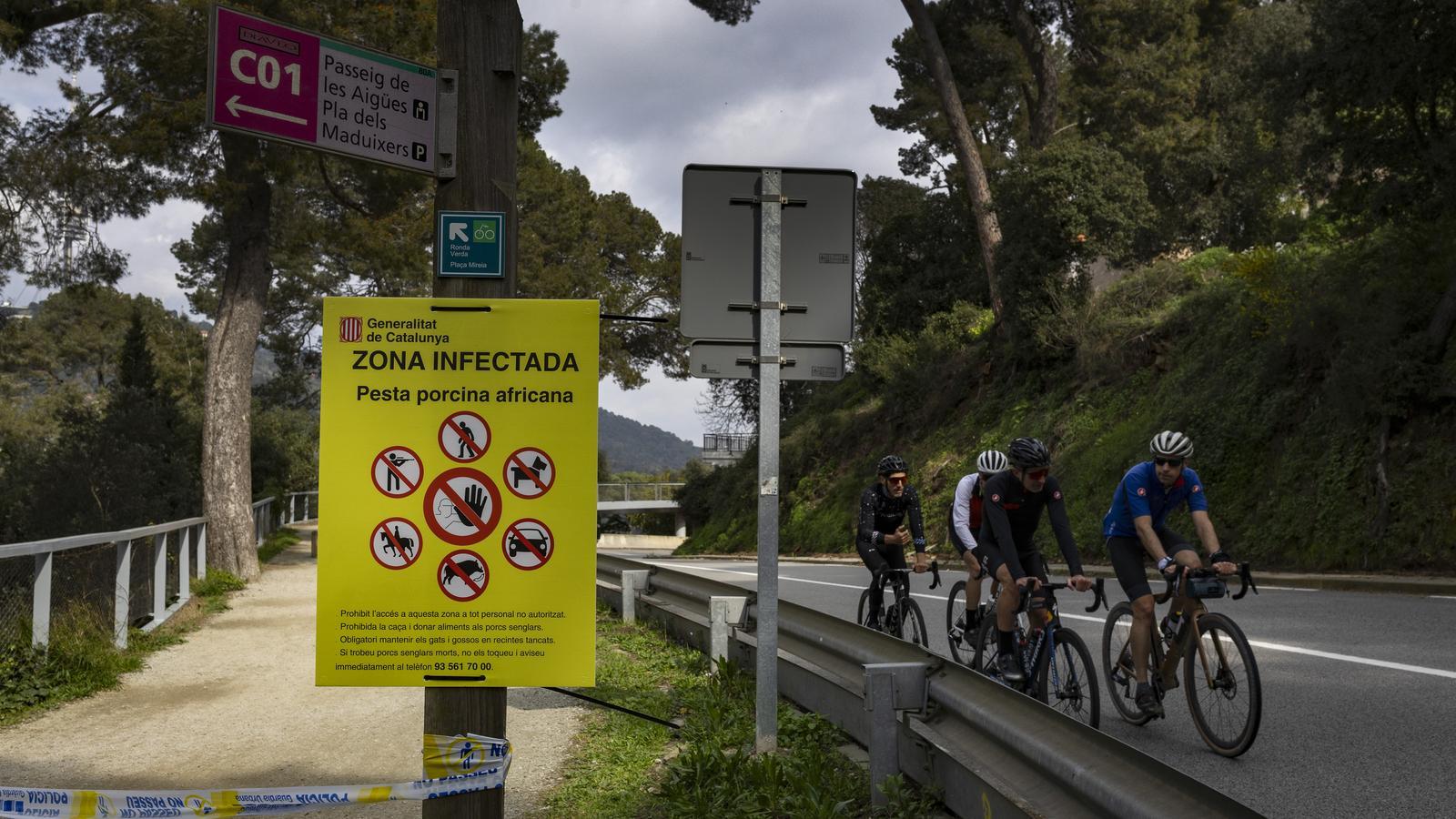
BarcelonaThe Government approved this Tuesday a series of economic and financial support measures, which will be channeled through the Catalan Institute of Finance, for companies and businesses affected by African swine fever (ASF). The aid package, designed by the departments of Agriculture, Livestock, Fisheries and Food; Business and Labor; and Economy and Finance; will have three lines of action: direct aid for companies located in high-risk municipalities that maintain restrictions on the natural environment; aid for pig slaughterhouses affected by regionalization – that is, from areas where they cannot export – and subsidized financing lines for pig farms affected by movement restrictions.
The Government will promote a non-reimbursable aid line, for which the call for applications is expected to be published during February 2027. Companies in areas with access restrictions to the natural environment due to high risk, which can demonstrate a decrease in turnover greater than 30% during 2026 compared to 2025, will be eligible for this aid. In addition, the ICF will soon launch a line of loans with interest rate subsidies for companies in restricted areas so that they can meet their liquidity needs.
In the case of slaughterhouses, there will be total or partial compensation measures for the administrative and sanitary costs associated with export and slaughter activities. These measures will include the costs of sanitary inspection and control actions, as well as the costs associated with the issuance of certificates and documentation required in destination markets for exports issued by official veterinary services. In addition, the ICF will expand the ICF Agroliquiditat credit line with interest rate subsidies for slaughterhouses affected by regionalization.
Finally, there will be support measures for pig farms that, during the first three months of movement restrictions due to ASF, have suffered serious impacts on the marketing of their animals. These farms will also be able to access the ICF Agroliquiditat line with interest rate subsidies.
In an interview with RAC1, the Minister of Agriculture, Òscar Ordeig, acknowledged that the Government had an "outstanding task" with the economic activity affected by African swine fever, beyond the sanitary measures applied to contain the outbreak.
Ordeig has valued the work done to control the ASF outbreak and has assured that Catalonia is the country that has "most quickly" carried out captures and identification of positives. In total, about 11,000 wild boars have been sacrificed since the beginning of the health crisis, reducing the concentration of these animals in the Collserola area to between 1 and 1.5 wild boars per square kilometer.
100 M€ to contain the outbreak
Ordeig has insisted that in recent months thousands of people have been working to stop the outbreak, with an investment of nearly 100 million euros and 300 perimeter closures deployed. Likewise, Ordeig has recalled that a year without positive cases is needed for Catalonia to be officially free of African swine fever, and has said that the objective is to create a "sanitary void" without any positive cases from the end of the year: "We are not done yet," he assured.
