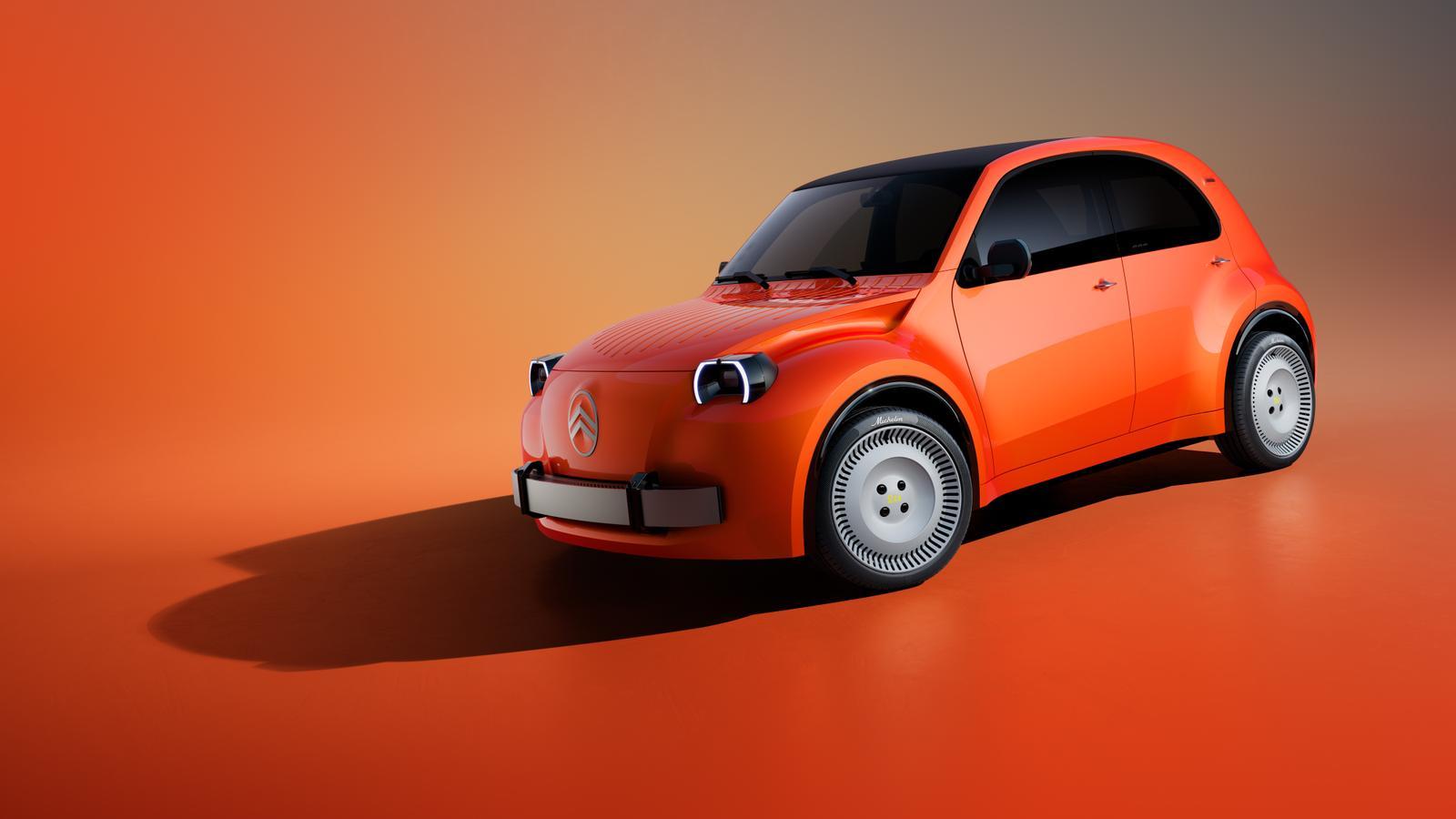
This is the new Citroën 2CV: electric, charming and for less than 15,000 euros
The French brand presents the reissue of the legendary 2CV in electric format, a utility vehicle with retro essence that points to a bestseller
-
CAT -
CAST
For some years now, European brands have been inspired by their past to project their future in terms of electric mobility. In fact, it has been quite some time since Mini was reborn under the BMW umbrella and switched to zero-emission cars, as well as Fiat with its electric 500. It is true that in both cases (Mini and Fiat 500) the brands have also marketed versions with combustion engines, but the resounding success of Renault and its electric R5 has led Citroën, the brand that is traditionally Renault's greatest rival, to copy the strategy with a modern reinterpretation of the legendary 2CV.

The original Citroën 2CV was a simple and very economical car that the brand manufactured between 1948 and 1990, and which left a magnificent memory in the more than five million units manufactured throughout its history. Citroën has recovered the essence of the original model, has copied its aesthetics quite successfully and has created a car that, according to the brand's president, the Frenchman Xavier Chardon, wants to be “affordable, popular and practical”.
The new 2CV is an electric car 3.76 meters long (still a bit smaller than the original model) that promises a weight of only 1,000 kilograms. The size and weight of the electric 2CV should allow it to use a smaller and more economical battery, which reduces the final price of the whole. In fact, this Citroën 2CV will be manufactured at the Stellantis facilities in Pomigliano d'Arco, on the outskirts of Naples, where it will share a platform and production line with other electric models such as the Leapmotor T03, which will use a battery with 35 kWh capacity. It would not be strange, then, if the new entry-level Citroën 2CV uses the same 35 kWh batteries for the more economical versions and reserves some with more capacity (approximately 45 kWh capacity) for the more expensive models.
A recognizable physiognomy
Beyond the figures of the technical data sheet of the new electric 2CV –still to be explained–, this small urban car stands out for a physiognomy faithful to the original model, with the iconic toad-eye-shaped headlights, the hood ribs, the front bumper, the wheel arches and the rear tailgate very faithful to those of the original model, but with a fresh, modern and cosmopolitan air. The canvas roof can also be removed to leave the top of the car in the open air, which would turn it into an authentic convertible.

The interiors of this new electric 2CV also pay tribute to the original model, with details such as the position of the gear shift knob or the driving mode selector, the shape of the steering wheel, or the layout of the front and rear bench seats. The new 2CV does not have a conventional instrument cluster, but rather a central touch screen with icons and graphics that imitate French comics from the 70s and 80s of the last century. This electric 2CV does maintain physical controls for volume or fan temperature and intensity, and—attention!—it has a removable basket and a removable radio, ideal for taking a snack to the orchard or the countryside, and it remains to be seen if the final production version will also include them.

For the moment, Citroën has promised that the new 2CV will be a reality before 2028 and that the entry-level versions (with 35 kWh LFP batteries and a range that we assume will be greater than 200 or even 250 kilometers) will have a price of 15,000 euros, excluding promotional discounts and institutional subsidies. This, within the current regulatory framework and incentive architecture for the purchase of electric cars in Europe, would mean that it would be possible to buy an electric Citroën 2CV for little more than 10,000 or 11,000 euros, which makes it a very attractive product as an urban vehicle or second car. It remains to be seen, therefore, if the 2CV becomes the next great European sales success in the electric car segment. For now, it already has the arguments.
