"The Kleenex culture does not interest us at all"
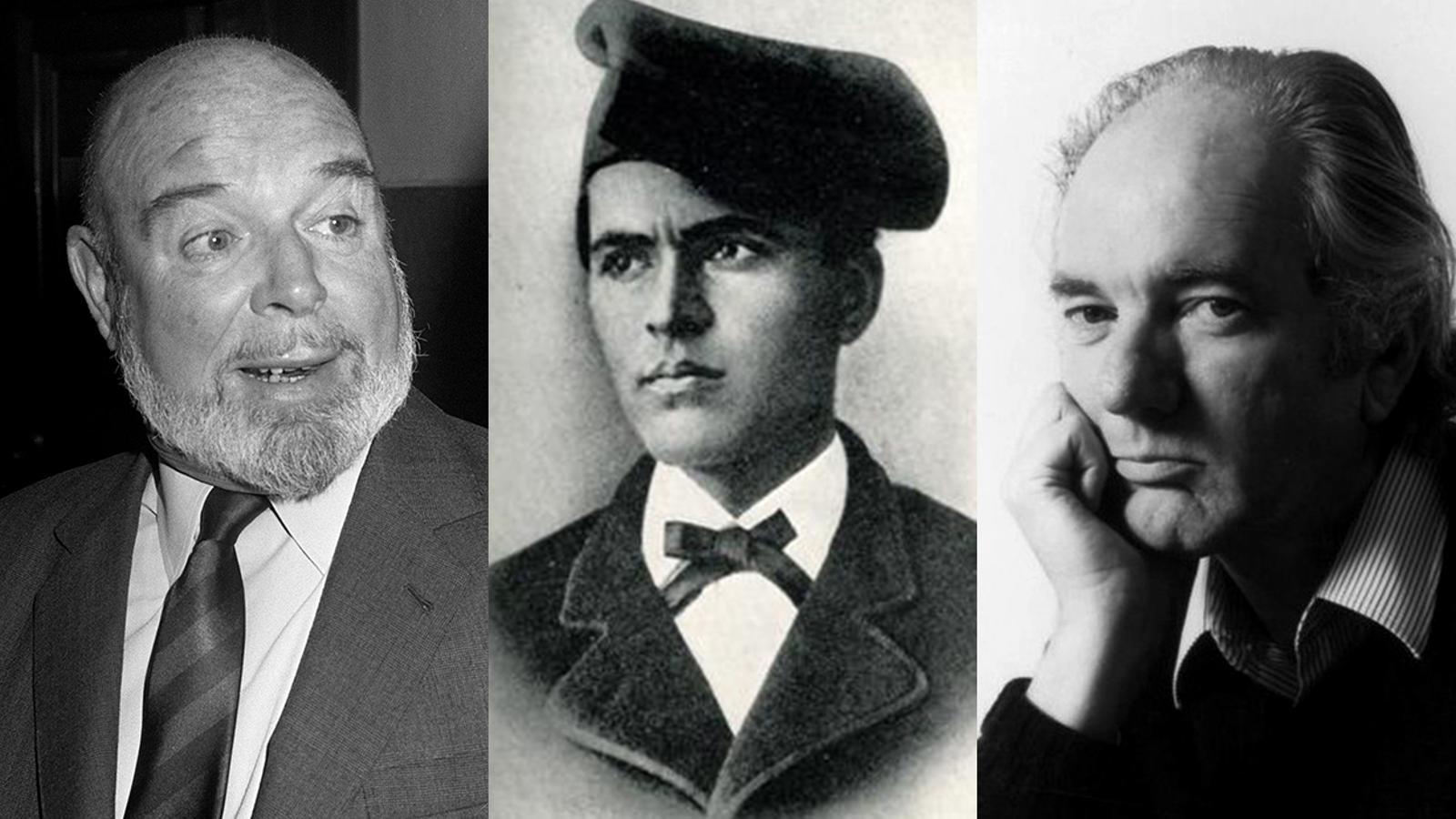
The Farró Theatres present their season appealing to big names like Thomas Bernhard, Jaime Gil de Biedma and Jacint Verdaguer and announcing the first edition of a contemporary dance festival.

-
CAT -
CAST
BarcelonaEls Teatres del Farró –made up of La Gleva and La Fàbrica– aim to consolidate the production and co-production of small and medium-format shows with remarkable artistic value. "We are not interested in disposable culture at all –remarked Albert de la Torre, its artistic director, this Monday during the season's presentation–. If we believe a production is extraordinary, it should be possible to see it again. It can't be that we let it die".
In this sense, of the dozen proposals that can be seen until the summer of 2027, the following stand out: Beethoven by Xavier Albertí, in which the director and actor will once again play the German composer (on stage from September 18 to October 19); the I am the worm signed and directed by Ferran Dordal, which attempts to bring, in the words of its creator, "the complex figure of Jacint Verdaguer closer to today's spectator" (from October 27 to November 20), and Paper roses, in which the actor and director Pep Munné revives the figure and work of the Barcelona poet Jaime Gil de Biedma (from December 1st to January 10th). "When a poet truly reaches you and tells you many things about life, as happened to me with Gil de Biedma, they teach you lessons over the years – Munné has admitted–. It is a joy to be able to return to this work, even though this will surely be the last time I do it".
"Every generation kills the father – Albert de la Torre recalled –. This means that if you don't know who your father is, you can't kill him: that's why we combine programming with long-standing figures and others more recent. We are not a theater of carriages or of bratty kids". This year, at Teatres del Farró, a production based on the story In the penal colony of Franz Kafka, directed by Dobrin Plamenov (from October 1 to November 1), and a work by Thomas Bernhard, The force of habit, directed by Ramon Simó (from November 18th to December 20th). "The tone of comedy prevails here, even though he continues to be an author who makes us uncomfortable – warns Simó–. The force of habit is Bernhard's most important play, and it has the grace that, besides, it is quite funny".
From Lorca to the 'wonder' of being a mother
Among the younger proposals, the monologue Rasa, by Sergi Ducet, which premiered at the Grec Festival and which La Gleva is reviving from September 23 to October 18, stands out; Los sueños de Federico, the first work by Pau Sintes, formed from unfinished theatrical texts by Federico García Lorca and which has as its "objective to travel into the poet's subconscious," according to the author, and La mare vella, by Pablo Macho; these last two, scheduled for 2027. "The monologue, which will be performed by Emma Arquillué, talks about the doubt of being a mother or not now, or leaving it for later –advances Macho, who is still writing the play–. It plays with two concepts, with the wonder of being a mother and with the possibility of becoming an old mother". Also in 2027, Constel·lacions, by Lluís Pasqual, will be performed, born from the will of Teatres del Farró to invite Pasqual to create "a show that allows us to better know his life and his artistic career".
Teatres del Farró have also announced the launch of a contemporary dance festival, which will be held from September 6 to 12. "We want to bring quality contemporary dance to the entire neighborhood, with proposals designed for spectators who are not necessarily familiar with it," assured Albert de la Torre. The program will open on September 6 with Aleta, by Marc Fernández, a piece inspired by the imagery of the casteller world. It will continue on September 10 with Scotoma, which reflects on a society dominated by the so-called attention economy, and 360, which explores the turn, an element present in numerous traditional dances, from a contemporary perspective in the Colombian context. On September 12, the festival will close with Miñoso Brothers, an Afro-Cuban dance proposal that begins as a participatory class, and Exitus, which combines dance, live sound, and dual-channel headphones, allowing each spectator to choose their own experience.
