The day Henry James stopped being "just a fat, bald, white man who wrote a lot"
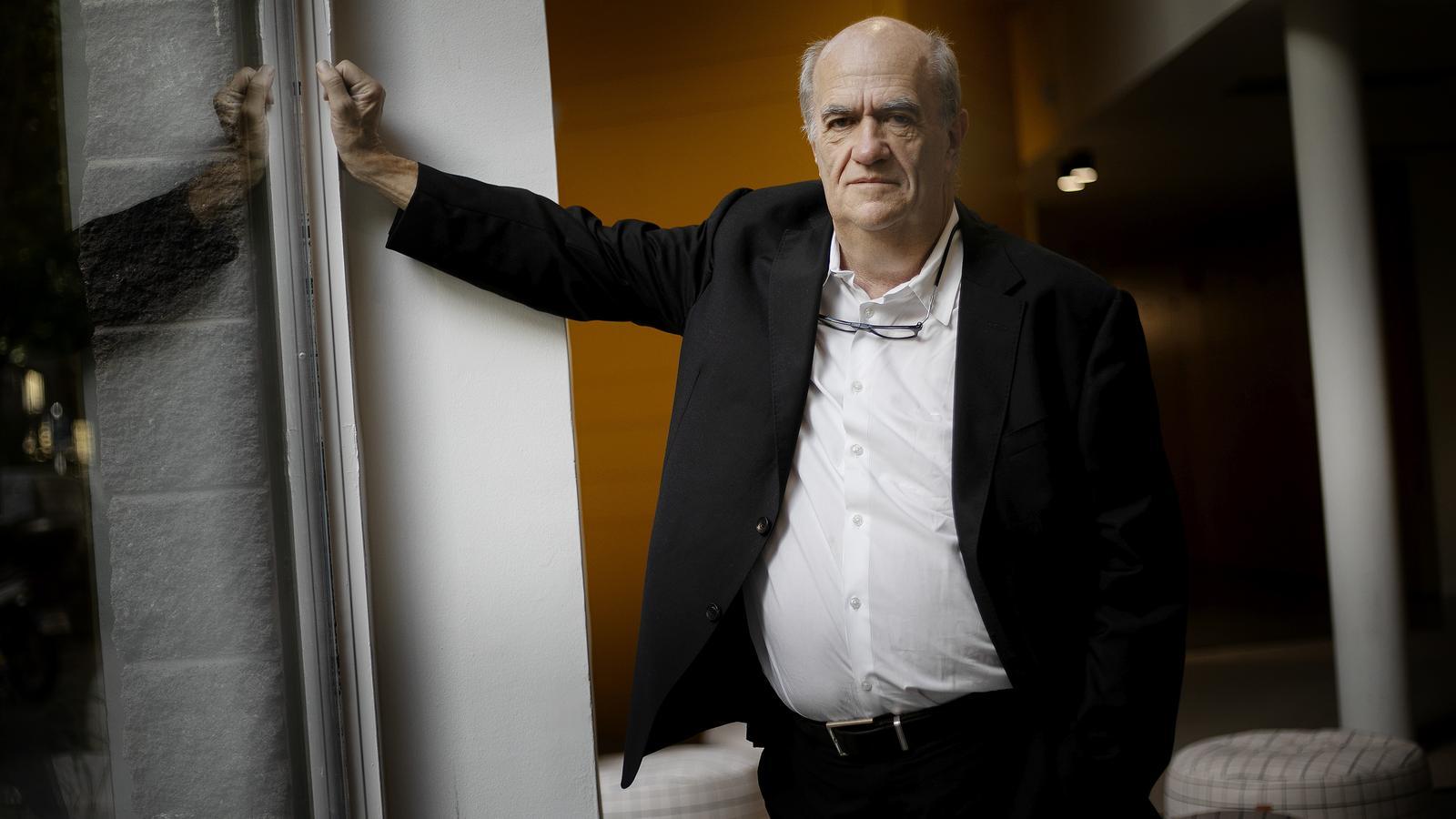
Colm Tóibín presents the Catalan translation of 'The Master', a novel in which he reconstructs five decisive years in the life of the author of 'Portrait of a Lady' and 'The Ambassadors'

-
CAT -
CAST
BarcelonaIt has been more than half a century since Colm Tóibín (Enniscorthy, 1955) read his first Henry James (New York, 1843 - London, 1916). "I had just turned 19, and I entered that very particular world with The Portrait of a Lady –he recalls now–. It was in the summer, and I discovered it for pleasure, without anyone recommending it or demanding it as a university course reading. It interested me so much that I went on to read the rest of his work over the following years, and then I reread it, and I ended up writing many articles about it. Since The Portrait of a Lady, I have never stopped keeping James in mind".
At the end of the 90s, when he had put an end to the first version of The Blackwater Lightship (1999; in Spanish published by Edhasa as The Blackwater Lightship) during a stay at the American literary residency Yaddo, Tóibín felt "so sad" that he picked up, to recover his spirits, a four-volume biography about his beloved Henry James. "I needed to escape the tension of that novel of mine –he explains–. I was determined to stop writing books set in Ireland, starring families full of unresolved problems". It hadn't been long since the writer and lecturer Alain de Botton had published an essay that had become a bestseller, How Proust can change your life (1997; How Proust can change your life). "It seemed to me that I could do the same with Henry James, but instead of compiling the articles I had written about him, I preferred to turn him into a character in a novel", he states.
A double failure
This was how Tóibín began to imagine how he could approach the life and work of the author of The Turn of the Screw. The Master (2004), previously unpublished in Catalan –translated by Alexandre Gombau for Ara Llibres– began to take shape in the late 90s. "The opening chapter of the novel is set in 1895, when Henry James failed in London with the play Guy Domville –he says–. To write it, I kept in mind an experience I had with The Blackwater Lightship. It was my first novel nominated for the Booker, and I had to go to the awards ceremony in London. It was a big event; you had to go looking neat and tidy. You were also forced to dress to the nines. The six finalists had to give speeches during that evening, and I remember that for half an hour I believed I would win, even though I had no chance, because I was competing against J. M. Coetzee, who emerged the winner with Disgrace without even attending the gala." Tóibín took advantage of "that personal disaster" to investigate how James must have felt when a portion of the London audience showed themselves to be openly disgusted with the play. "James wrote immediately to his siblings that that failure spurred him on to try to truly succeed," comments the Irish author.
The Master focuses on five decisive years in the life and work of James, during which he began to build "three masterpieces of his late production," the ones that interest Tóibín the most: "In three consecutive years he published The Wings of the Dove (1902), The Ambassadors (1903) and The Golden Bowl (1904). I like to compare this creative outburst with the golden years of William Shakespeare at the beginning of the 17th century". When the premiere of Guy Domville invited James to stop writing theater, the writer was 52 years old and had spent two decades having swapped the United States for Europe. Aside from having published celebrated novels like Washington Square (1880) and novellas like The Aspern Papers (1888), James was known for his bachelorhood. The Master starts when James has still not overcome the suicide of one of his best friends, Constance Fenimore Woolson (Claremont, 1840–Venice, 1894). "James followed with great interest all the scandals surrounding Oscar Wilde, who had had no problem coming out of the closet –Tóibín recalls–. Wilde scared James, because he represented everything that he was, but never dared to live. In Wilde there is no secret. James, on the other hand, is all a secret, and his books are full of repression and things said in low voices or, even, of silences".
It seems eloquent to Tóibín that James's family also wanted to curb the suspicions about the writer's sexuality. "On a date as late as 1932, the sculptor Hendrik Christian Andersen got in touch with James's nephews to ask them if he could publish the more than 70 letters he had from his uncle where he showed himself to be exceptionally affectionate towards him –he explains–. The response was negative, and those letters could not see the light of day until 2000. As much as his family wanted to hide it, Henry James was homosexual".
Tóibín also acknowledges the "great value" of the essay Epistemology of the closet (1991; Epistemology of the closet), by the academic Eve K. Sedgwick, which contributed to changing the perspective of studies on James. "From then on he ceased to be just a fat, bald, white man, who wrote a lot, went out to dinner every night, and was a respectable figure to become a queer, tormented, and mysterious character," he adds. Colm Tóibín subtly illuminates some of the shadows of Henry James in The Master, which since its publication has become one of the most celebrated novels by the Irish writer.
