The Catalan oasis, now yes?

-
CAT -
CAST
Forgive the topical reference to the expression “Catalan oasis,” coined by Manuel Brunet ninety years ago. The different political and social dynamics—opposed or fed back—of Catalan and Spanish society mean that we can continue to replicate that cliché. The foundational moment of the expression was the spring of 1936, when in the Spanish barracks a military coup was brewing while in the Catalan offices a timid truce was emerging between Catalanist leftists and rightists, more desired than real.
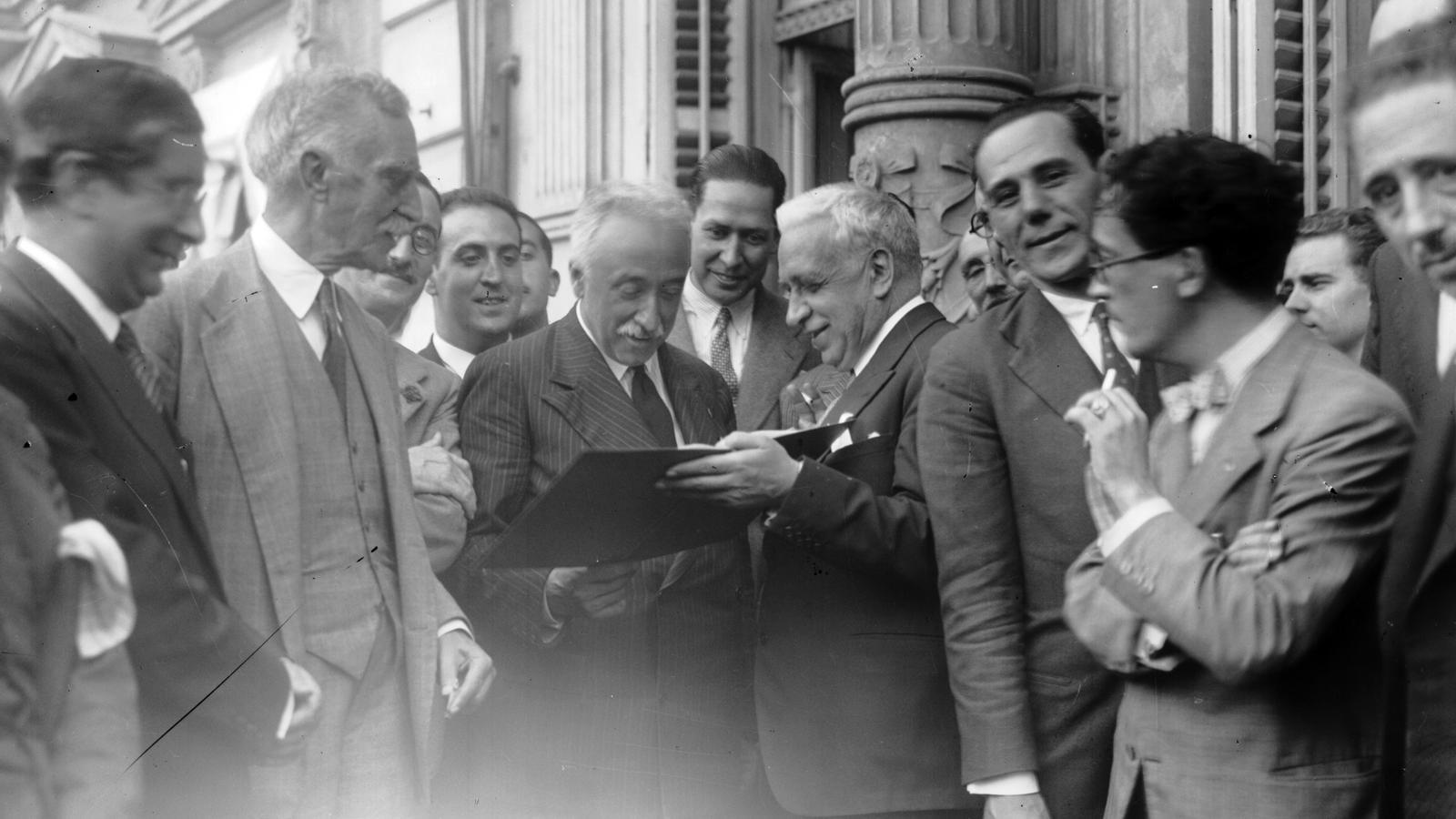
Within that ephemeral and incipient detente there was a key figure who had been consolidating himself as an ideological and intellectual bridge, to whom Joan Safont has dedicated a monumental and detailed biography: Amadeu Hurtado, the gray eminence (Pòrtic). Lawyer, politician, and journalistic promoter, we owe him the best headlines in Catalan from the republican era, from the newspaper La Publicitat and the magazine Mirador, to which we at ARA are indebted. We also owe him for tempering the left and Catalan nationalism—he was a friend and advisor to President Macià—and for seeking the integration of Catalonia with Spain: he was a confidant and advisor to presidents Alcalá-Zamora and Azaña. Of course, all his work behind the scenes, his enlightened Francophilia, his reasonable Catalanism of concord, his social liberalism, ended in a resounding failure. Many more Hurtados and far fewer ideological maximalisms would have been needed, both in Barcelona and in Madrid. The coup d'état and the Francoist victory sent him into exile and to the dustbin of history. Now Safont is rescuing him.
Brunet, the journalist of the “Catalan oasis,” had flirted with anarchism in his youth alongside Andreu Nin, and had been the first director of Mirador and a journalist for La Publicitat. But with the radicalization of the period, and because of his Catholicism, he moved to the newspaper of Cambó’s League, La Veu de Catalunya. Josep Pla had done the same a few years earlier. Brunet became a fierce critic of Hurtado. When he wrote the “oasis,” he did so with relative conviction. Months later, he nuanced it: “The metaphor of the oasis was invented to encourage the leftists to govern with common sense and justice.” Well: the dynamic of internal Catalan confrontation continued to exist, of course, but the atmosphere was not as incendiary as in Madrid.
Are we in a similar situation today? This Sunday we will know if there is the announced political turn in the State, which will not be a mere left-right alternation, but a historic shift. An involution in every sense. If it happens, how will we have to take it in Catalonia? Faced with the ultras at the Moncloa, will we be capable of not falling into extreme reaction and of building, this time, a “Catalan oasis”? Will we climb back into a competition to see who is braver in the face of the foreseeable revenge? Or, on the contrary, with a cool head, will we seek how to save the furniture of self-government and rebuild the Catalanist unity?
In this predicament, the vindication of Hurtado, who had faithful friends in Claudi Ametlla, Eugeni Xammar, and Francesc Pujols, is timely. His was a modern, anti-romantic, non-nationalist Catalanism. More of self-affirmation than anti-Spanish. Liberal, possibilist, and republican. Far from sterile idealisms and inflamed rhetoric. Despite the convulsive times, he maintained constructive and mediating common sense, from the youthful defense of his fellow student Pere Coromines, accused in 1896 of instigating the anarchist attack of Banys Nous and initially sentenced to death, to the years in which he connected with the bohemian life of Els Quatre Gats and became a lawyer for the popular and anti-clerical newspaper El Diluvio, where he started as an opinion writer. Up to running as an independent in the successful 1906 Solidaritat Catalana candidacy in the wake of the military attacks against La Veu and the ¡Cu-cut!.
With the dictatorship of Primo de Rivera and the Republic, his trajectory straddling law, politics –within moderate left-wing republicanism– and journalism is exciting. He was into everything. He became an essential figure, both in Barcelona and in Madrid. The “gray eminence,” they called him. The biography that Joan Safont has dedicated to him is a revealing journey through the liberal, sensible, and progressive Catalonia that could not be.

