Losing a daughter murdered by sexism: "Toxic relationships have been normalized"
Families of two victims of feminicide confirm the negligence of the system, which did not prevent the deaths despite the complaints
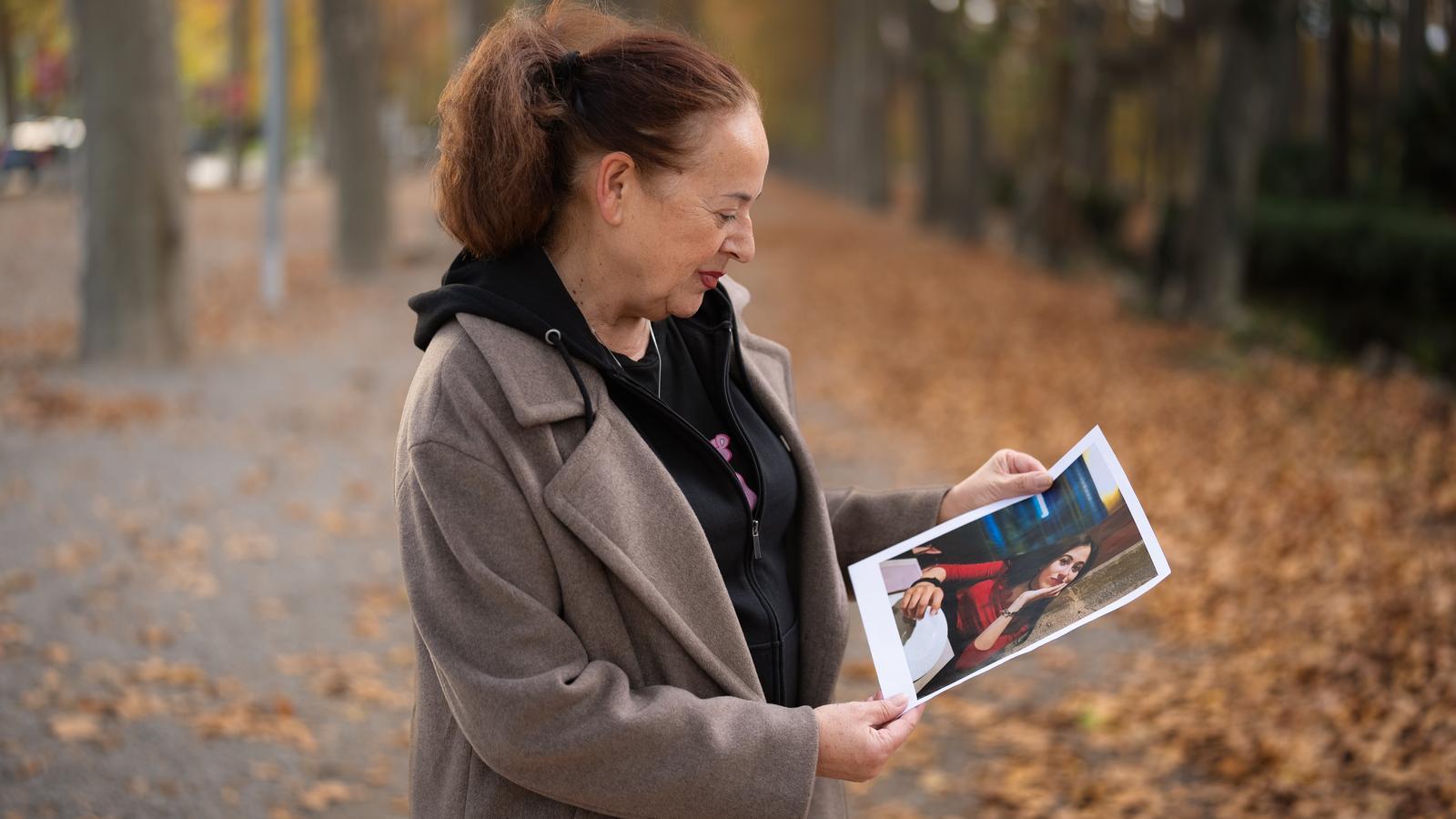
GironaIt has been three years since her life stopped. “Since Carla was killed, I only go from work to home. It makes no difference to me if it is November 25th, Christmas, or a Sunday. I don't even want to go for a walk because when I see girls laughing in the street I think... Why do they get to and my daughter doesn’t?”, explains Blanca Gutiérrez, mother of Carla Gutiérrez, the 26-year-old young woman murdered in 2023 in Girona by an ex-partner. “I thought about killing myself to be with her again, but I have decided tocreate an association to be in contact with mothers and relatives who have been through the same thing, and for all this pain to serve so it doesn’t happen again,” she says. “We must place the corpses of our daughters on the table so that they pay attention to us,” she demands.
The mother decided to explain her daughter’s story to ARA so that other girls and mothers like her can react sooner and not repeat this outcome. “Without my daughter I have nothing left, I have lost my fear and my shame,” she explains. Marcela D. García, sister of Kimberly, also wants to collaborate, the 32-year-old girl murdered in the month of May in the middle of the street in Figueres. “If they see their story reflected in ours, may they not seek to disappear to ease the pain because it does not work: one must have a lot of strength,” warns García.
Carla met Antoni, her murderer now sentenced to permanent reviewable prison, while she was studying the course to access the higher degree in tourism. Blanca describes him as a very lonely boy, with delusions of grandeur, obsessed with video games, snuff films, the army, and with a constant, even obsessive, perception of moral superiority. “She, who had suffered school bullying in secondary school, approached him because she felt sorry that he was always alone,” recalls her mother. An innate enthusiasm and gratitude, that of Carla, who did not understand prejudices or fears.
In 2017 they went out together for a few months and the mother met him. “He dreamed of fighting in the Russian army, he spent the day locked in his room playing video games, he had no friends, the only person who did not despise him was Carla,” says Blanca. When they broke up, however, they remained friends. Carla met another partner, whom she wanted to marry, and they lived together during the pandemic. Later, she managed to buy an apartment with her salary as a receptionist. “She was very thrifty and brave,” recalls the mother with a smile. She lived there alone until Antoni, her murderer and then-friend, asked to rent a room from her.
Constant harassment
Now they have discovered that he was recording her day and night, even when she was in the shower. “He wouldn’t let us enter Carla’s house, he belittled her, he followed her...”, explains Blanca, her mother. “I thought that one day he would cause a scene, that they might fight, but I never imagined he could kill her. The problem is that we have normalized these toxic relationships and we think it will never happen to us”, she states. In fact, after a very heated argument, Carla ended up kicking him out of the house. And there, a harassment that, as her mother now explains, they found impossible to report, worsened.
First, a fire in the garage. He also forced her door twice, and robbed her. “And when we went to report him, the Local Police told us they couldn’t do anything, that we didn’t have any proof”, she responds indignantly. He followed her at all hours. “And he would stare at her fixedly so she would know he was there, so she would be more afraid”, recalls Gutiérrez. Her mother and boyfriend accompanied Carla to work every day. But that July 26, 2023, when she was breathing easily thinking she would enter the building entrance, she did not know that he would strangle her, rape her, and kill her on the third-floor landing. “The next day he acted worried and told me we should go look for her: I knew it had been him”.
Institutional negligence
When Kimberly ended up dead, bloody, in the Plaça Josep Tarradellas in Figueres, this month of May at three in the afternoon, she had received a visit from her mother just a few days earlier. “People saw her leaving the hospital and they notified her mother. She had bruises on her face. She said it was nothing, she didn't want to worry her, but her mother saw her malnourished, she wasn't eating.” She gave her a hug, a kiss, and told her she loved her. “It's as if Kimberly knew he would kill her, as if she was saying goodbye,” her sister explains.
The anger and injustice that the family feels also looks towards the administration. Kimberly had reported Andrés after a beating two days before she died. He ignored the restraining order, beat her again until she was admitted to the hospital. Even so, neither the Mossos, nor the Prosecutor's Office, nor the court ever ordered prison, with the argument that she was not at the judicial hearing. “She was obtaining the medical documents she needed for the forensic doctor: they gave her the runaround between the CAP and the hospital, that's why she wasn't there.” Minutes after being released from court, he killed her. “It was an avoidable death,” insists García. The family has already formally reported patrimonial damages to the Generalitat for this management.
Since she started dating Andrés (48 years old), Kimberly's (32) life changed radically. They met in a bar in Figueres. She, accustomed to the reproaches, insults, and harassment due to her gender transition, saw him as her hero. “They were picking on her, as always, and he appeared as a savior,” continues García. A week later they were already living together in Figueres. Afterwards, he began to suffocate her. “She worked at a distribution center, but he made her late for work and she ended up being fired,” explains Kimberly's sister, who suspects that he kept her severance pay.
Without unemployment benefits and dependent on him, it was increasingly difficult to contact her. “We couldn't enter her house, they had the same mobile phone for both of them and you never knew who was the one speaking to you, he had hidden her passport and her NIE... he never let her be alone with us,” maintains her sister. Kimberly also stopped seeing her nephews, her friends... “She was so brainwashed that she didn't want to leave even though we insisted: she thought he really loved her, she was waiting for that love that no man had ever offered her before,” she recalls.
The breakup
The isolation reached such a point that the two sisters stopped speaking to each other. “I couldn't stand him, he would confront me and taunt me”. Now she regrets it. “If he hadn't disappeared, if I had dragged her away with me, she would still be alive”. After her murder, the family discovered the back-and-forth at the courts to report him and, at the same time, how he convinced her to withdraw the complaints. The neighbors told them about the beatings, her screams and her tears. They also learned that Kimberly wanted to leave for Andalusia to work with some friends. “A week before she died, she told me that she would see what she would do with her life, as if she were going to make a change. She left him and he killed her because he couldn't stand it”, adds García.
After thinking about taking her own life, Gutiérrez decided to found the Amma Association, in which eight mothers whose daughters were murdered by sexism meet and help each other. Tired of the empty speeches of some and others, they want to take action. “It is necessary to prevent it from happening again and we will achieve it by helping each other”, she asserts.
