Almost 130 women are murdered every day in the world by someone from their environment
The UN warns that the gap in the reduction of feminicides and homicides is widening

-
CAT -
CAST
BarcelonaWhen gender-based violence is questioned or denied, it is often said that femicides, the rawest expression of this structural violence, are simply homicides in which the victim is a woman, ignoring the fact that the reason the perpetrator ends up killing her is because she is a woman. Organizations working to eradicate gender-based violence have for years insisted that a homicide and a femicide are the result of different realities and, as such, require a different response. Proof of this difference is one of the data points presented by the UN in the report published to coincide with the International Day for the Elimination of Violence against Women, which in one of its sections focuses on the slow pace at which the total figures for murders in which the victim is a woman are declining compared to those in which the person who dies is a man.
Global homicide rates have decreased in Europe and the Americas in the last fifteen years, but murders of women at the hands of their partner or close family environment are declining at a much slower pace than murders in which the victim is a man or that are committed outside a close environment for the victim. Between 2010 and 2025, homicides fell almost twice as fast as murders of women in the family sphere in the Americas, and at a rate 1.5 times higher in Europe, making it clear that security policies are not succeeding in curbing specific violence against women enough.
Globally, every hour that passes, five women or girls are murdered by their partners or someone in their family. It is the environment closest to the victim –that is, people the murdered woman knows and who are usually presumed to be her core circle of trust– who continue to commit the majority of lethal crimes against women.

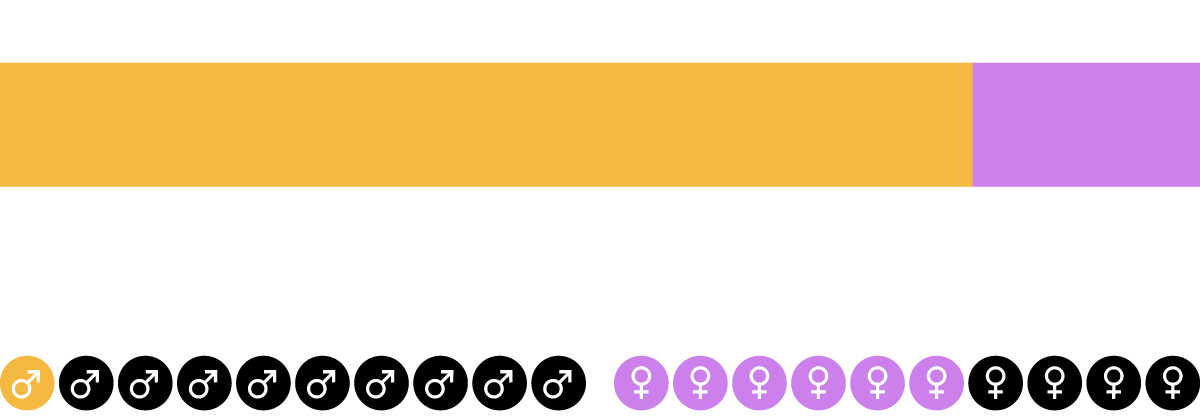
Assassinats segons el gènere de la víctima
Homes
81%
Dones
19%
Assassinats per la seva parella o el seu entorn familiar
11% dels homes
60% de les dones
Assassinats segons
el gènere de la víctima
Homes
81%
Dones
19%
Assassinats per la seva parella
o el seu entorn familiar
11% dels homes
60% de les dones
Assassinats segons
el gènere de la víctima
Homes
81%
Dones
19%
Assassinats per la seva parella
o el seu entorn familiar
11% dels homes
60% de les dones
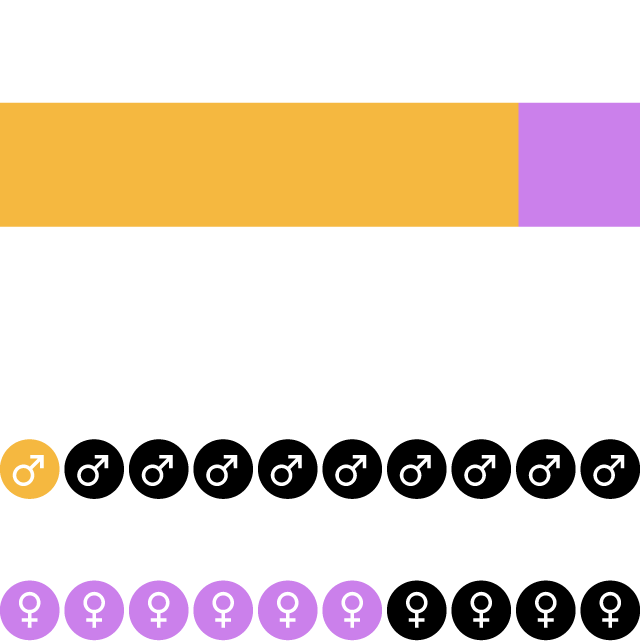
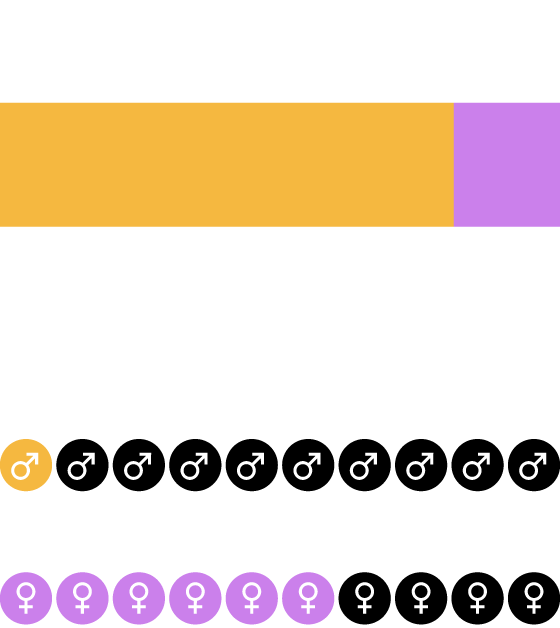
Putting absolute data into perspective, around the world 47,000 women and girls were murdered during 2025 by their partners or family members. Put another way, 129 women every day. This accounts for 60% of lethal crimes in which the victim is a woman. In contrast, in the case of murders where the man is the lethal victim, only 11% of the crimes were committed by his partner or closest family environment.
The data is even more relevant if we look at the total number of murders. In 81% of the lethal crimes registered by the UN during 2025, the victim was a man. Only in 19% of cases was it a woman. And although they account for a significantly lower proportion of the total murders, the majority were murdered by their partners or family environment. That is to say, it is unusual for women to be killed for reasons related, for example, to organized crime.
An even bigger problem
Although the toll of women murdered by their close family environment in 2025 remains slightly below the 50,000 victims estimated in 2024, international organizations warn that this variation does not respond to a real reduction in sexist violence, but rather to a greater availability of official data from states. In fact, the study emphasizes that these are only registered cases, so the real dimension of the problem is probably higher.

The report published by the United Nations Office on Drugs and Crime (UNODC) and UN Women places Africa, once again, at the top of the global ranking of murders in which the victim is a woman. On this continent, the rate stands at 2.9 victims for every 100,000 women. Further behind is the American continent (1.4 victims for every 100,000 women) and Oceania (1.1). Below the average are Asia (0.6) and Europe (0.5), which record the lowest rates on the planet.
Institutional failure
The United Nations reminds us that femicide is almost never an isolated event. It is the culmination of a long history of threats, control, and physical or psychological abuse, which almost always could have been stopped if action had been taken in time. However, structural obstacles mean that the majority of survivors never manage to seek help, leaving aggressors in a situation of impunity. "We have been seeing alarming statistics for too long," laments UNODC Executive Director Monica Juma, who attributes this reality to "terrifying attitudes, social norms, and the failure of institutional safeguards" that end up normalizing the murder of a wife, a daughter, or a mother.
In the same vein, UN Women Executive Director Sima Bahous describes each crime as "a failure of justice and of the law's most fundamental duty." Bahous demands safe mechanisms for victims to report before it is too late: "When warning signs are not recorded, cases are not properly investigated, and women are not protected, the consequences are fatal."

Gratuïts i confidencials
Generalitat de Catalunya
Emergències
Mossos d’Esquadra
900 900 120 / 016
112
601 00 11 22
(WhatsApp)

Gratuïts i confidencials
Generalitat de Catalunya
Emergències
900 900 120 / 016
112
Mossos d’Esquadra
601 00 11 22
(WhatsApp)

Gratuïts i confidencials
Generalitat de Catalunya
Emergències
900 900 120 / 016
112
Mossos d’Esquadra
601 00 11 22
(WhatsApp)
