The Black Man of Banyoles and the debt that museums cannot pay
The Bòlit of Girona opens a debate about forgotten memories and uncomfortable legacies with three exhibitions dedicated to the Darder Museum, the Muslim past of the city and the ruins of Empúries
-
CAT -
CAST
GironaThe history of the Western world is full of grievances regarding the heritage of colonized territories: looting of great riches, desecrations of ancient tombs, destruction of sacred temples, and oppression of entire civilizations. These are accomplished, inexorable facts, and from the present, there is no physical way to change them. It is a debt to the past that, by definition, cannot be repaid. The only option remaining is reparation and memory. These far-reaching ideas are the starting point for the new exhibition program at Bòlit, Centre d'Art Contemporani de Girona, titled Llegats en potència, which reflects on the role of museums in transmitting the memory of forgotten and despised peoples.
The project starts in the city with three newly created exhibitions, commissioned from three different artists, which explore particularly thorny issues in the Girona regions such as that of the Black Man of Banyoles, the Muslim past of Girona, and the musealization of the Empúries ruins. The trio of proposals, spread across the museum's three spaces, can be visited until February 7, 2027, and is accompanied by an extensive program of talks, guided tours, and workshops that enrich the debate.
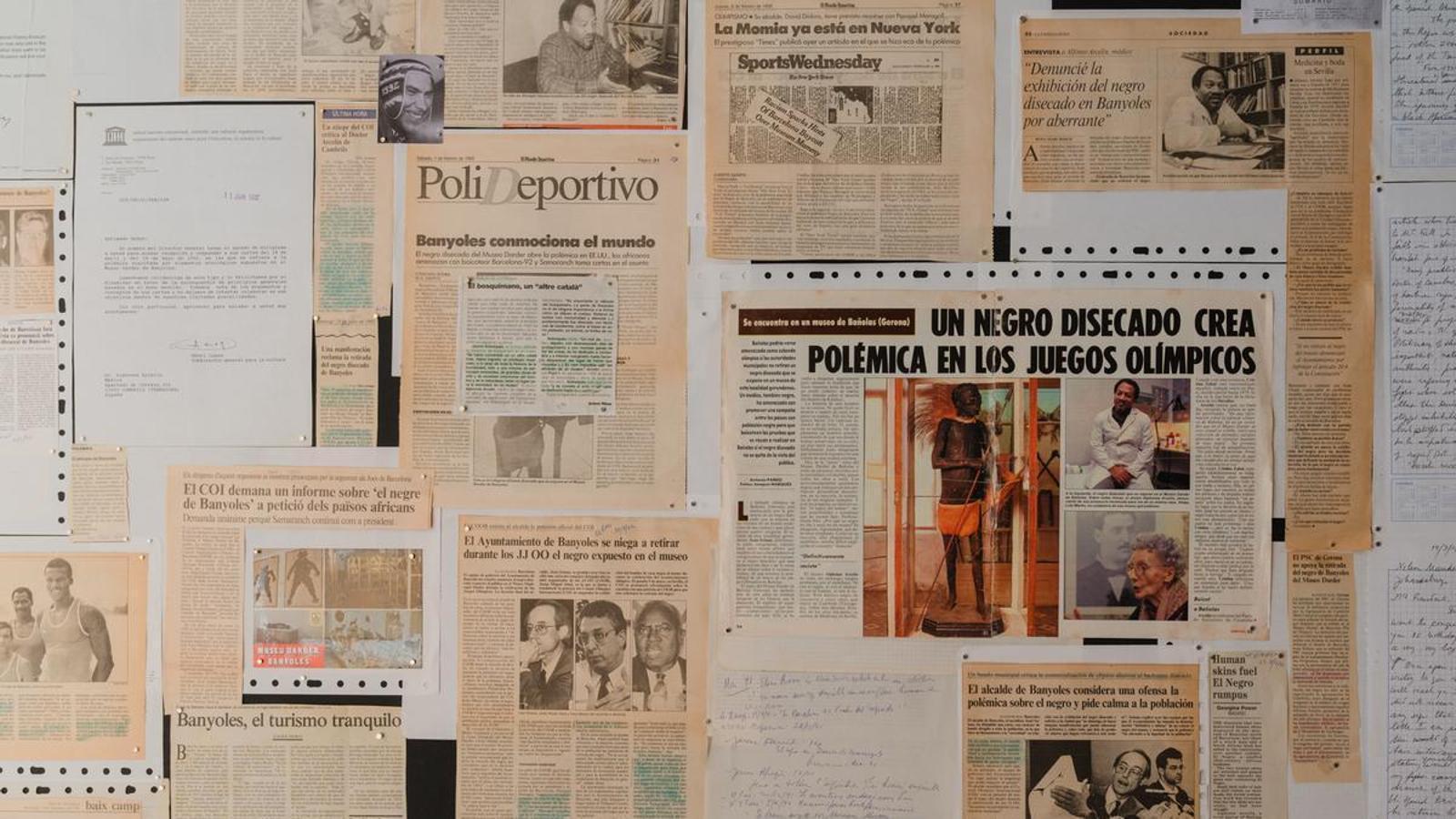
The first exhibition, at the Pou Rodó space, is Diuen que soc. Anatomia d'una fabulació, by artist and filmmaker Miguel Ángel Rosales. It unravels the controversy generated in the nineties in Banyoles by the exhibition at the Darder Museum of the dissected body of an African man, acquired by Francesc Darder in 1888, and its subsequent repatriation, driven by the Haitian-born doctor Alphonse Arcelin in a pioneering petition in Europe that shook the citizenry of Banyoles. In collaboration with David García López de la Osa and with the participation of dancer and choreographer Yinka Esi Graves, the exhibition combines archival materials, including documents provided by the Arcelin family, with an oneiric dimension in which a reproduction of the big-headed figure that gives life to the Black Man of Banyoles becomes a figure that dreams of the different "skins" that history has placed upon him.
Oriol Fontdevila, director of Bòlit and curator of the program, highlights the relevance of addressing wounds like this one. "Reparation goes far beyond the historical circumstance of repatriation, and must also have to do with how institutions and museums come into contact, for example, with the Afro-descendant community of our towns and cities," he explains. And he continues: "It has been very interesting because the exhibition has served for both parties, the Darder Museum and the Arcelin family, to provide us with material and to get back in touch after so many years.

Girona and Al-Andalus
The tour continues at the church of Sant Nicolau with the work of Sara Ouhaddou, a French artist of Amazigh origin born in Draguignan in 1986, which is titled with the very long Not everything that is said finds someone who wants to hear it; not everything that finds someone who wants to hear it is said at the right time. In a current context marked by growing Islamophobia and coinciding with the celebration of the bimillenary of Girona, the artist revisits the legacy of Al-Andalus in the city to question the mechanisms of oblivion that have relegated the Muslim presence to the margins of the historical narrative. Faced with the lack of studies and written records about the community established in the city during the 8th century, Ouhaddou questions the narrative that officially limits that presence to only seventy years: "No one comes to a place and simply leaves after a short time".
The exhibition, presented just a few meters from the Islamic necropolis discovered in 2016 in Sant Pere de Galligants, combines an imaginary alphabet with reproductions of Islamic objects preserved in the Girona regions, which claim the richness of cultural exchanges and the beauty of the Muslim heritage. Ouhaddou also denounces the current prejudices towards Muslim communities and laments the pejorative language that still predominates in European museums when explaining the passage of the Arab world in the Peninsula. "They talk about the invasion of the barbarians, as it is is repeated now by some politicians in news such as those of Ceuta, and of wars, but many more things happened; there were normal stories, of love, families that were formed, inventions. But all this is never explained", she asserts.
Empúries and new proposals
The triad closes on La Rambla with En fi, coses, by the Banyoles artist Irena Visa, with an original proposal that adopts a more ironic tone to reflect on objects and the passage of time. Based on her experience during a residency at the Empúries site, the artist began to observe her own belongings as possible vestiges of a life, in parallel to the work of archaeologists. In this way, the creator makes her personal objects dialogue with the Roman and Greek remains, developing an unusual discourse, outside the canons, even with references to science fiction and the figure of the vampire.
In the coming months, the program Llegats en potència will continue at Bòlit with new productions until December 2027, always with the same themes as a common denominator. "Institutions that manage heritage and public budgets must question ourselves about the inequalities in the transmission of heritage. There are those who have been dispossessed of their heritage, there are also uncomfortable legacies, things we do not receive and others that we do not know we had", concludes Oriol Fontdevila.
