Sergei Dovlatov, the writer who best knew how to read his era (and ours)
LaBreu Edicions publishes, with translation by Miquel Cabal Guarro, 'The column', which gathers 94 opinion columns by the Russian author
-
CAT -
CAST
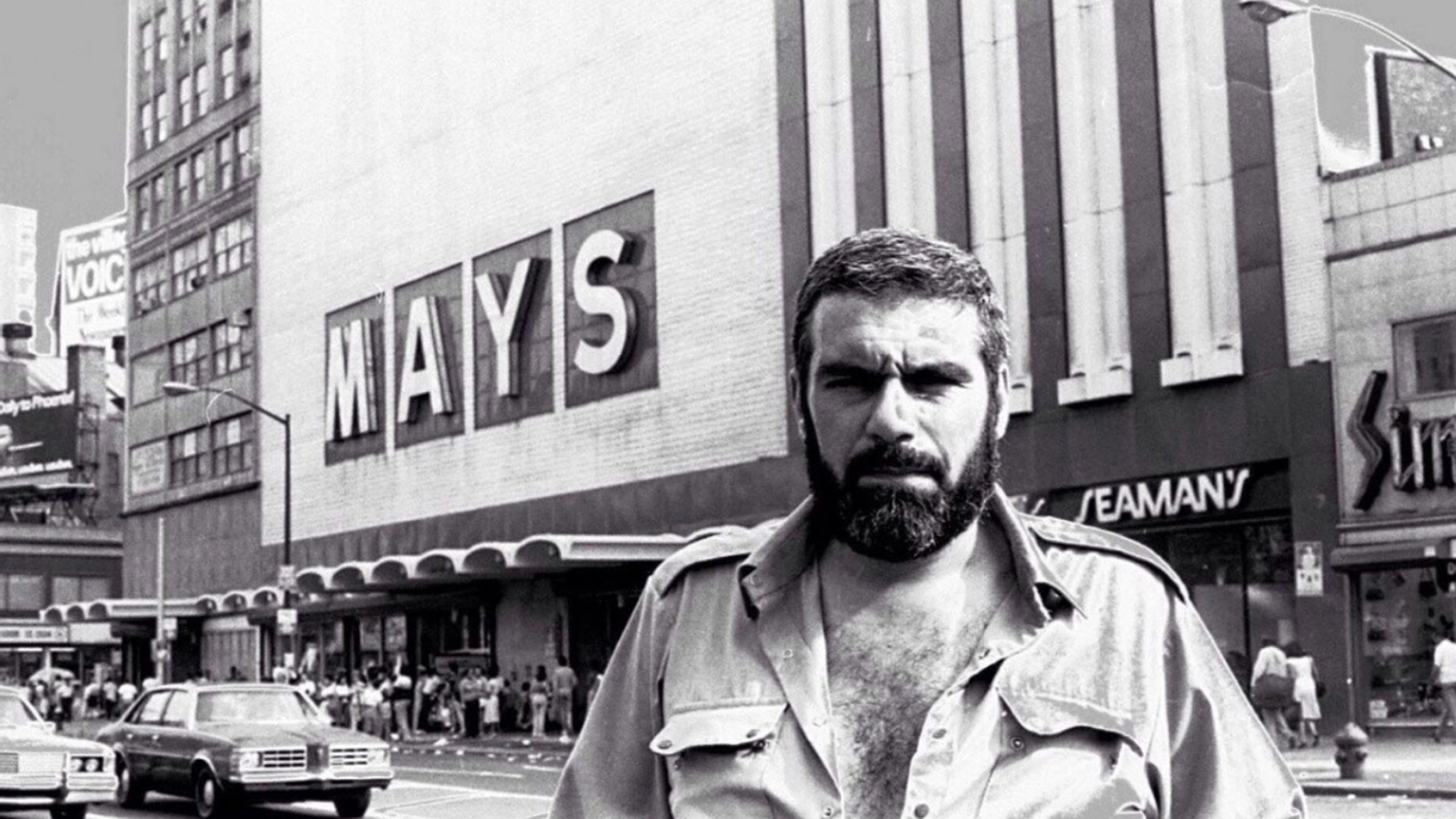
BarcelonaSergei Dovlatov (Ufa, 1941—New York, 1990) is "the writer who best knew how to read his era", said Svetlana Alexievich, 2015 Nobel Prize in Literature. Perhaps she was convinced by reflections like the ones he spread in the 94 columns he wrote for the weekly The New American between 1980 and 1982 and which LaBreu Edicions now collects under the title of The Column, with translation from Russian to English by Miquel Cabal Guarro. Alexievich explained it to Cabal, who completely agrees. After all, he has translated a dozen of Dovlatov's books for LaBreu and deeply knows the legacy of the Russian author. By the way, both the translator and the publisher deserve the greatest recognition for constant work that allows us to read in our language one of the great writers of the second half of the 20th century, a humanist in the most prosaic sense: concerned with social welfare, critical of totalitarianism and disappointed with empty gestures and those disgruntled individuals incapable of making constructive proposals. "We do not consider the alternative to love to be hostility. Not even indifference. But lies. Consequently, the alternative to hatred is truth", this activist of a "spontaneous humanism" said bluntly.
"The world will be saved by courage, kindness and nobility", he wrote on June 5, 1980, in the column that described the reader of The New American as "someone normal, simple and complex, sad and happy, thoughtful and carefree...". Much like himself, although not everyone had the narrative talent and insight of the author of The Suitcase. Ironic with a cause, Dovlatov managed to leave the Soviet Union in 1979. He was welcomed into the heterogeneous Russian community of New York and, while struggling to live as a writer, he participated in the founding of The New American, a publication in Russian. "We wanted to overcome the inertia we carried from totalitarian thinking. To put an end to the congenital lack of responsibility. To eliminate within ourselves nihilism, disbelief and blatant contempt for ideals", he recalled on September 21, 1980.
A world on the verge of catastrophe
Dovlatov's columns are those of a Russian looking at Russia from New York, and also those of a Russian looking at the United States from "the spiritual homeland: the so tormented Russian culture"; after all, no one remembers "the name of that man from the Regional Committee" and, "on the other hand, Mandelstam's name will live as long as the Russian language lives!". The comparative perspective leads him to devastating aphorisms. "In the United States everything works differently. Here the concept of businessman and that of a swindler do not coincide. To speak clearly, here one must work", he noted. "Soviet propaganda has a fantastic characteristic. Tenacious, noisy, omnipresent and incessant, Soviet propaganda elicits an inverse reaction [...] When they attack someone individually, it means that they are a worthy person...", he said 46 years ago; perhaps it is the unexpected legacy that Western democracy has received from totalitarianism. He also compares the deeper human condition: in Russia, when a man wants to get divorced, he gets drunk with a friend; in the United States, first of all he visits the lawyer. Likewise, he delights in paradoxes: Egypt, an ally of the Soviet Union, had no Communist Party; and Israel, allied with the United States, had two.
In the two years that Dovlatov wrote for The New American, the international context functioned as a premonition of the end of an era. The Soviet Union was invading Afghanistan, the totalitarian machinery was beginning to "stall", Ronald Reagan was winning the United States presidential elections and the Solidarity union was disturbing the strength of the Polish government. He talks about all of this there. He foresees the Soviet catastrophe; he predicts Reagan's triumph, celebrates it and then laments his policy, and follows what is happening in Poland hoping that Russia will not invade the country again. "Yes, the world is on the verge of catastrophe. And it has been brought there by all sorts of grumpy people", said a man in love with humor.
Dovlatov also writes columns that are short stories, and the Dovlatovian reader will recognize metaphors and situations that appeared in later books. Among these mini-stories disguised as journalistic columns, there are some developed from perplexity, such as that of the locksmith who claims that Einstein and Muhammad Ali are his relatives, and others with the scent of the greatest Russian literature, such as the one that poses the dilemma of choosing between a bastard and an idiot, praying that the bastard is not also an idiot. Read today, it is inevitable to think of the worst-case scenario: what if Trump, Putin, and the entire reactionary mob are both bastards and idiots?
In this exceptional book, Sergei Dovlatov sometimes inserts dialogues that, briefly and clearly, condense philosophical concepts to which humanity has dedicated unattainable treatises, philosophical concepts annihilated by the totalitarian experience and by the capitalist law of the strongest. For example, at the end of the column from June 23, 1980:
"The freedom to choose is a complicated good. I remember going with my mother into a pastry shop on Broadway. Something did not please her. And she said:
—We should ask for the complaint book. Or call someone...
—Or perhaps –I said– is it enough if we go to another bakery?"

