Ukraine launches against Saint Petersburg one of the biggest drone attacks of the war
Kyiv strikes an oil terminal, a data center, a logistics center and an electrical substation
-
CAT -
CAST
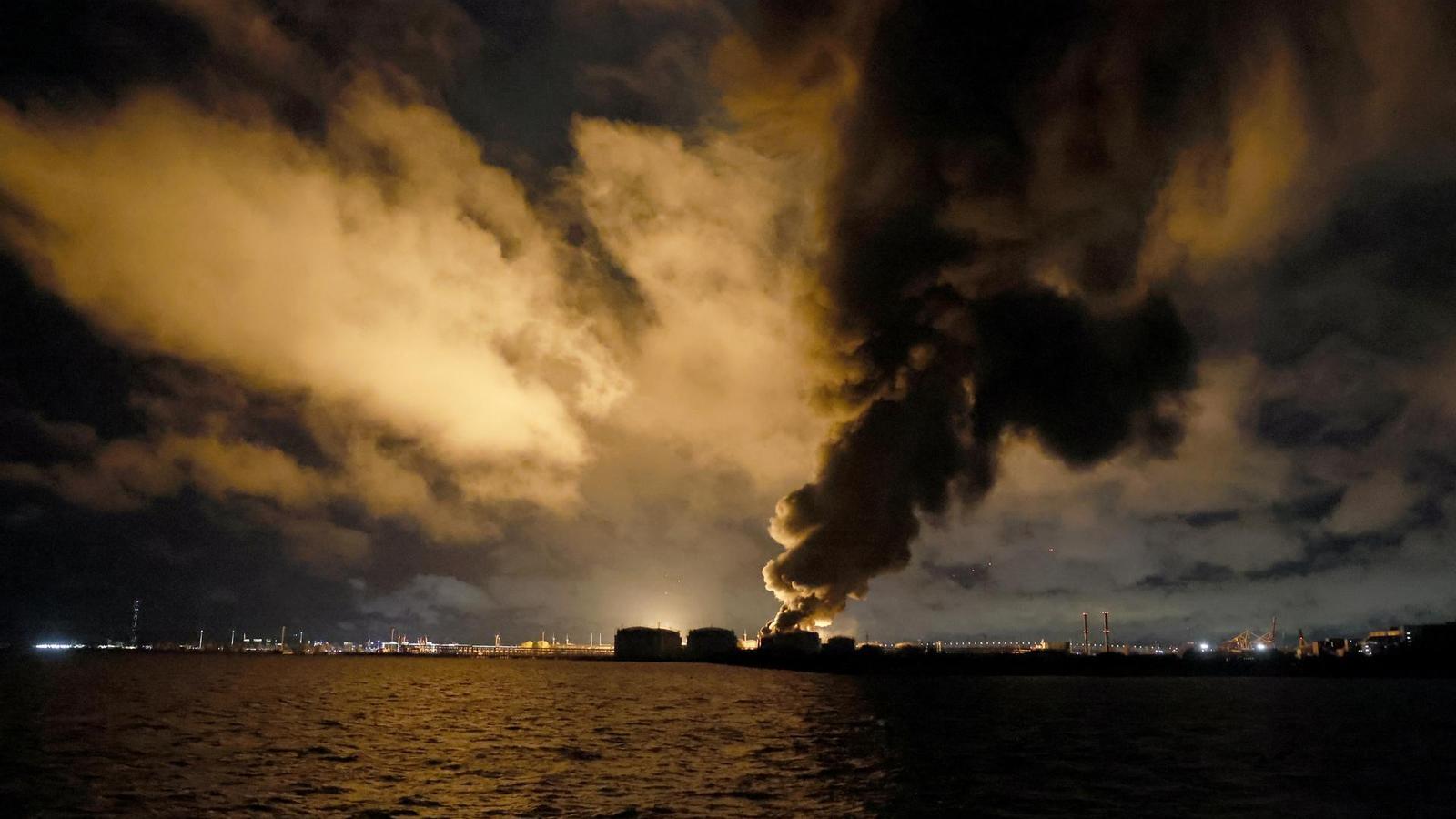
BarcelonaAmid the rapprochement between Donald Trump and Vladimir Putin, the Ukrainian army launched a drone attack this Saturday night against Saint Petersburg, Russia's second-largest city with more than five million inhabitants, and the Leningrad region. It is considered one of the largest drone attacks of the entire war, and it has left one person dead and five injured. About 20,000 people were left without electricity due to the damage caused to an electrical substation, and damage also occurred to several residential buildings.
Russian authorities in the region have claimed that the country's air defenses shot down 144 unmanned aerial vehicles over the skies of the Leningrad area. Those that did end up impacting caused damage to the region's main oil terminal, an electrical substation, an e-commerce warehouse, a Vkontakte data center –the Russian Facebook– and a bridge. The Saint Petersburg oil terminal has a capacity of 12.5 million tons per year, making it one of the main facilities of its kind on the Baltic Sea.
Ukrainian President Volodymyr Zelenskyy had resumed attacks against Russian refineries on Thursday after Trump announced an energy truce that Russia ignored. Sunday's bombing, however, goes beyond energy infrastructure and has practically paralyzed Saint Petersburg for several hours. The attack also affected the activity of Pulkovo Airport and the main airports in Moscow, where several hundred flights were canceled or delayed. Across Russia, air defenses have intercepted more than a thousand drones, according to the Russian Ministry of Defense.
Zelenskyy responds to Trump
This attack comes after Trump agreed with Putin last week on the acquisition of 300,000 tons of Russian diesel. The US president made this announcement at a time of low popularity for his figure, partly due to the rising cost of fuel in the US, and with only a few weeks left until the US midterm elections, which are being read as a referendum on Trumpism.
The rapprochement between the United States and Russia in recent weeks is evident. Trump has asserted that "it is time for Ukraine to have a new president," putting one of the Kremlin's main goals on the table: to force a political change in Kyiv. Furthermore, this Friday, the New York tycoon signed an order to temporarily freeze a package of sanctions aimed at individuals and entities linked to the Kremlin, as well as tariffs on importers of Russian hydrocarbons. For all these reasons, Ukraine's launch of such a massive and painful attack for Russia, like the one on the night from Saturday to Sunday, is interpreted as a response by the Ukrainian president to the movements of the US leader, who is increasingly drawing closer to Putin and showing more contempt for Zelensky.
The current moment is reminiscent of what happened in February 2025. Back then, the relationship between Trump and Zelensky experienced one of the greatest shocks since the start of Russia's full-scale war against Ukraine. Just as it has happened now, at that time the precedent for the clash between Washington and Kyiv was also a phone call between the occupant of the White House and the one in the Kremlin. On both occasions, Putin has managed to drag Trump to his side through promises of major joint business deals. In the winter of 2025, Putin proposed to Trump that they jointly exploit Russian rare earth minerals in the occupied Ukrainian territories. Almost two years later, the Russian leader has seduced the New York tycoon with the diesel deal.

