Growing up without family in a country that is not yours: "You will suffer more than in Morocco"
ARA speaks with several migrant people who have suffered unwanted loneliness since their arrival in Catalonia
-
CAT -
CAST
BarcelonaAs a child, Mohammed Fadily met thousands of children like him, minors living in shelters after having crossed the border illegally to achieve a better life in Europe. Only about twenty of them made it. "Most have died sleeping on the street, are in prison, or have returned to Morocco." When he arrived by boat he was fifteen years old, and although some of his cousins were already living in Spain, none of them gave him a hand when he asked for help. He did not speak Catalan or Spanish, and the few familiar faces turned their backs on him. His family was miles away; he would not be able to visit them until he reached the age of majority. He was transferred from one center to another without being informed of anything. The only certainty he had was that he did not know anyone.
"It is very hard because there is not enough support. There are no psychologists, no one asks you how you feel, and you are just a child," explains Mohammed in a conversation with ARA twenty years after his arrival. He remembers that as a child he only thought about going to Europe to earn a living. Everything he saw on television about the Old Continent was "wonders" that made him think that "in a year I would already be rich," which pushed him to spend all his money on a passage that did not guarantee him arriving at his destination alive. Although he did make it, what he found upon arrival did not resemble his dream at all: "No one tells you that in Spain you will suffer more than in Morocco. They arrive here and go into shock. I know people who have paid 12,000 euros to come and have found a life totally different from the one they expected."
To the frustrated expectations, we must add loneliness, which particularly preys on these children. He says he cried almost every day because he missed his family, had no one to guide him, and constantly thought that no one here loved him. "Many times you feel alone and don't know what you're doing here," he asserts. Like him, more than 30 million people in Europe suffer from unwanted loneliness, a scourge that primarily affects vulnerable people such as migrants and the elderly, and directly impacts their emotional well-being and physical health. For this reason, starting Monday, Sant Joan de Déu is organizing the Week Against Unwanted Loneliness with various proposals that aim to make visible and raise awareness about this problem that affects people of any gender, origin, social status, and even age.
This is the case of Fàtima Ali Azzuz, who knew what loneliness was at only four years old. She was born in the Sahrawi refugee camps of Tindouf, in Algeria, with a rare and degenerative disease, Klippel-Trenaunay syndrome, which affects the veins and bones of the body and causes malformations in those who suffer from it. There is no cure, but there is a treatment that consists of alleviating the symptoms and preventing complications. Unfortunately, in the refugee camp where Fàtima was born, it was unthinkable to obtain the medical resources to treat her properly, and her parents managed to send her to Barcelona as a medical refugee. In Barcelona, they saved her life, but the price to pay was being separated from her family from a very young age.

Between the ages of four and six, she was hospitalized at the Hospital de l'Esperança without her parents, with whom she only maintained contact through letters and cassette tapes that they sent her. "The doctors and nurses loved me very much, but it is not the same as being with your mother or your father," she recalls. Only with the support of the hospital team, of whom she only has kind words, Fàtima had to undergo an experimental treatment all by herself that consisted of exposing her to radiation to minimize the impact of the disease, which mainly affected one of her legs. Despite being discharged, Fàtima's life has always been far from her parents, who have never left the refugee camp. "The problem with the Sahrawis is that we do not exist; you cannot enter or leave because we do not have an ID from anywhere."
Learning to ask for help
She has lived all her life in Barcelona, surrounded by the nuns at the shelter where she grew up and by the healthcare professionals who have treated her since she arrived. The therapy that saved her life at age six caused her skin cancer at twenty. A year after the fateful diagnosis, she broke her femur for the third time due to the incurable disease she suffers from, and she was granted permanent disability. Since then, she has been receiving a pension that barely covers her rent. She has been evicted several times and has only been able to visit her family twice because the journey to the refugee camp is expensive and arduous for a person with reduced mobility. "My father died and I couldn't go, it was very hard," she recalls, although she insists that in the face of loneliness, she is a resilient and optimistic person. "It is true that one is very alone in the world, but I have always found people along the way who have loved me and helped me."
This same need for resilience is shared by Dani, a 26-year-old young man originally from Kenya. He arrived in Spain when he was 19, for love, but remained in an irregular situation and when he broke up with his partner he had nowhere to go and ended up sleeping rough. He spent six months living on the street and admits that the isolation led him to situations of paralysis, to the point that now he sees photographs of himself from that time and does not recognize himself. Living through this situation, without anyone, without any emotional support, has taught him that sometimes he has to raise his hand and ask for help when he needs it.
Now, both Dani and Fàtima live in a Sant Joan de Déu apartment with other vulnerable people. She cannot work due to her disability. He explains, happy, that he has found a job in a cleaning service and believes he is flourishing again: "You have to cut down the tree and then plant another one and let it grow," he explains with a metaphor for the change in life he has made since he managed to get off the street, enter the apartment, and start working.
With the aim of making visible and combating situations like the one experienced by Mohammed, Fàtima, and Dani, Sant Joan de Déu is promoting the third edition of the Week against Unwanted Loneliness. The campaign will have its opening event on Monday, October 19th, at Plaça Universitat in Barcelona, where the Square Against Loneliness will be installed, an urban space with tables and chairs designed so that citizens can sit down to have a coffee and chat.
This initiative will be replicated throughout the week in different neighborhoods of the Catalan capital and also in other cities such as Sant Boi, Cornellà, Lleida, Manresa, Palma, Seville, or Zaragoza. The program of events also includes the premiere of the documentary The Empty Chair, on Monday at the Cinemes Girona and on Tuesday on the 3Cat program Sense Ficció. In addition, reading clubs will be organized in nearly a hundred libraries, activities in school and university settings, and a festive closing day next Sunday on the Rambla de Sants that will include a community meal for 150 people in vulnerable situations and neighbors of the area.
Looking towards the future
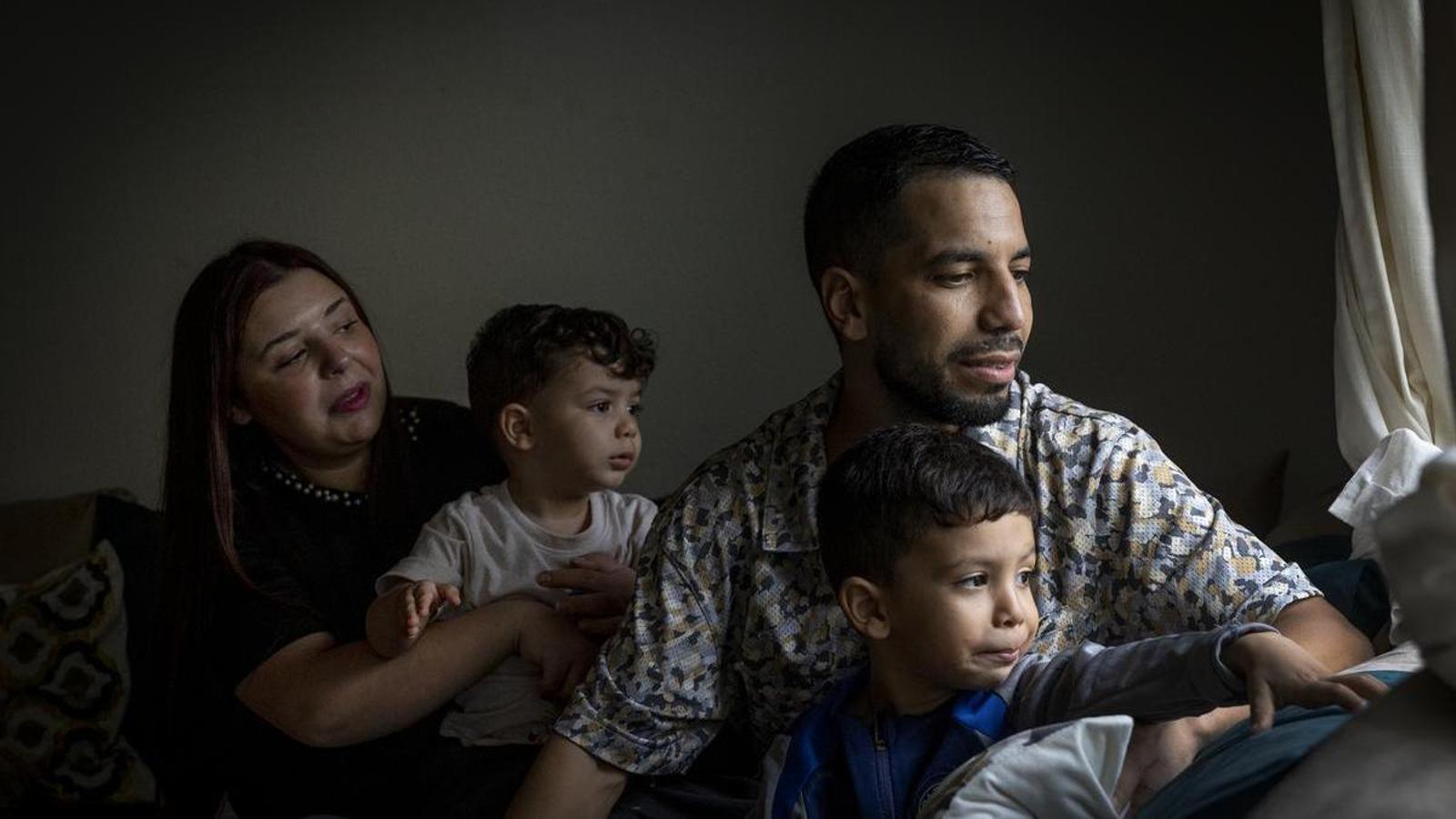
Mohammed has managed to rebuild his life in Barcelona, he has a wife and two children. Despite everything, he believes that a good part of what he has achieved was due to his stubbornness to learn Catalan and find a job. "I had to do it all by myself," he says proudly, although he also has kind words for many of the social workers he met at the shelters. He believes the system is poorly designed, because children are not informed of the alternatives available to them to progress, such as vocational training and intermediate and higher degrees, nor are they mixed with children born in the State. "At the center we were only Africans: Moroccans, Senegalese, Ghanaians... how do you expect them to adapt if you are already separating them?", he questions.
Now Mohammed works at the Sant Joan de Déu Social Work, he is in charge of logistics, and he wants his children to have all the privileges that he did not have. "My idea is that they study and, if they want to do it in London, that they can do it with every comfort". All in all, he is very satisfied with everything he has achieved despite the loneliness he suffered during his adolescence, far from his own. "I am very proud of what I have done, it cost me a lot and I would have liked to have more opportunities, but I can only feel pride".
Fatima is also proud, who now that she lives in the Sant Joan de Déu apartment can save money and will be able to reunite with her mother, whom she has not seen for thirty years. "I'm going there in March. I'm very nervous, we are very dramatic and we will cry a lot. I realize that my mother is getting old and I don't want the same thing to happen to me as with my father," she concludes, convinced that she does not want to remain separated from her own.
