Tim Jackson: "Prosperity has to do with health and not with wealth"
Economist, university professor and essayist. Author of 'The Economy of Care'

-
CAT -
CAST
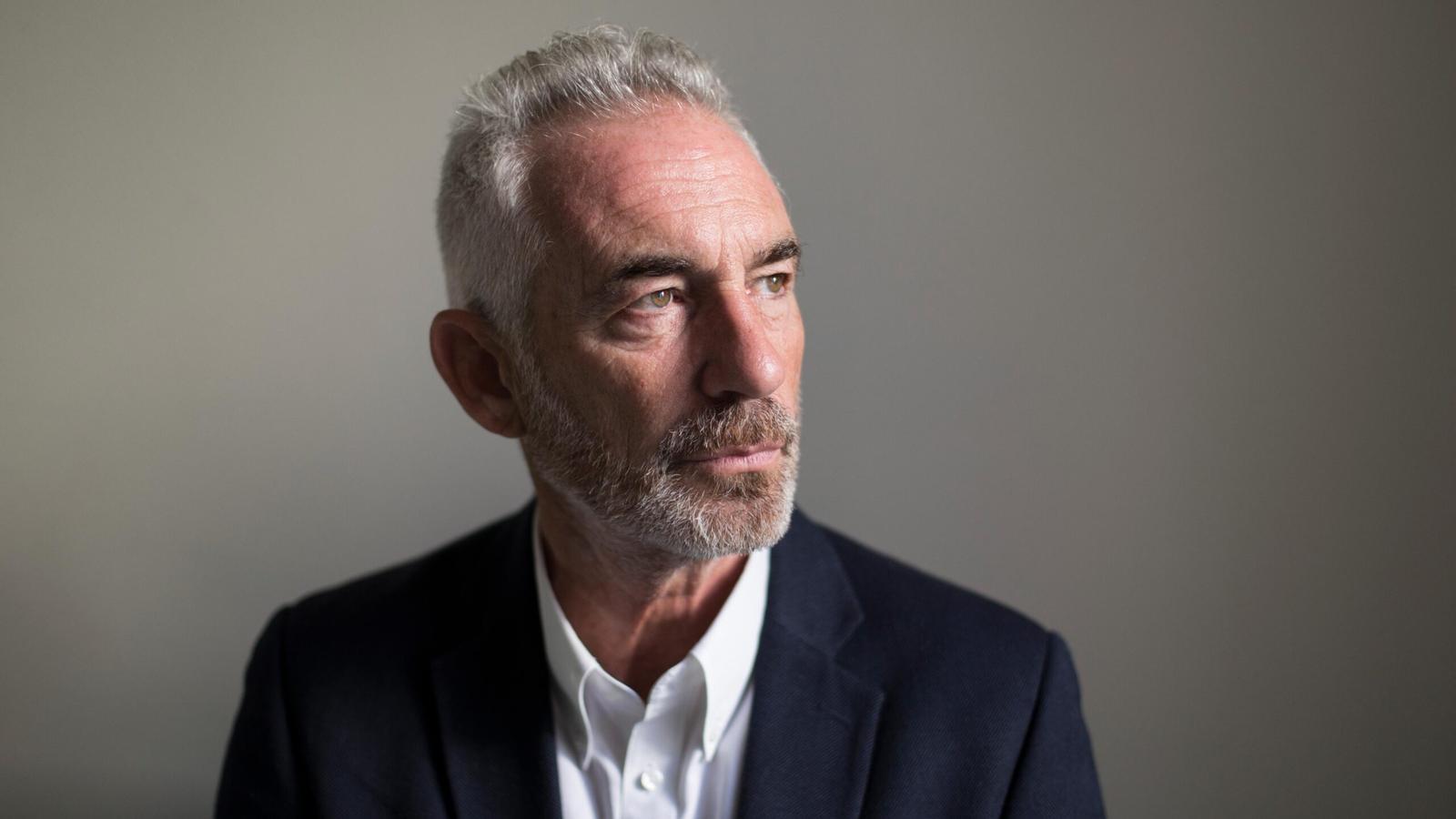
BarcelonaThe economist and essayist Tim Jackson (United Kingdom, 1957) calmly and meticulously explains the radical shift proposed by his latest book, The Case for a New Economy (Arcàdia, 2026, translated by Anna Llisterri). It deals, in the form of an initiatory journey – which includes personal anecdotes and philosophical, historical, and ecological lessons – with two ideas that clash with prevailing capitalism: the first, that human prosperity has more to do with health than wealth; the second, that the economy should above all be concerned with care, in all its forms, and not with incessant growth, as it currently is. Jackson, of whom Catalan readers had only previously been able to read Postgrowth (Arcàdia, 2022), opens the doors of his English study where he works to ARA to discuss the ideas that have preoccupied him over the last five years.
It was during one of the last waves of the covid-19 pandemic that he began to ponder The Case for a New Economy. Why?
— It connected with the research on prosperity that I had been doing previously. I will never tire of repeating that this has to do above all with health and not with wealth. During the covid-19 pandemic, it became evident that the aspects of care related to health were fundamental for our survival. The value of the professionals who dedicated themselves to it was even recognized, who do not occupy the central place they should in our society. Do you remember the applause for healthcare professionals? Those videos went viral during the pandemic.
Only six years have passed since all that, but we look the other way, as if the pandemic had not shaken the world.
— The world could have changed, but it quickly moved on. A turning point in this process was February 22, 2022, when the Russian army invaded Ukraine and a war began that is still ongoing. Since then, several conflicts have erupted in the world, including those in Israel and Gaza and between the United States and Iran. As a consequence, the idea of care has been set aside and confrontation has been placed at the center. At the end of 2022, healthcare staff went on strike for the first time in history in the United Kingdom to demand an improvement in working conditions. They received no political support because the government argued that it was a priority to increase the defense budget.
The book explains that he immediately realized that it was not the best time to talk about the cure, and that perhaps for this reason it was more necessary not to abandon the project.
— I realized that I could not approach the subject innocently. It was fundamental to read an essay by Kathleen Lynch on care and capitalism in which she said that, in order to understand the importance of care, love and solidarity, one must also study their antithesis, which is violence.
When it talks about care in the essay, it doesn't just refer to health, right? It also talks about the care for animals and the environment, about the care to preserve historical and cultural heritage...
— What interests me is to show the dynamics of care. For this reason, in one chapter I wonder if we could say that the Moon takes care of us. Even though it has no emotions or any motivation to worry about all of us who live on planet Earth, without the Moon perhaps we wouldn't even exist; we must bear in mind that it drives the tidal currents that stabilize temperatures within relatively habitable ranges. From the reflections on the Moon, I began to underpin the idea that health has to do with balance, with reaching it, maintaining it, and restoring it. It is not, by any means, static, but rather in constant motion.
To what extent do doctors help us maintain and restore physical and mental health?
— We cannot discard the good work that the healthcare system does, but we have ended up overmedicating ourselves, and this has more to do with the interests of the pharmaceutical industry than with the idea of restoring our health.
Dedicate a chapter to the euphoria caused by certain drugs. To avoid pain, the massive use of opioids has created millions of addicts.
— The body resists the idea that health is found in pursuing pleasure. Let me explain how I arrive at this reasoning. Our economic system has as one of its main objectives the pursuit of pleasure and euphoria. Our body, on the other hand, to activate the brain's pleasure circuits must resort to dopamine. If we stimulate dopamine through drugs, the body gets used to it and needs more, which leads to addiction and the need for ever-increasing doses. It therefore moves away from the balance required for good health and settles into dysfunctionality.
In the case of opioids, prescribing them has enriched some pharmaceutical companies. The Economy of Care recalls the case of Purdue Pharma.
— It is not accidental that this has happened because it has to do with the system we are in. We have allowed health problems to become a business. What's more, we have made our psychological desire for pleasure turn us into victims of a process in which our health is harmed with the priority of generating profits. In The Economy of Care I ask myself at what point this process began, and I place it at the beginning of the 19th century. If the business is so profitable, it is because, if we can choose between pain and pleasure, we all prefer the latter. Nevertheless, it should be remembered that 75% of the diseases we suffer from cannot be cured with drugs. In three out of four cases, they can only help you alleviate the symptoms. Here we have the business, and it is incredibly profitable. Furthermore, we exonerate pharmaceutical companies because they promise economic growth.
In addition to being physical beings, we are also social beings. That is why the philosopher Boris Groys distinguishes between physical health and symbolic health, which is connected with psychological health and social well-being. In The Care Economy it is recalled that one in eight people suffers from some mental health problem.
— These figures are even worse in economies that are called advanced. More than one in five adults in the United States suffer from some mental illness. Almost one in three have been treated for depression at some point in their lives. Depression and anxiety cost the global economy more than one trillion euros annually. Mental health is connected with physiological health, but there is an aspect that goes beyond it, and it has to do with symbolic health, which includes the search for a life purpose, satisfaction or dissatisfaction with identity, cultural history... and self-awareness of mortality.
Does the world we live in try to hide this existential anguish?
— We live anxious and stressed, but not existentially. We have supplanted God with fame. We tend to live with our backs to death. The entertainment industry tries to make us forget this abyss through distraction. If we look at social media, this strategy leads us to two relatively extreme types of behavior: the first is that we tend to defend the group that coincides with our ideas; the second is that it leads us to confront those who think differently. Social media isolates us and makes us aggressive.
One of his battlehorses as an essayist and professor has been the idea of post-growth. This passage from the book explains it very well: "Opposing the obsession with growth does not simply mean campaigning for the opposite. We degrowth proponents do not ask for less prosperity. We ask that we redefine prosperity".
— The prosperity that interests me is more equitable, fair, and sustainable.
He explains that sometimes he has been invited to give talks in which he has felt insulted, like the day he went to Paris to hear the French Minister of Economy and Finance, Bruno Le Maire, say, in front of him: "Degrowth is dangerous because it leads to impoverishment. To inequality. To shutting ourselves away. To the loss of knowledge."
— The event I was invited to was titled Growth and climate change, but instead of fostering an exchange of opinions, it was intended that attendees reach two conclusions: that growth is the way to combat climate change and that climate change is a perfect opportunity to stimulate growth. I find it very difficult to defend these considerations from a rational point of view. At the end of the first session, furthermore, the French Finance Minister criticized degrowth and said that those who defended it were not only wrong but did so with bad intentions, because our intention was to destroy the system. I have dedicated the last twenty years of my career to working around the idea of degrowth, and I have realized that it is very difficult to dismantle cultural myths. Growth worked when the economy was small and the planet was very large, but now that we are exceeding its limits, it is time to explore alternatives. And we must act quickly, because the dynamics of growth have become profoundly destructive.
