Matt Haig: "In a rich area of London they will offer you therapy; in the north, only pills"
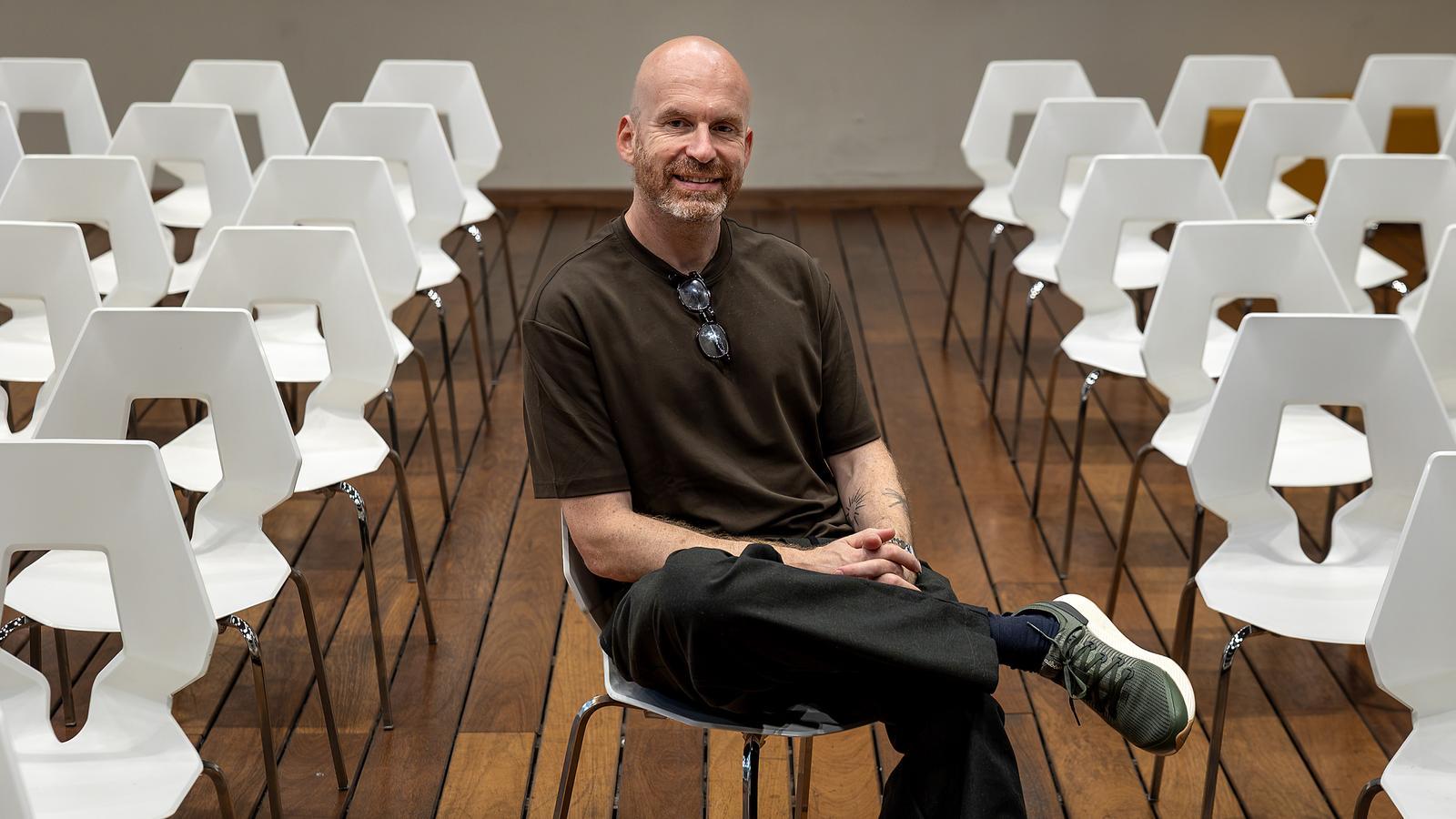
Writer, author of 'The Midnight Train'
-
CAT -
CAST
BarcelonaGoing back after a very long life and, therefore, seeing everything through the eyes of experience. It is the opportunity offered to Wilbur Budd, who owns a bookstore empire but is very lonely. Budd is the protagonist of the new novel by the British author Matt Haig (Sheffield, 1975), The Midnight Train (Empúries/ADN), translated into Catalan by Esther Roig Giménez. Haig has published more than twenty books and achieved international success with The Midnight Library (2020), with more than 10 million copies sold. Now he returns to using fantastic elements to talk about the possibilities that life offers us and to delve into one of his favorite themes: how to get out of the pit.
Wilbur Budd, the protagonist of the novel, can go back after having lived a very long life and revisit many chapters of his life, which is tempting for most of us. Why did you decide to give this opportunity to the character?
— Of all the books I have written, this one changed the most while I was writing it. It was supposed to be called The Memory Thief and there was no train. The protagonist was also at the end of his life, but he went to an AI company that allowed him to relive his life, even though he did not know he was reliving it. It was too dark. While I write, I often think: what would the version of a children's story be? It was then that I thought of a magic train. And as soon as I had the idea, I started writing it and it became nostalgic. It ended up being very much about my parents, who also met in Sheffield in the sixties. Also, at that time, my father was undergoing treatment for cancer, which he has overcome, and I felt very close to him.
Did it get less dark when he decided to set the AI aside? There is a certain fairy-tale air and a touch of optimism.
— I hope so. But I think some readers find optimism in it and others pessimism, depending on their age or at what moment they find themselves in their life. It depends on to what extent you feel you have the control to change things.
There is a certain similarity, although also differences, with The Midnight Library. If you could take the train, what would you say to the Matt Haig who wrote it?
— One of the reasons why I wrote The Midnight Train is so that it would argue with The Midnight Library, a novel that I am very happy to have written. Often, the motivation to write is to correct or add something to something you have written before. In The Midnight Library I spoke about accepting the life you have, and it is a great message, especially in the era of social media, where we are constantly made to feel unsatisfied. But I was also worried that it was all a bit passive. It is interesting to imagine yourself at the end of your life, looking back and asking yourself: what would you do differently?
Do the problems we have depend on the life we have and the circumstances, or are they rather a problem of our own? In his books, the desire to escape one's own life often appears.
— When I was younger, I used to link my problems and traumas to outside places and situations. For example, when I was 24, I was the typical rowdy Brit, and I had a breakdown in Ibiza due to drugs and alcohol. So for years, I couldn't even hear about Ibiza. I would have a panic attack if I heard people talking about Ibiza or heard dance music. Twenty years later I went back and I saw the other Ibiza: the nature, the walks, the kind people... And I realized that it was never Ibiza; it was me, as a young man, interacting in a certain way. When I was a young writer, I thought: the reason why I am depressed or stressed is because I am not successful. It took me about twenty books, I think, before I had success with The Midnight Library. I had everything I wanted before, but I no longer had any excuse to blame for my mental health. You achieve what you thought you were missing and your mind stays the same, so you have to go to therapy. Which is what I did.
Does a perfect life exist?
— One of the reasons why we live in an era of anxiety is because we are encouraged to feel this sense of dissatisfaction. I believe that, without being too melodramatic, all of capitalism and consumerism are based on not being satisfied; if you are, you don't need to buy additional things. When I was younger, my first writing job, which I hated, was writing books about marketing and business, and there were entire books about advertising that dealt with how to make people feel dissatisfied and want more. We constantly talk about progress, but we live in a world that is increasingly unnatural. Every day there are more mental health problems; we have designed a stressful world.
It speaks of a dark world, but in the novel there is hope and optimism.
— Yes, but to be optimistic, to have hope, you must start from the lowest point. What I like about writing is taking a depressing situation and looking for the light in it. When I wrote Reasons to Stay Alive [2015], the challenge was to write a book about depression that was not depressing. When I was younger I had a severe suicidal depression that almost killed me, but I was able to stay alive long enough to realize that the things depression told me were lies. For example, I was convinced that by age 25 I would be dead, but at 26 I was still alive. It was a long recovery, but in the end my brain realized that it should not listen to what depression was telling it. So I suppose I always write against depression. But to do that, you have to recognize it.
I find it fantastic that you speak so openly about mental illnesses, because it is still very difficult for people to do so.
— I think it is difficult to talk about it because it touches upon one's own identity. We like to believe that we have control over our mind and we like to feel strong. Therefore, especially men of my generation, we want to feel that we have control over our lives; it is a comforting thought. Admitting that you are depressed when you do not want to be or that you are afraid of things is very difficult. The reason why I like to talk about it is because I believe that it really changes the way you feel, and so does listening to others and knowing that they have made it through. The first time I had suicidal tendencies was in 1999, and back then practically no one talked about mental health: when I thought of depressed people, I thought of suicide. In my head, I had Sylvia Plath, Kurt Cobain, Hemingway... I had a dangerously romantic idea of depression. Now it is talked about much more, but the world is very harsh. And I think that, without a doubt in my country, there is no equality. We have very long waiting lists and it depends on the part of the country where you are: if you are in a very rich and expensive area of London you will be offered therapy, while if you are in the north, like in Newcastle or Manchester, they will simply give you pills.
