Fontaines D.C. lights up Barcelona
The Irish band presents 'Dopamine Chamber' in a live show of magnetic energy and a disjointed ending
-
CAT -
CAST
BarcelonaAn hour before the concert, the Barcelona sky shifted from the pink of Romance (2024) to an iridescent Dopamine Chamber (2026). Fontaines D.C. arrived in the city ten days after the album's release, which explores a more electronic sound while maintaining themes of social justice. That same afternoon, an outbreak of unrest in Barcelona had forced changes to the train and metro, and the band's followers were forced to climb up and down the hills surrounding the Sant Jordi Club amidst rushing, dodging the dozens of fans who had been left without tickets and a handful of bewildered young people camping out for the Niall Horan concert.
After nine o'clock, Fontaines D.C. took the stage to play the first chords of Tongue. From the very first bars, the group had recovered with admirable ease the post-punk spirit of their early albums, missed by some fans. Live, the band shines when they let themselves be big, noisy, and saturated, and it was impossible not to be swept away by the distorted spiral of the guitars, the urgency of the bass and drums, and the almost prophetic narration of Grian Chatten's verses.
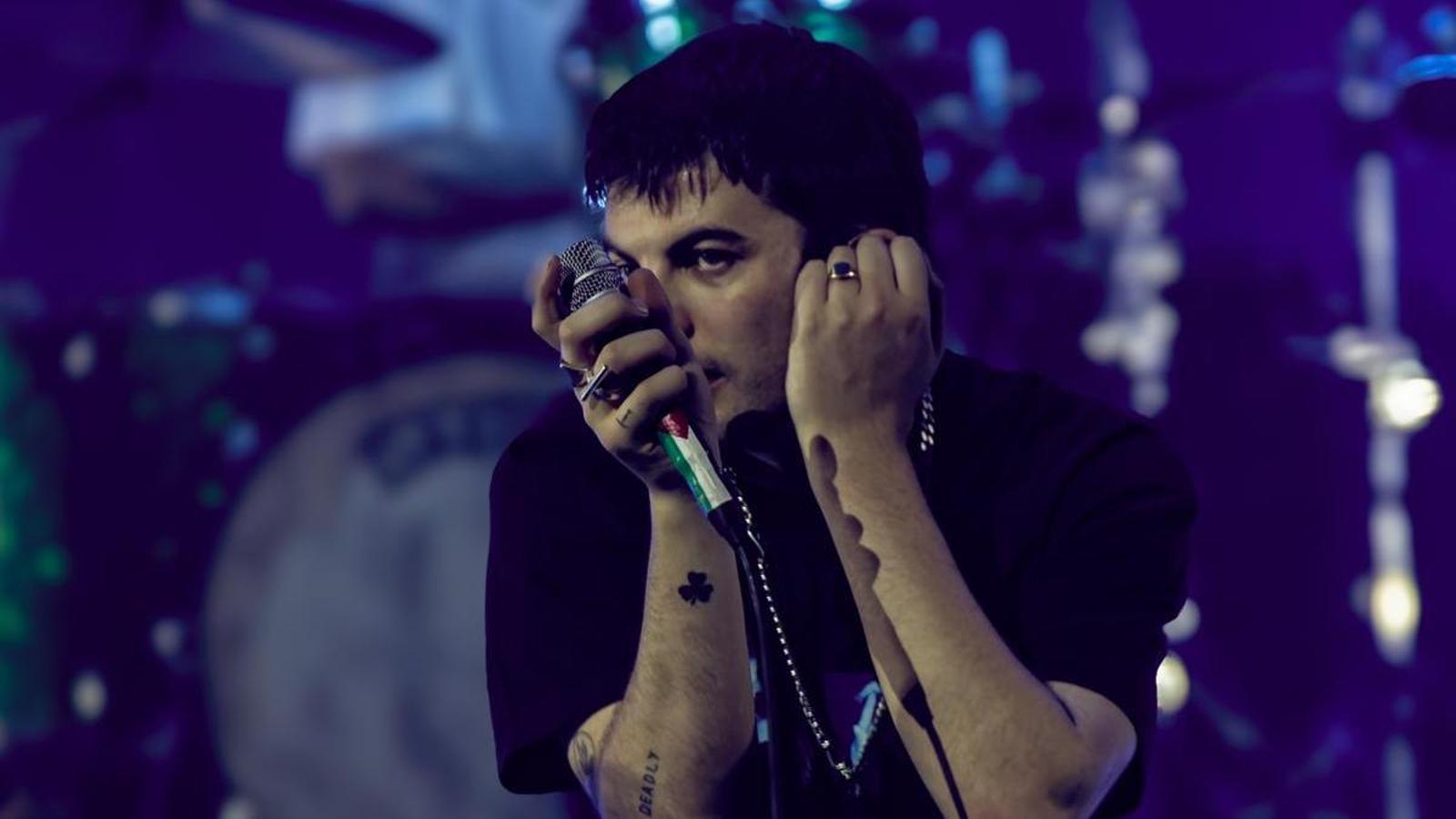
Initially, however, the Catalan audience was shy. It was not until the frantic repetition of Boys in the better land that the first flags of Ireland and Palestine appeared. The frontman, laden with gold chains and with the defiant swagger of a hip-hop star, walked up and down a catwalk that extended from the stage and split the audience in half, tirelessly demanding the attention and energy of the listeners with both arms.
What stood out most about the concert was precisely Chatten's strength over the cool hermeticism of the band. Chatten would crouch down to sing directly to the fans, and he would seek them out by shouting at them, pointing at them, looking them in the eyes. This stage ease contrasted with the few words he uttered between songs: many "thank you very much", some "good night". Towards the middle of the concert, when he said "Long live Catalonia" (also in Spanish), and the Sant Jordi Club responded with a roar of euphoria.

Towards the end of the night, Fontaines D.C. had managed to transform the live performance and the audience, and the atmosphere had finally mutated into a rock concert: dozens of people climbing onto their friends' shoulders, flags, shoving, people taking off their shirts to spin them around; beer cups flying, splashing everything with electric sparks, and hundreds of hands reaching out towards the singer. The entire venue pulsed to the unredeemed rhythm of Fontaines D.C., carried away by the band's sensual aggression.
Before the encores, the band left the stage dyed in the colors of the Irish flag, and to return they made themselves begged, to the point that the audience no longer knew what else to whistle, shout or chant to encourage them. The first encore, Six Shot Morning, was marred by an error in the playback of the tracks, momentarily cooling the atmosphere and apparently distracting the musicians, who had moments of looking for each other and not finding each other during the rest of the songs. Despite everything, with Japan Chatten, he allowed himself one last crowd bath and took out his earpiece during the chorus to hear the roar of the Sant Jordi singing to him.
Fontaines D.C. closed the setlist with Where Is Gone, the collaboration with Rosalía that has been playing everywhere these weeks. On this occasion, Chatten performed it solo, sitting among his bandmates and jumping from the low to the high register. The technical difficulty of the melody, however, made the Catalan singer's absence in the duet even more evident. In the cloakroom line, some fans consoled themselves: "For the Primavera Sound concert next summer, she will surely come out with her".
